
Last summer I got nerdsniped by evangelical christianity, and in particular church planting, the domestic missionary system used by nondenominational churches to resolve the conflict between an abhorrence of hierarchy and a drive to spread the Word. The system was so different from what I expected from religion; I wanted to understand the frame that made it make sense to its members. What I found were values and mechanisms nearly identical to Silicon Valley’s start-up/venture capital culture along with a healthy dose of American “don’t tell me what I can’t do” in ways that warm my libertarian heart.
That post is one of my favorites of anything I’ve written, in part because it had head and shoulders the best comments. There were enough compliments to make me feel good about what I’d learned, and enough criticisms to teach me more. For the first time, I am compelled to create a post solely to highlight comments on a previous post.
This isn’t the only sequel in the works. My biggest regret from that post is that I gave only a few paragraphs to the experience of being a pastor’s wife. I’m a sucker for “this system is simultaneously very different from what I know and yet running on similar human hardware, in ways that help me understand the hardware”, it’s what attracted me to church planting in the first place, and understanding the mechanisms and rewards of pastor’s-wifing feels like it will offer even more insight. I’ve had this on my list for a while, but when Asterisk Magazine announced their upcoming issue was themed around Work, it moved to the top.
My second biggest regret from the original post was that I relied 100% on published material, with no original interviews. I want to fix that too. If you or someone you know has insight into being a pastoral spouse, I would love to talk to you/them. You can reach me at elizabeth@acesounderglass.com.
What I Got Wrong
My post focused on non-denominational churches, so it makes sense that many of the corrections pertained to denominational evangelicals. To my surprise, “evangelical denomination” is not a synonym for “evangelizing churches.” Lots of churches in evangelical denominations do not emphasize recruitment. They don’t send out new churches and they don’t encourage members to recruit either.
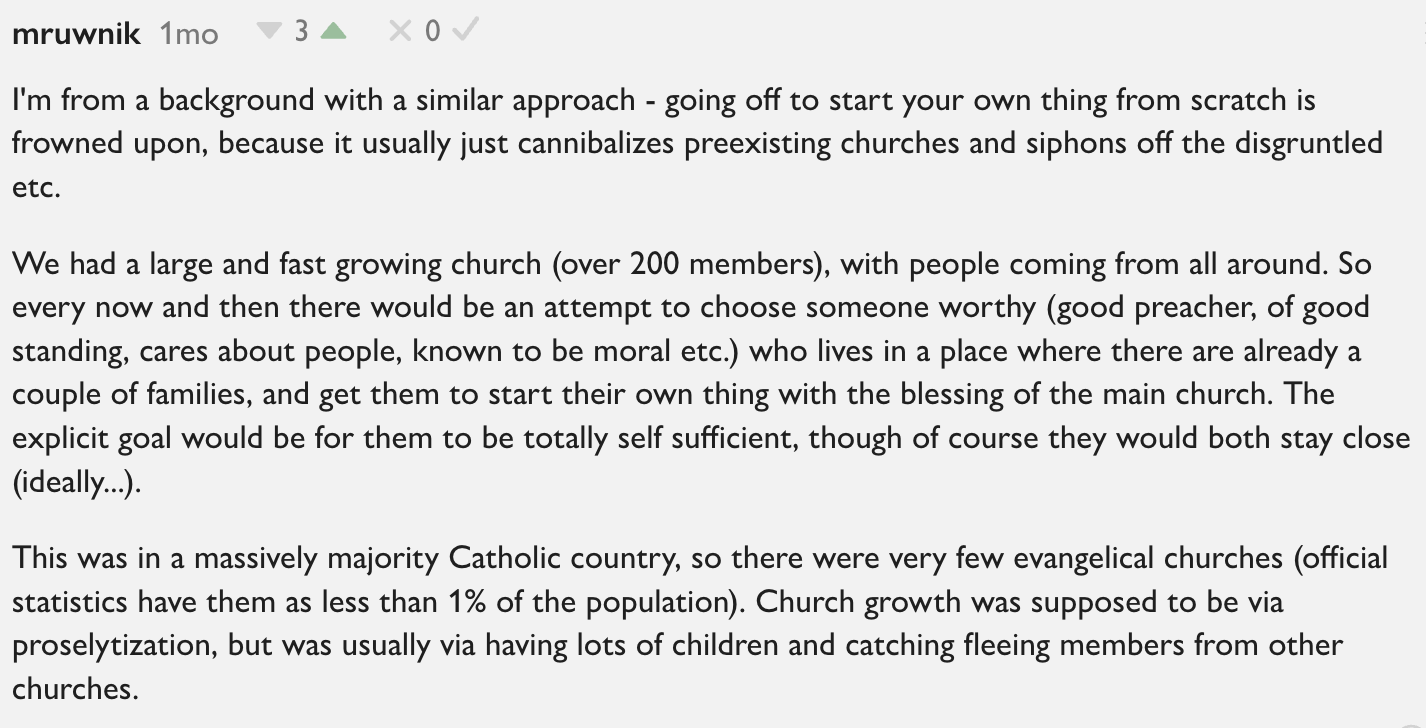
When the church planters I listened to talk about non-planting churches (which are a supermajority- maybe 90%?), it’s with something of a sneer. They don’t view these churches as choosing a different path, but as failing at the one true path of bringing in new souls to shake Jesus’s hand. The planters love non-planters in their failure… but they are praying for the failures to see the light some day.
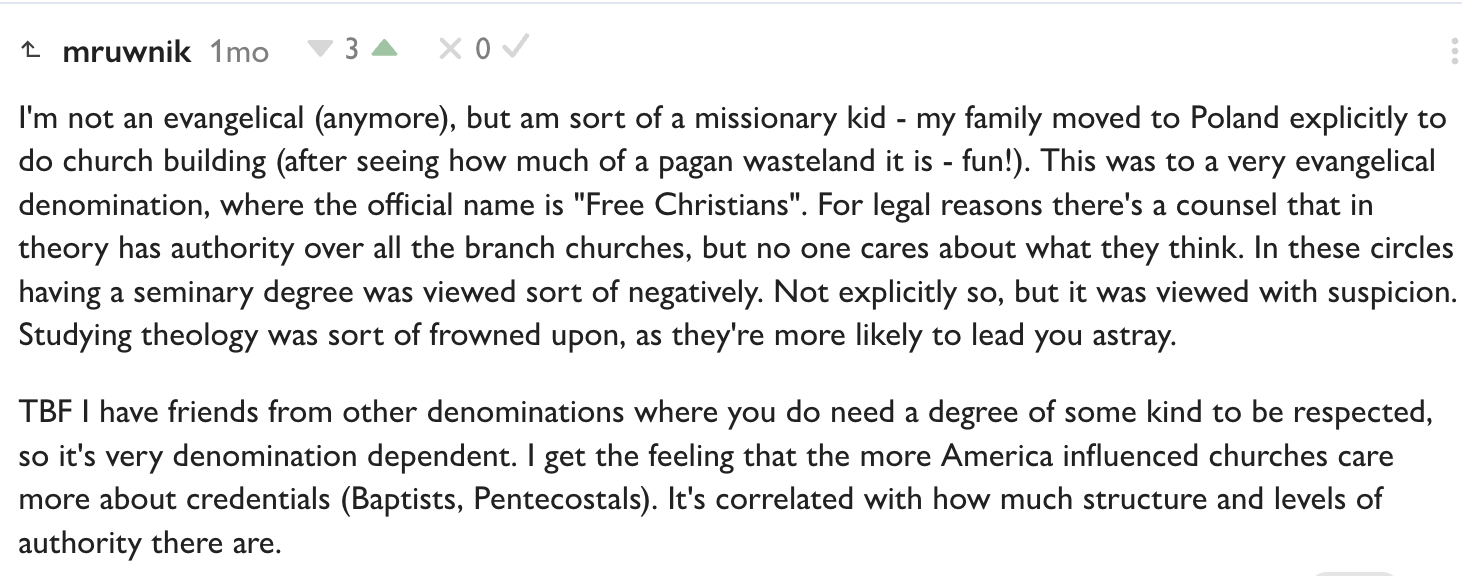
Multiple people mentioned that, in their part of the evangelosphere, seminary degrees were mandatory. If not a full seminary degree at time of founding, then at least an online certificate within 4 years.

On the other hand, mruwnik reports that in his childhood denomination (where his parents were international missionaries), seminary degrees were viewed with suspicion. Not forbidden by any means, but more negative than positive.
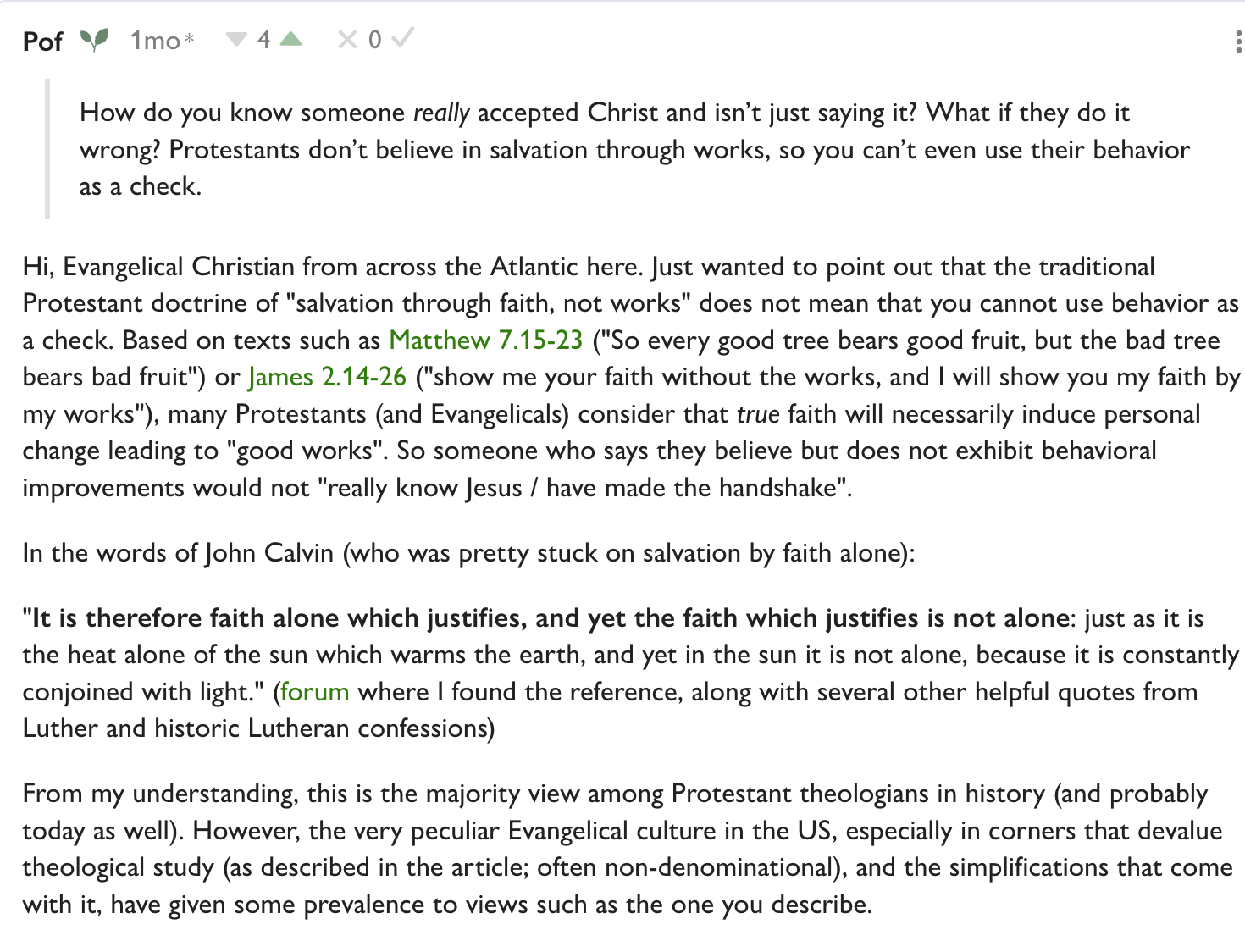
In the previous post I described free grace theology: the idea that salvation requires only the profession of faith, and that good deeds are not only not necessary for salvation, they aren’t even evidence of faith. I represented this as the standard evangelical view, but Pof pushed back that this is an American view. In Europe, FGT is almost unknown.
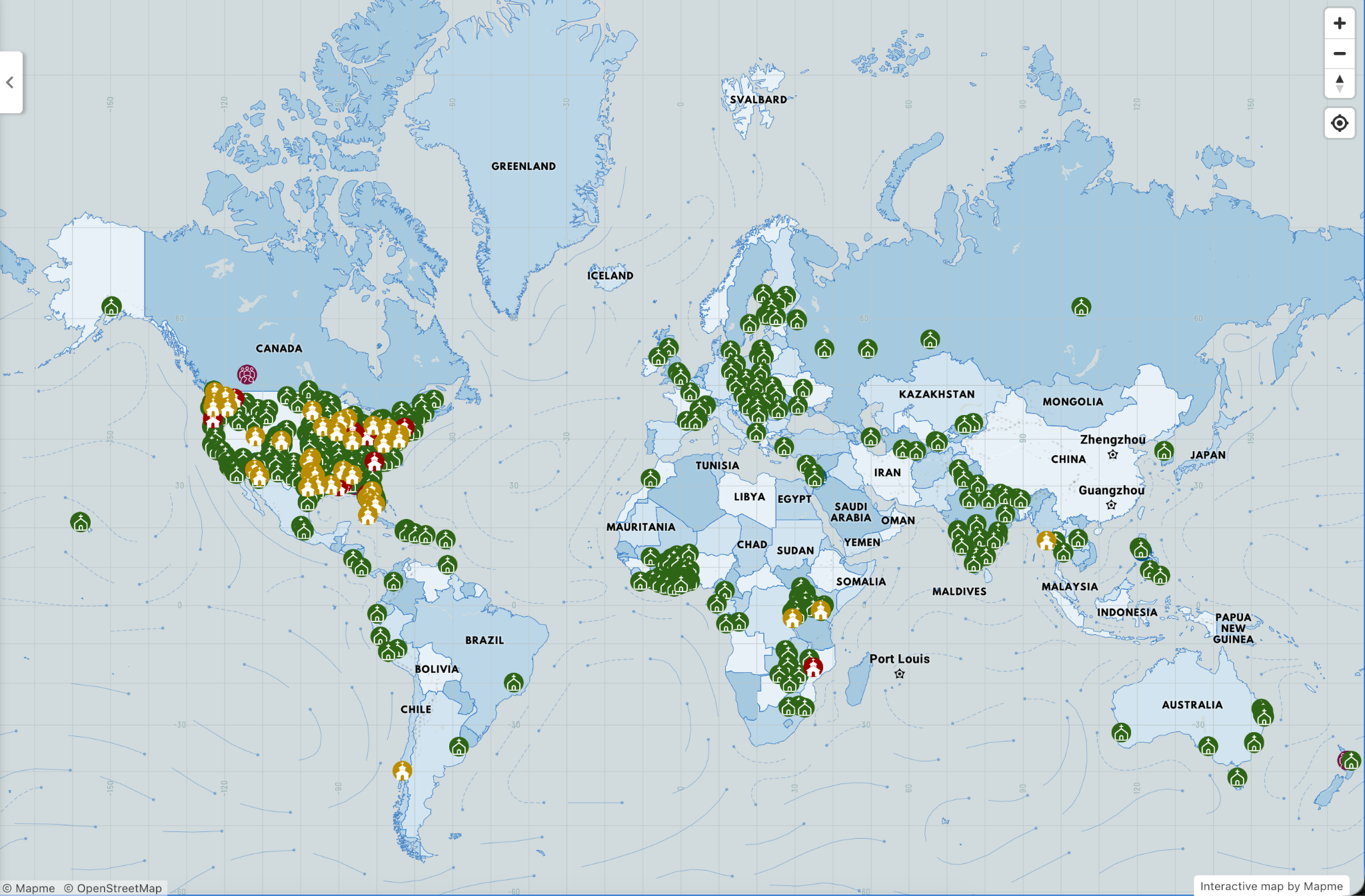
This was easy to check. The Free Grace Alliance has a map of participating churches, and all of its members save 6 are in the US. Europe only has “grace friendly” churches.
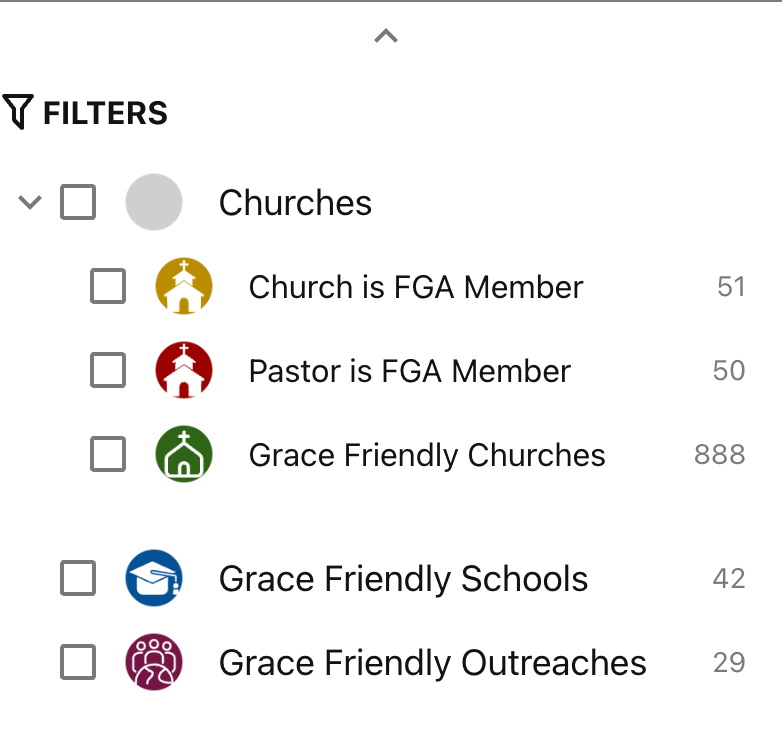
There are evangelizing organizations that focus on spreading free grace theology in Europe, but they’re both based in the US.
Salvation without evidence is an area of conflict within the US, even within the evangelical community. The self-identity of the opposition is lordship salvation, which teaches that if you believe in Christ it will show up in your actions. They decry free grace as easy–believism. The free grace people call the lordship salvation people fruit inspectors (from the verse “A tree is recognized by its fruit…”).
Free grace theology is also very new, by religious standards. This article dates it to not quite 50 years old, which would put it right alongside the evangelical boom of the 80s.
What I Got Right
One of my north stars when writing the piece was portraying evangelical Christians in a way they would recognize and find respectful. Not that I would lie to make them look better, but I wanted to present “What are their terms for success?” rather than “How are they doing by my terms for success?” I’m delighted that multiple evangelicals spontaneously praised my understanding, even when they had addenda.

The link between venture capital and evangelical Christianity was closer than I thought. They’re not just analogous; they deliberately cross-pollinate. GWD took a seminary course that repeatedly referenced Barbarians to Bureaucrats, a book on the corporate lifecycle. Solhando points to start-up founders reading The Purpose Driven Church because it’s a “well known manual for building startup culture, attracting dedicated employees, and raising capital”.
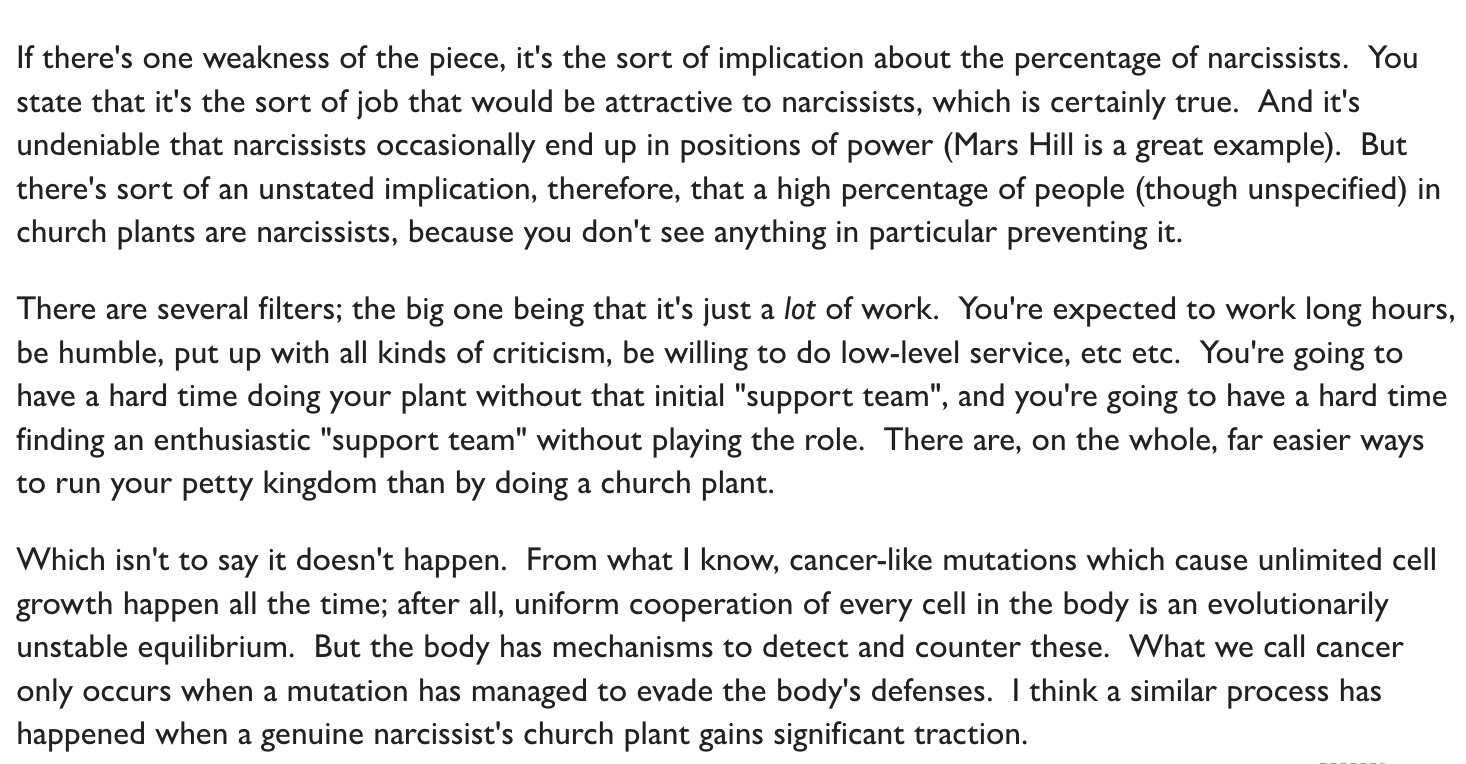
Generally people agreed at the factors I pointed to rewarding narcissism, although of course if you know lots of pastors based through their work instead of by how much mainstream attention they capture, they represent a lower proportion of pastors you know.
Creative destruction is even more built into evangelism than I thought. I assumed it was a byproduct of worshipping in America, however the Bible says “If the salt loses its saltiness, how can it be made salty again? It is no longer good for anything, except to be thrown out and trampled underfoot.”, which sure sounds like the market in action to me.
Other additions
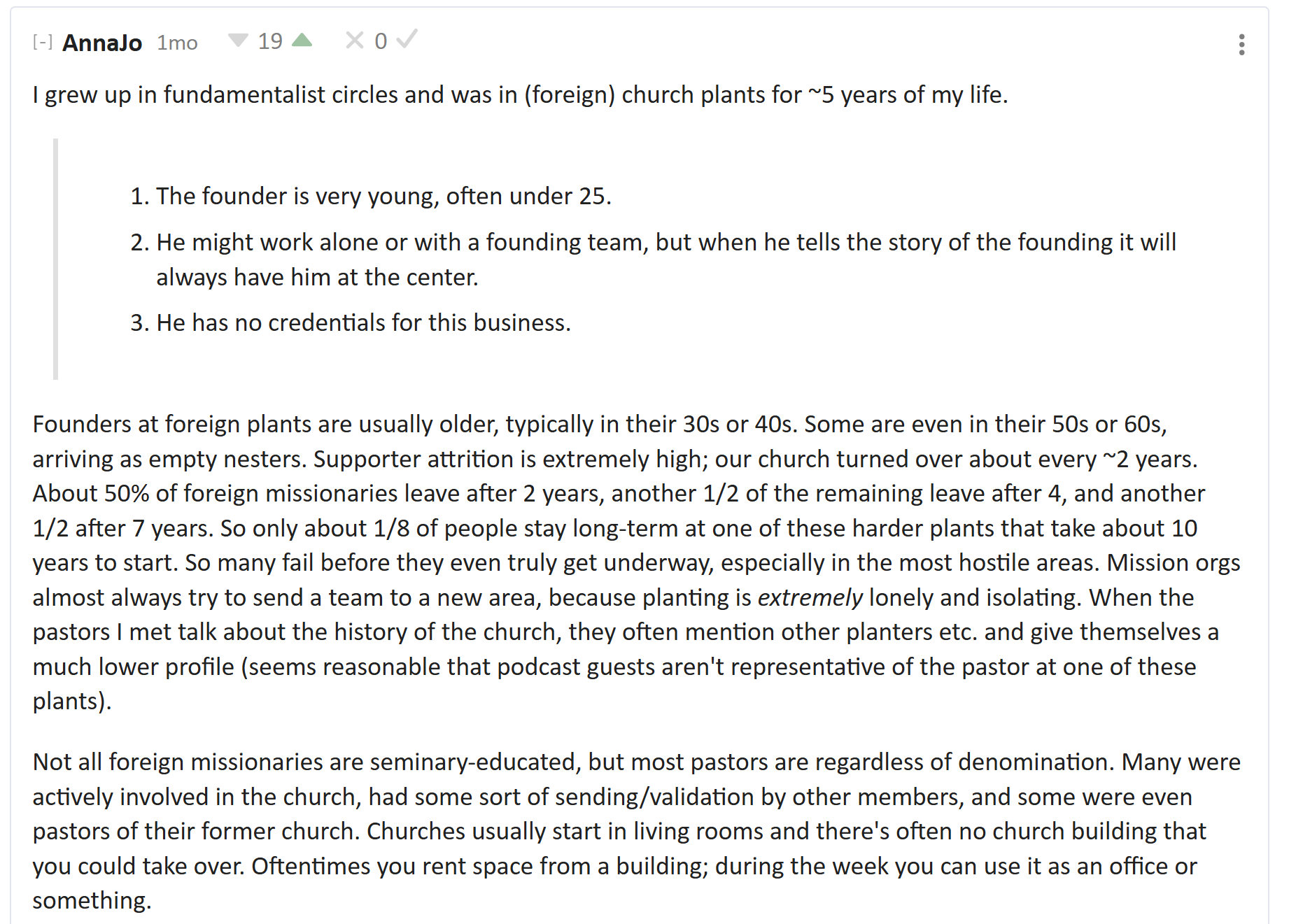
AnnaJo gives an info dump about foreign plants:
Conclusion
When I talked to people about the church planting post, they always wanted to know what got me interested in church planting. The short answer is that I listened to the excellent Rise and Fall of Mars Hill Church podcast, which presents a case study of the harms and benefits of a church plant in order to ask what systems made this possible. But the longer answer is that I spend a lot of time around scared, neurotic people, and it was soothing to listen to voices who were so sure that they were doing what they should be doing and everything would ultimately work out. Even if I disagreed with them on the facts that make them so confident, it was a nice vibe to visit.
My current frame on the spousal sequel is “what a specific job, what can its specificities teach us about work in general?”. But I didn’t see the conclusion to the original post coming at all, so I want to leave room to be surprised. I’m sure being a pastor’s wife is work, but is job even the right frame? If you have information on this I would love to talk to you. You can reach me at elizabeth@acesounderglass.com, and I’m happy to answer questions about myself or the project before you decide.
Thanks
Thanks to everyone who read the post and especially those who wrote such edifying comments.
Thanks to the CoFoundation fellowship for their financial support of my work.
Thanks to Progress Studies Blog Building Initiative for beta readers and editing support.

