The Biochemical Beauty of Retatrutide: How GLP-1s Actually Work

On some level, calories in calories out has to be true. But these variables are not independent. Bodies respond to exercise by getting hungry and to calorie deficit by getting tired. Even absent that, bodies know how much food they want, and if you don’t give it to them they will tell you at increasing volume until you give in (not all bodies, of course, but quiet stomachs aren’t the target market for GLP-1s). A new breed of drugs, GLP-1 agonists, offer a way out of the latter trap by telling your body you’ve eaten, even when you haven’t, but leave many people fatigued. The newest GLP-1, retatrutide, may escape that trap too, with a mechanism so beautiful I almost don’t believe it. 

How Jelly Beans Become Fat

Unfortunately in order to understand the beauty of retatrutide, you’re going to have to learn the basics of energy metabolism in the body. I’m sorry.

You have probably heard of mitochondria, the power house of the cell. What that means is mitochondria takes in sugar, protein, or (components of) fat and turns them into ATP, which is then used to power chemical reactions in your cells. This is the equivalent of a power plant that uses nuclear, coal, and hydro to power small batteries and mail them to your house. 

Sugar is a desirable fuel because it can produce ATP very quickly, and if push comes to shove, can do so without oxygen. Your body works to maintain a particular concentration of sugar in your bloodstream, so your cells can take in more when they need it. This is especially important for your brain, which runs mostly on sugar.

Fat is your body’s long-term energy storage. If you eat fat and don’t immediately burn it, it will be directly added to adipose (fat) cells. Dietary sugar you don’t use will be converted into fat and stored in the same cells. This is beneficial because fat is very space-efficient, but the process of converting sugar to fat is calorie-inefficient: you lose 10-25% of the energy in sugar in the conversion to fat (this means that how many calories you get from a jelly bean will depend on whether you burn the sugar immediately or store it as fat and burn it later)

Under the right circumstances (weasel worded because I’ve yet to find a satisfactory explanation of when this happens), fat will break down into fatty acids, which circulate like sugar until a cell draws them in to create ATP.  Breakdown of fatty acids can also produce ketone bodies, which are what powers your brain during fasts. Breaking down fat to produce ATP takes minutes.

So sugar works fast, but takes up a lot of storage space, is prone to undesirable reactions with nearby proteins, and is osmotically unstable*. Fat is space efficient and non-reactive but breaks down slowly, and frequent conversion is costly. Glycogen is somewhere in the middle- it’s a store of energy that breaks down into sugar faster than fat can produce fatty acids, but is more stable than raw sugar. If you’ve ever eaten a carb heavy meal and seen the scale go up way more than could be accounted for by calorie count, that’s the glycogen. Each gram of sugar is stored with 3-4 grams of water, so it can cause major swings in weight without touching fat cells. 

There are glycogen stores in your muscles for their personal use during intense activity. There’s also a large chunk in your liver, which is used to regulate blood sugar across your entire body. If your blood sugar is low, your liver will break down glycogen into glucose and release it into the blood, where whatever organ that needs it can grab it. If you’re familiar with “the wall” in endurance exercise: that’s your body running out of glycogen. Your second wind is fat being released in sufficient quantities. In general your body would rather use glycogen than fat, because glycogen loses almost no energy in the conversion from and to sugar and fat loses a lot. 

The Power Plant Managers

Managing these stores of energy is a complicated web of hormones. 

When your blood sugar is high, the hormone insulin is released to trigger certain cells, including muscle and fat cells, to take said sugar from the blood and use it. Type 1 diabetics don’t produce enough insulin. Type 2 diabetics produce insulin but their cells respond to it more weakly (known as insulin resistance). 

When your blood sugar is low, the hormone glucagon triggers your liver to break down glycogen to release sugar, raising your blood sugar, suppressing insulin, and giving you more energy. It more weakly triggers the breakdown of fat. release. Glucagon also triggers the release of the hormone cortisol.

Cortisol gets a bad name as the stress hormone, but the only thing worse than stress with high cortisol is stress with low cortisol. If you stumble along a tiger in the jungle, you want cortisol. It also increases blood sugar and energy levels (to provide energy to escape the tiger). Energy for running sounds good for weight loss but empirically cortisol promotes fat storage and muscle breakdown, and increases insulin resistance. This may be why raising glucagon alone does not cause weight loss. 

Glucagon-like peptide 1, or GLP-1 is one of the hormones that tells your brain “I’m eating food”. It is triggered by the presence of calories in the gut, bile in the stomach, or even the knowledge that you’re about to eat. It suppresses appetite and glucagon (preventing the breakdown of glycogen), increases insulin (and thus sugar uptake into cells), and slows down the movement of food through your intestines. 

The hormone glucose-dependent insulinotropic polypeptide (abbreviated GIP for historical reasons) is also triggered by calories in the gut. It encourages insulin sensitivity (meaning a given molecule of insulin will cause a cell to uptake more sugar) and fat storage. 

I used the phrase “hormone X does Y” a lot, but it’s kind of misleading. Hormones are more or less arbitrary molecules, their shape doesn’t mean anything, just like the word “toast” doesn’t inherently mean “bread exposed to high, dry heat” or “raise a glass to”. Hormones’ meaning comes from the receptors they activate.  Hormone receptors are molecules that straddle the membranes of cells. 

The “outside” end of a receptor waits to be activated by a hormone molecule. When it does, the “inside” end of the receptor does… something. That something can depend on the activating molecule, the cell type, conditions inside the cell, phase of the moon…

[adapted from]

Hormones are often described as a “lock and key” model. The problem is that locks and keys are precision instruments.

[adapted from]

….whereas hormones and receptors are blobs. Some blobs don’t fit together at all, some fit as well as a key in a lock (strong affinity), and some fit together like puzzle pieces that don’t quite interlock, but are close enough  (weak affinity). Receptors are much less specific than locks, and don’t have a 1:1 relationship with hormones even when they are named after one. E.g. GLP-1 Receptor (GLP1R) has strong affinity for GLP1 but also weak affinity for glucagon, because their blob shapes are close enough to each other. 

[glucagon (red) and glucagon receptor (blue)] [adapted from]

I bring this up because some drugs referred to as GLP-1s hit more than one receptor, and this is important for understanding GLP-1s. 

How do GLP-1 Medications Work?

So GLP-1 the peptide hormone works by activating receptors that tell your brain you’ve eaten and don’t need more food. How do GLP-1s, the class of medication, work?

Semaglutide (aka Ozempic and Wegovy) activates only GLP1Receptor. We’ve covered why that helps, but often comes at the cost of fatigue.

Tirzepatide (Zepbound) activates GLP1R and GIPR, and no one is sure why the latter helps but it seems to.

Retatrutide (no retail name) activates GLP1R, GIPR, and glucagon receptor. The glucagon receptors encourage the breakdown of glycogen and fat, which your body will use as energy. You might hope this would cause weight loss on its own, but in practice it doesn’t. Even if it did, permanently elevated glucagon would raise blood sugar to undesirable levels for undesirable periods of time. But GLP-1 is great at managing blood sugar. If only there was a way to keep it from making you tired… 

So glucagon’s and GLP-1’s positive effects (burn more energy/eat less food) are synergistic, but their negative effects (elevated blood sugar/fatigue) cancel out. It’s elegant at a level rarely seen in biochemistry.

Just taking these hormones won’t help much, because all three have a half-life of less than 10 minutes. You’d need to be on a 24/7 IV infusion for them to maintain levels long enough to be useful. 

This is where big pharma pulls its weight. All three medications feature minor edits to the chemical structure of the hormone that don’t affect its work as a key but do slow your body’s ability to digest it (which they can get away with because key fit is fuzzy, not precise). Tirzepatide and retatrutide are further modified to fit the extra receptor(s) they target. This is easier because all three of GLP-1, glucagon, and GIP are peptide hormones, meaning they’re made up of amino acids, and it’s easy to substitute one amino acid for another (well, easy compared to modifying other kinds of hormones).

Then chemists attach that altered peptide hormone molecule to a chain of fatty acids. The acids are slowly picked off over days: when the last one is removed the remaining molecule briefly fits into its locks/receptors, before being digested (but not as quickly as if it were the unmodified hormone). Because this removal happens at a slow, predictable pace, it spaces out the availability of the molecule, getting you the same effect as an IV drip with a lower dosage each day. And thus fat is the instrument of its own undoing. 

The Side Effects 

Reminder that I am some lady who reads stuff on the internet and writes it down and the fact that I couldn’t find a better version of this should make everyone involved feel bad. That said.

The common side effects of all three GLP-1s are digestive distress and injection site reactions. The former makes sense- GLP-1s screw with your digestion, so you’d expect the side effects to show up there. The latter might be a combination of the volume and pH level of the injection.

Fatigue is another common side effect (it’s reported at only 7%, compared to 3% for placebo, but anecdotally seems worse). It’s unclear if this stems directly from the medication or the body’s normal protective reaction to a calorie deficit. There’s no data yet, but retatrutide’s 3rd mechanism of action (imitating glucagon) may counteract fatigue or even give people more energy (trip report from one such lucky person).

There’s no data on this either, but if GLP-1s cause fatigue due to calorie deficit, I wonder what they do to the immune system, which is among the first of your systems to suffer from energetic budget cuts. 

People who lose weight often lose muscle as well as fat. This might happen at slightly higher rates for people losing weight through GLP-1s, or they might just be selected for not exercising much. Weight lifting and protein consumption help (note that this may require planning to fit into your new, lower calorie budget).

In rodent studies, semaglutide and tirzepatide were both found to increase the rate of thyroid tumors. There’s no data on retatrutide yet but no reason to expect it to be different. It’s even less clear than usual if this rat finding will transfer to humans, because the rodents have several factors making them much more susceptible to thyroid cancer. If you have a family history of thyroid cancer or something called MEN2, GLP-1s probably aren’t for you. 

Another concern is drug interactions. GLP-1s will obviously interact with other drugs that affect blood sugar, so be cautious around that. So far as we know they don’t affect the production of liver enzymes that digest medications, which precludes a major source of drug interactions. However they will lead medication to sit in your gut longer, which might increase their effective dose. And any drug that’s highly sensitive to body weight, like warfarin or lithium, will need monitoring as you lose weight. 

Conclusion

I don’t like the idea of everyone being on a compound to mitigate a problem that modernity caused, forever, any more than anyone else does. But I’m unexpectedly impressed with the elegance of this solution (in a way I’m not for antidepressants, which have great empirical results but give us only the vaguest idea of how they work). It’s not clear this should make me feel better, but it does. 

*Osmotically unstable means that there’s a semi-permiable barrier and for some reason water will cross the barrier more in one direction that the other. In this case, the inside and outside of the cell “want” to have the same percentage sugar, but if a cell is stuffed full of sugar that will attract too much water and the cell will burst. If the cell has less sugar than the environment, it will leak and potentially dehydrate to death; this is one reason bacteria struggle to live on honey.
Inositol Non-Results

Three months ago I suggested people consider inositol for treating combined vague mood issues and vague stomach issues. I knew a few people who’d really benefited from it, and when one talked about it on his popular Twitter account several more people popped up thanking him for the suggestion, because it fixed their lives too. But those reports didn’t come with a denominator, which made it hard to estimate the success rate; I was hoping mentioning it on my blog and doing a formal follow-up to capture the non-responders would give a more accurate number.

Unfortunately, I didn’t get enough people to do anything useful. I received 7 responses, of which 3 didn’t have digestive issues and thus weren’t really the target. The low response rate might be a consequence of giving the wrong link in the original follow-up post, or maybe it just wasn’t that interesting. I’m reporting the results anyway out of a sense of civic virtue. 

Of those 4 remaining responses:

  • 2 rated it exactly 5 out of 10 (neutral)
  • 1 rated it as 6, which was not strong enough for them to try it a third time.
  • 1 rated it as 3- not bad enough that they spontaneously noticed a problem, but they did detailed mood tracking and the linear regression was clearly bad. 

That response rate isn’t really low enough to prove anything except that anything with a real effect can hurt you, and the value of detailed data. So for now we just have David’s estimate that 5% of people he inspired to take inositol benefited from it. 

Luck based medicine: angry eldritch sugar gods edition

Introduction

Epistemic status: everything is stupid. I’m pretty sure I’m directionally right but this post is in large part correcting previous statements of mine, and there’s no reason to believe this is the last correction. Even if I am right, metabolism is highly individual and who knows how much of this applies to anyone else.

This is going to get really in the weeds, so let me give you some highlights

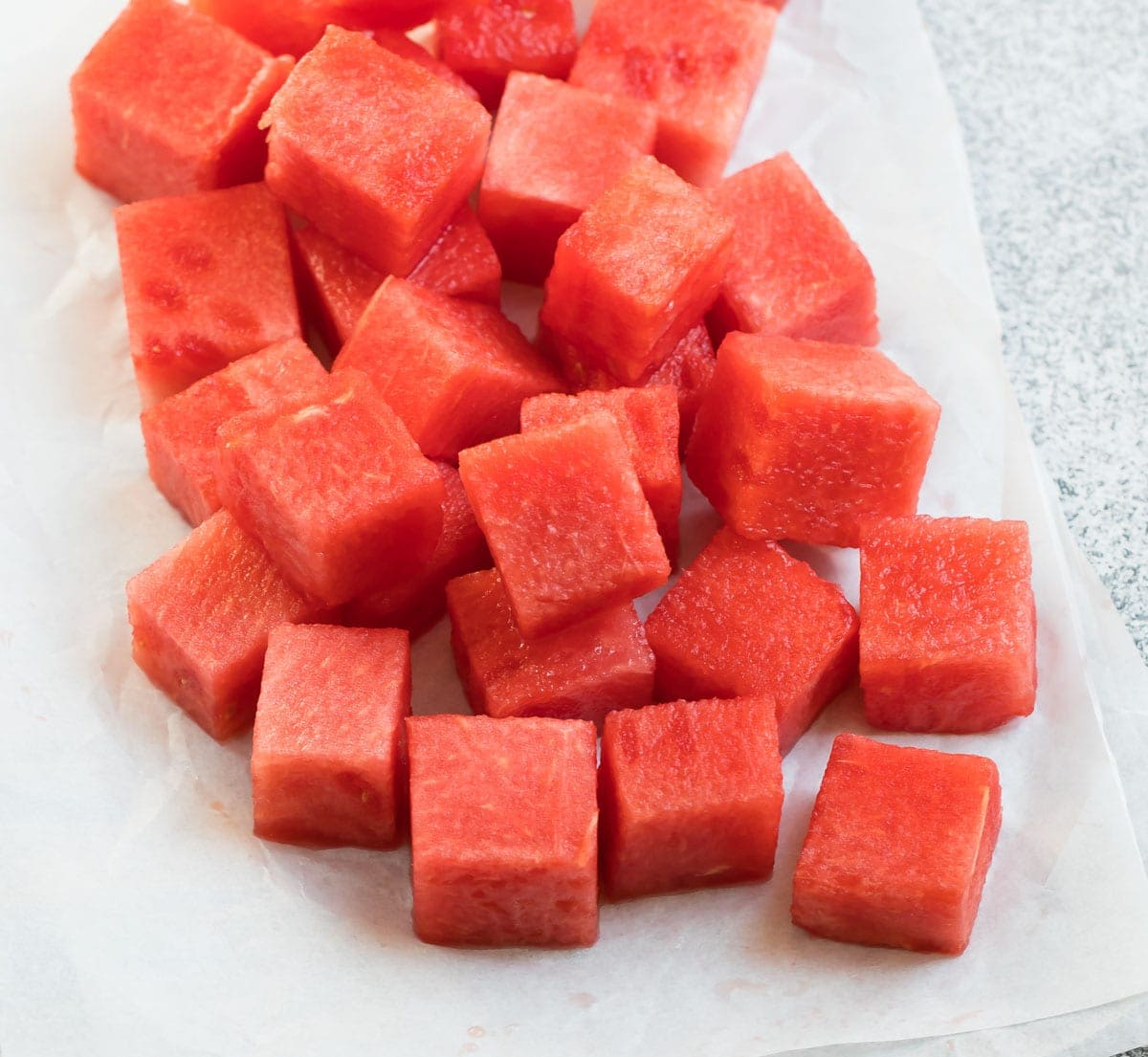
  • 1-2 pounds of watermelon/day kills my desire for processed desserts, but it takes several weeks to kick in.
    • It is probably a microbiome thing. I have no idea if this works for other people. If you test it let me know.
    • I still eating a fair amount of sugar, including processed sugar in savory food. The effect is only obvious and total with desserts. 
  • This leads to weight loss, although maybe that also requires potatoes? Or the potatoes are a red herring, it just takes a while to kick in? 
  • Boswellia is probably necessary for this to work in me, but that’s probably correcting an uncommon underlying defect so this is unlikely to apply widely. 
  • Stevia-sweetened soda creates desire for sugar in me, even though it doesn’t affect my blood sugar. This overrides the watermelon effect, even when I’m careful to only drink the soda with food.
  • My protein shakes + bars also have zero-calorie sweeteners and the watermelon effect survives them. Unclear if it’s about the kind of sweetener, amount, or something else.
  • Covid also makes me crave sugar and this definitely has a physiological basis.
  • Metabolism is a terrifying eldritch god we can barely hope to appease, much less understand. 

Why do I believe these things? *Deep breath* this is going to take a while. I’ve separated sections by conclusion for comprehensibility, but the discovery was messy and interconnected and I couldn’t abstract that out. 

Boswellia

Last October I told my story of luck based medicine, in which a single pill, taken almost at random, radically fixed lifelong digestion issues. Now’s as good a time as any to give an update on that. 

The two biggest effects last year were doubling my protein consumption, and cratering sugar consumption. I’m still confident Boswelia is necessary for protein digestion, because if I go off it food slowly starts to feel gross and I become unable to digest protein. I’m confident this isn’t a placebo because I didn’t know Boswelia was the cause at the time, so going off it shouldn’t have triggered a change. 

As I’ll discuss in a later section, Boswelia is not sufficient to cause a decrease in sugar consumption; that primarily comes from consuming heroic amounts of watermelon. The Boswellia might be necessary to enable that much watermelon consumption, by increasing my ability to digest fiber. I haven’t had to go off Boswellia since I figured out how it helps me, so I haven’t tested its interaction with watermelon. 

How does Boswellia affect micronutrient digestion? I have always scored poorly on micronutrient tests. I had a baseline test from June 2022 (shortly after starting Boswellia + watermelon), and saw a huge improvement in October testing (my previous tests are alas too old to be accessible). Unfortunately this did not hold up – my March and June 2023 tests were almost as bad as June 2022. My leading hypotheses are “the tests suck” and “the November tests are the only ones taken after a really long no-processed-dessert period, and sugar is the sin chemical after all”. I hate both of these options. 

If we use fuzzier standards like energy level, illness, and injury healing, I’m obviously doing much better. Causality is always hard when tracking effects that accumulate over a year. In that time there’s been at least one other major intervention that contributed to energy levels and mood, and who knows what minor stuff happened without me noticing. But I’d be shocked if improved nutrition wasn’t a major contributor to this. 

Illness-wise; I caught covid for the second time in late November 2022, and it was a shorter illness with easier recovery  than in April (before any of these interventions started). But that could be explained by higher antibody levels alone. I haven’t gotten sick since then (9 months), which would have been an amazing run for me pre-2022.

My protein consumption (previously 30-40g/day) spiked after I started Boswellia in May 2022 (~100g/day) and then slowly came down. Before November covid I was at ~70g/day. My explanation at the time was that my body had some repairs it had been putting off until the protein was available, and once those were done it didn’t need so much. It spiked again after November covid and only partially came down, I’m still averaging ~100g/day. I’m not sure if I still need that for some reason, or if I’m just craving more calories and satisfying that partially with protein. 

Watermelon

The cure to all my dieting woes?

In spring 2022 I started eating 1-2 pounds of watermelon per day. This wasn’t a goal-oriented diet or anything, I just really like watermelon and finally realized the only limitations were in my mind. I started eating watermelon when it came into season, before I got covid in April 2022, but didn’t start the serious habit until the later half of my very long covid case. As previously discussed, that May my doctor prescribed me Boswellia in part to aid covid recovery, and a bunch of good things followed (including a disinterest in processed sugar), all of which I attributed to the Boswelia. 

The loss of interest in sugar was profound. It wasn’t just that I gained the ability to resist temptation; I mostly didn’t enjoy sugar when I had it. I went from a bad stress eating habit to just… not thinking of sugar as an option when stressed. 

My interpretation at the time was “sugar cravings were a pica for real nutrition, as soon as I could digest enough food they naturally went away, fuck you doctors”. It never occured to me the watermelon might be involved because in my mind it was categorized as “indulgence” not “intervention”.  Even if it had occured to me to test it, I know now the effect takes at least six weeks to kick in, and I wouldn’t have waited that long. Lucky for science, reality was going to force my hand. 

Around October I started wanting sugar again, although not as much as before. I put this down to stress, but that never really made sense: August saw me break my wrist and have a very stressful interpersonal issue without any return in cravings. Then in November I got covid again, and it again created intense sugar cravings, which improved some but never really went away. I thought maybe covid had permanently broken my metabolism. I played with the Boswellia dosing for a while but it didn’t seem to make a difference. Plus my protein digestion stayed the same the whole time, so it seemed unlikely Boswellia had just stopped working. 

In February 2023 I talked about this with David MacIver of Overthinking Everything, and noticed that the sugar cravings had returned a few weeks after watermelon had gone out of season. I created a graph from my food diary, and it became really obvious watermelon was the culprit.

The effect is even stronger than it looks, because watermelon has sucrose in it. Over summer my sucrose intake is 90% from fruit; over winter it’s dominated by junk. 

I figured this out in February 2023. Because I live in a port city in a miracle world, that was late enough in the season to get mediocre watermelon. It took a while to work, but that was true the first time as well (somewhere between 6 weeks and 12, depending on how you count covid time). And you can indeed see where this started on the graph. But five months later it is still replicating the previous year’s success. Sugar cravings were weaker but still present, and certainly came back when I was stressed. The weight loss was slow and stuttering where it had previously been easy.  That brings me to my next point.

Stevia-sweetened Soda

In January 2023 my doctor gave me a continuous glucose monitor to play around with. The thought process here was…exploratory.  Boswellia is known to lower blood sugar, and helped with (I thought) sugar cravings and many other issues. Covid causes sugar cravings in me, is known to hurt diabetics more, and causes lots of other problems, so maybe that points to blood sugar issues in me? Also I was kind of hoping the immediate feedback would nudge me to eat less sugar.

One of the foods I was most excited to test was 0-calorie soda. I’d always avoided diet soda on the belief that no-calorie sweeteners spiked your insulin and this led to sugar cravings that left you worse off. But when I tried stevia-sweeted Zevia with the GCM my blood glucose levels didn’t move at all, and I didn’t feel any additional drive to eat sugar (compared to my then-high baseline desire – remember this was while I was off watermelon and dessert was amazing). 

I was extremely excited about this discovery. I’d given up cola about 18 months before and missed it dearly. Now I had chemical and mathematical proof that no-cal soda was fine. When I had the cola again it made me so happy I was amazed I’d ever managed to give it up before. I began a 2-3 cans/day caffeine-free Zevia cola habit. 

This would have been 4-6 weeks before I restarted on watermelon. When the watermelon failed to repeat its miracle I suspected Zevia fairly quickly, but I really, really didn’t want it to be true so I tested some other things first. Finally I had ruled out too many other things, and had a particularly clarifying experience of sudden, strong cravings with nothing else to blame.  I gave up Zevia, and immediately lost all desire for sugar. In retrospect the low-sugar-desire days of the previous months were probably not random, but days I happened to not drink Zevia. 

Unfortunately this doesn’t obviously show up on the fructose vs sucrose graph and I don’t care enough to export the data and do real statistics. It also doesn’t show up cleanly on my weight graph, because weight is noisy and the effect operates at a substantial delay. But I’ve given it 7 weeks, and I’m definitely losing weight. The current streak is faster than anything I had last year, although it’s too soon to say if that will hold up. . . 

Zevia is sweeted with stevia, which seems like it should make stevia an enemy. But my protein shake is also sweetened with stevia (plus something else), and I had at least a bottle/day during the weight loss last year (this is one excuse I gave for testing other potential culprits before Zevia). Maybe the issue is the amount in Zevia, maybe drinking stevia with a lot of protein is better than separately, even when it’s with a meal. Maybe Mercury was in retrograde I give up. 

Potatoes and Weight Loss

The no-sugar effect had kicked in in earnest by late May 2022 (I didn’t start a food diary until late June that year, but confirmed the May date by looking at my grocery orders). In July 2022 I went on minimum viable potato diet, in which I ate a handful of baby potatoes every day and demanded nothing else of myself. Within a few days my caloric intake dropped dramatically, and I started to lose weight. This continued late fall, when watermelon went out of season. 

The post-potato weight loss was weird, and seemed much too large to be produced by a handful of potatoes. But it was such a strong effect that started so quickly after potatoes that it seemed impossible to be a coincidence. 

I mentioned before that the watermelon works on a delay. So maybe I just happened to start eating potatoes the day the watermelon effect kicked in (I don’t have exact timing for this – the first run is complicated by covid and the second by stevia soda and work stress). Maybe I need watermelon and potatoes for some stupid reason. Maybe that 100g of produce was a tipping point, but 100g of anything would have worked. Or maybe that’s just when the summer heat kicked in, since I’ve always eaten less when it was hot out. Maybe it’s not a coincidence the current weight loss kicked in shortly after finishing a stressful, air conditioned gig… 

Questions

What is happening with sugar?

The stevia effect appears to be same-day, often kicking in within a few hours and wearing off by the next day, so I assume that’s a metabolic issue. But not one reflected in blood sugar, according to the CGM. Unless the effect kicks in slowly (while also stopping the day I stop drinking it). 

The no-sugar effect watermelon takes 4-8 weeks to kick in, and another 4+ to cause weight loss. But between those milestones… I don’t want to brag, but it’s relevant so I think I have to. ~10 weeks after 1-2lbs of watermelon/day my feces become amazing. So amazing they look fake, like they were crafted for an ad for a fiber pill. Enormous without being at all painful because of their perfect consistency. Other bowel movements resent mine for setting unrealistic beauty standards, but they can’t help it, that’s just how they naturally look. 

Between the delay and the gold-ribbon poops, I’m pretty sure the watermelon effect works through microbiome changes. Maybe fiber, maybe feeding different bacteria, maybe changing the metabolism of the existing bacteria?

Are you one of those idiots who thinks processed sugar is different than natural sugar?

I regret that I have to answer this with “maybe”.  Processed is not well defined here, but it sure seems like a Calorie from watermelon hits me differently than a Calorie from marshmallows; even if they fuel the same amount of metabolism. My guesses for what actually matters are fiber, fructose vs sucrose, water content, and “fuck if I know”. If anyone tries a sugar water + fiber pills diet, please do let me know. 

I try to be careful to say I haven’t given up processed sugar, just processed desserts. Lots of savory dishes have a fair amount of sugar (not just carbs) in them. My guess is that if easy, sugar-free prepared food was available I wouldn’t miss the sugar, but in the real world it is too much work to cut it out and I seem to be doing okay as-is 

Does it have to be watermelon?

If I’m right about the fructose, fiber, and/or water, no, but I haven’t tested it. Watermelon does have a pretty favorable mix of those (grapes have way more sugar per gram), but its primary virtue is that it is obviously the best fruit and I’d struggle to eat that much of anything else on purpose, much less do so accidentally for months straight. In fact I did try to replace watermelon that winter, but couldn’t find anything I’d eat that much of.  

However someone on twitter pointed out that watermelon is unusually high in citrulline (which is used to produce arginine, which is metabolically important). There’s no way I could detect this trend against my overall increase in protein uptake, so I can’t do more than pass this on. If California fails to deliver truly year round watermelon my plan is carrots + citruilline pills, so maybe we’ll find out then.  

Why does Boswellia help protein digestion?

I don’t know. Digestion isn’t even included on the list of common effects of Boswellia. All any doctor will tell me is “something something inflammation”, as if I haven’t taken dozens of things with equally strong claims to reducing inflammation.

Last year a reader connected me with a friend who had some very interesting ideas about mast cell issues, and I swear I’m going to look into those any day now… 

Conclusion

Everything is stupid, nothing makes sense. If hadn’t lucked into a situation where I was using Boswellia, eating stupid amounts of watermelon, and consuming no Zevia I might never have found out this no-sugar-desire state and would be at least 30 pounds heavier. 

PS

If you find yourself thinking “this is great, I’m so sad Elizabeth only publishes a few extremely long posts per year about metabolism that prove nothing”, I have good news! The Experimental Fat Loss substack features multiple posts per month in exactly that genre. It mostly follows the author’s fairly rigorous dietary experiments, but lately he’s been taking case studies from other people as well. 

Luck-based medicine: My resentful story of becoming a medical miracle

You know those health books with “miracle cure” in the subtitle? The ones that always start with a preface about a particular patient who was completely hopeless until they tried the supplement/meditation technique/healing crystal that the book is based on? These people always start broken and miserable, unable to work or enjoy life, perhaps even suicidal from the sheer hopelessness of getting their body to stop betraying them. They’ve spent decades trying everything and nothing has worked until their friend makes them see the book’s author, who prescribes the same thing they always prescribe, and the patient immediately stands up and starts dancing because their problem is entirely fixed (more conservative books will say it took two sessions). You know how those are completely unbelievable, because anything that worked that well would go mainstream, so basically the book is starting you off with a shit test to make sure you don’t challenge its bullshit later?

Well 5 months ago I became one of those miraculous stories, except worse, because my doctor didn’t even do it on purpose. This finalized some already fermenting changes in how I view medical interventions and research. Namely: sometimes knowledge doesn’t work and then you have to optimize for luck.

I assure you I’m at least as unhappy about this as you are. 

Preface to the Preface

I’ve had nonspecific digestive issues since before I have memories. In pre-school my family joked that I would die as a caveman because there were so few things I would eat, and they were mostly grains. This caused a bunch of subclinical malnutrition issues that took a lot of time to manage and never got completely better. And while I couldn’t articulate this until it went away, food felt gross all the time

It’s hard to convey just how bad this was for me, because it feels like it undermines everything I did to work around it. I’ve always been functional but decidedly less healthy than my friends. I got sick more often and it hit me harder. I was slower to heal from injuries and scrapes and that limited my interest in the more athletic sort of hobbies.  I couldn’t work the same hours, and working hours traded off really sharply against energetic hobbies. I had to spend a lot of time managing food where other people can just show up and eat, which was a constant source of social stress. My genetics say I was destined to have anxiety issues, but the low level malnutrition and justified feelings of food insecurity despite apparent abundance did not help anything.

Eventually in my late 20s. I saw a nutrition-focused psychiatrist who listened to my observations (I could only eat protein with soda), immediately formed a hypothesis (I produced insufficient stomach acid), asked questions to rule it out (which I no longer remember), suggested a test (take stomach acid pills and see if they gave me heartburn), and when it came back positive (no heartburn) suggested a course of action (keep taking stomach acid pills) that showed immediate benefits in practice (indigestion removed, but only when I took the pills). My protein and produce intake increased enormously, and I felt overall much better. 

This is exactly how I want medicine to work. I gathered good data and took it to an expert who immediately formed a model, definitively tested it, and prescribed a course of action that made mechanistic sense.  If you forget that it took almost 30 years and I took those exact same symptoms to other doctors beforehand, it’s a stunning success. 

But it was not a total success. My protein intake maxed out at 50 grams/day, and that was if I made consuming protein a hobby and nothing went wrong. I was doing much better than I had been, but my nutrient tests showed I still had a lot of issues. Eventually the stomach acid pills stopped working, although that seems to be “my stomach started producing more acid and a different problem became the bottleneck”  rather than the pills ceasing to contain acid. But the problem was not solved, and more of the existing treatment did not help.

Standard Preface

I worked with a number of doctors on fixing the remaining digestive, for ~another decade. I had a lot of conversations like the following:

Me (over 20 pages of medical history and 30 minutes of conversation): I can’t digest protein or fiber, when I try it feels like something died inside me. 

Them: Oh that’s no good, you need to eat so much protein and vitamins

Me: Yes! Exactly!. That’s why I made an appointment with you, an expensive doctor I had to drive very far to get to. I’m so excited you see the problem and for the solution you’re definitely about to propose.

Them: What if you took a slab of protein and chewed it and swallowed it. But like a lot of that.

Me: Then I’d feel like something died inside me, and would still fail to absorb the nutrients which is the actual thing we want me to get from food.

Them: I can’t help you if you’re not willing to help yourself.

Or sometimes…

Me (over 20 pages of medical history and 30 minutes of conversation): I can’t digest protein or fiber, when I try it feels like something died inside me. If I make it my top priority I can get maybe 50 grams of protein a day.

Them: Oh that’s no good, you need 70 minimum, and really more like 100. Also because I’m a naturopath I’m morally obligated to tell you to give up eggs, dairy, and wheat.

Me: That’s gonna be hard seeing as those three are 90% of my protein intake and by far the easiest forms of protein to digest.
Them: What if you ate pea protein?

Me: Well that’s harder so…worse.

Them: What about hemp?

Me: That is even harder than pea protein.

Them: If you’re not going to try why are you even here?

These exchanges were incredibly draining for me, so I didn’t have them that often. Every year or two I’d get my hopes up for a new doctor, pay a shitton of money (these doctors are never covered by insurance) for several emotionally draining appointments, and then get told they couldn’t help me and this was a failure on my part.

After several years of that pattern I gave up and went back to my old PCP. She hadn’t solved the problem either, but she had solved other problems, had ideas to try for this one, and believed it was a physical rather than moral problem. Unfortunately she is very busy, and sometimes pawns me off on her assistant doctors, who are idiots. That second conversation was with one of those, although in the real conversation I was less witty, and was more like “*sob* no *sob* I told you *sob* I CAN’T”. 

I refused to see that doctor again, but this left me little leverage when they assigned me a different sub-doctor to handle a post-covid rash back in April. You know how naturopaths complain about western medicine being mechanical and reactive and not taking the time to reach a systemic understanding? Well this guy, who we will call Dr. Spray-n-pray, was determined to fight for equality by taking the same approach with unregulated supplements. He guessed I had an allergic reaction and threw 5 different antihistamines of varying legitimacy at me, with no mention of testing the hypothesis, monitoring my progress, expected changes, duration of treatment… 

And it worked.

Not on the rash; I eventually had to go to urgent care for that. But shortly after I started the pills, I found myself eating 50 grams of protein in a sitting and then going back for more the next meal. I also started chowing down on produce, and at some point realized I couldn’t remember the last time I’d had dessert. I had known I had some aversion issues with food but didn’t realize how gross I found it until the feeling went away and I could just eat without feeling contaminated. About here is when I started a food diary and found I was regularly hiting 100g of protein/day. When I crashed my scooter I ate 350 grams of protein over two days, suggesting I could do that any time I wanted but chose not to, suggesting my body was getting all the protein it felt it needed, all of the time.

I’m not sure I can convey what a big deal this is either. I would have paid several years’ salary for this cure without thinking. It is now possible for me to feel okay at an emotional level it wasn’t before. Plus, you know, I can actually get the nutrients I need to run my body and stuff.  My injuries after that scooter accident healed noticeably faster than past injuries. The fact that I haven’t caught an illness since April’s covid isn’t conclusive, since it’s summer and I haven’t done anything high risk, but it is interesting. 

[I do have covid antibody results from the December (8 months after my vaccine) and August (4 months after catching covid)  and my levels have gone way up, but that’s more likely due to the more recent and stronger immune stimulus.]

But that evidence came later. Back in May the timing of the miracle suggested that one of Dr. Spray-n-pray’s pills was responsible. This was more or less confirmed when I weaned off the various pills and the subtle grossness around food started to return. I could also feel growing sugar cravings. So it was important to figure out what the miracle pill was and get back on it immediately.

[If any of you are thinking “well it could have been a coincidence”: no it fucking couldn’t. I did not carry this around for 35 years and try everything to fix it only to have it suddenly go into remission for no reason. I’ll believe covid fixed it before I believe that.]

I had always assumed the reason doctors turned on me was that it was easier than accepting that they couldn’t solve my problem. But this one had fixed my problem! Not on purpose or anything, but I was fully prepared to pretend it was. Now we just had to figure out what had worked and why, in case it suggested any additional actions. I made a spreadsheet tracking the changes as best I could – when my diet changed (using grocery order data), when I’d started and stopped which pills. Surely my data plus his doctor ego would help us get to the bottom of this.

At the time of my follow-up appointment I had a strong guess which supplement had helped based on timing, but it didn’t make any sense. The active ingredient was Boswelia (specifically BosPro brand (affiliate link). I’m afraid to try another in case it breaks the spell). Boswelia is sometimes described by alt medicine websites as helping digestive issues, but in the same way they describe every supplement as helping digestive issues. “Helps anxiety, allergies, autoimmune disorders, inflammation, and digestion” should just be a stamp. This isn’t even necessarily illegitimate – the body is complicated and lots of things are entangled, especially with inflammation.

But I’ve tried a lot of these supplements at one point or another and there was absolutely no reason to predict this one would be different, even if I had researched it ahead of time. Examine.com is pretty positive on Boswelia but doesn’t list digestion as an issue it solves. Everything is connected to everything else in the body and it was still pretty hard for me to make a causal chain between Boswelia’s alleged mechanisms and improvements in my digestion. So I was extremely excited for Dr. Spray-n-pray to explain why it had worked.

All this was on my mind when I finally got to ask Dr. Spray-n-pray why his treatment had worked. He mumbled something about inflammation and moved on. He had zero interest in my spreadsheet or a more mechanistic understanding of what had changed. I confirmed the miracle was from BosPro when I resumed taking it and the digestive improvements returned (including the creeping feeling of grossness going away). It’s now 5 months since I started taking it and it still works but I have no idea why.

This is not how I want medicine to work, at all. A medic who clearly was not trying for a systemic understanding recommended a lot of stuff and one of them happened to fix a problem as unrelated as could be that I’d spent a decade+ searching for without success? Even knowing definitively that it works we have no idea why, and what would help or hinder it? And there’s ~0 evidence this would help other people with the same condition?

This is bullshit. But bullshit is working where logic feared to tread.

Other Evidence

This experience isn’t what got me on the path of luck-based medicine though. I was already at that point when the supplements were prescribed, which is why I took them instead of doing 5 hours of research and ignoring Dr. Spray-n-pray’s suggestions as the ravings of an idiot. There were a lot of contributors to my shift, but a few stand out.

A few years ago I ran a series of epistemic spot checks on various self-help books, and found that how helpful they were had no correlation with how rigorous or true their theoretical backing was.

Then last year I ran that ketone ester study. I and a handful of people I know get insane gains from using ketone esters – better than Ritalin with none of the side effects – but when I ran an RCT (n=8-12 depending on how you count) no one reported any benefits. 

Or take Slime Mold Time Mold’s all-potatoes-all-the-time diet study (which happened after I started on the magic pills, but is too good an example to pass up). I have an extremely long list of complaints about their hypothesis and follow up study:

  • They failed to contextualize it as a monodiet and discuss the classic monodiet problems.
  • Potatoes aren’t nutritionally complete and don’t have enough protein for people to thrive. They gestured at some of the nutritional deficiencies but I think not hard enough, and believe potatoes have more protein than reported but have not pointed to any evidence to that effect.
  • They tracked weight loss over 28 days but will not be doing a follow-up for six months. Since the default after rapid weight loss caused by an unsustainable diet is immediate regain, this is unconscionable.
  • I haven’t had time to dig into the object-level facts in the argument between SMTM and a persistent critic, but with my monkey social brain it sure does look like SMTM is blowing off well-founded criticism (given in a super aggressive manner).
  • They treat weight loss as an unalloyed good no matter how fast or what the person’s starting weight was.
    • I have not looked into the popular “weight loss not safe above 2 pounds per week” claim and it wouldn’t shock me if it were made up, but if I had an intervention with double that impact I’d spend an hour investigating the claim.
    • Weight loss beyond a certain body fat percentage is bad. You need that stuff.
  • They did warn people about solanine poisoning but I think they should be more concerned about it.
  • Analysis featured a lot of stories along the lines of “Did X on Wednesday and lost 2 pounds on Thursday” and fat loss does not work like that. Two pounds overnight is either water weight or has a lookback period longer than 24 hours.
    • I’m deeply confused about that second part, I don’t understand why or how weight-loss-that-is-definitely-not-changes-in-water-retention comes in chunks. If you have an answer I’m quite curious.

That’s a lot of epistemic sins. OTOH, their potato diet results inspired me to try the minimal potato diet, which consists of eating some potatoes every day (I started with ~100g of baby potatoes), and I’ve lost 15 pounds in 3 months. That level of weight loss with zero sacrifices buys you a lot of epistemic forgiveness, especially when my miraculous dramatic dietary improvements did fuck all to the number on the scale.

[ People already writing their “potatoes can’t possibly be the cause it must be psychosomatic” comments in their head: I see you. Your hypothesis is perfectly reasonable; in your position it would be my first reaction too. But in this particular case you’re going to need to explain why potatoes caused that magic mental shift when giving up soda, a dramatic improvement in diet and removal of dessert entirely, complete emotional reorientation to food, a mild prescription stimulant, and varying levels of exercise did nothing, and ketone esters worked better than all of those but much worse than potatoes. Comments not attempting this will be deleted or mocked as I see fit.]

If you are thinking “ah, but clearly those all did contribute and the potatoes were just the last step”: I agree that’s likely. If I’d started minimal potato diet before BosPro it either wouldn’t have worked or would have been extremely bad for me. But since it seems to work for at least some other people who didn’t have all this baggage I think we need to update in that direction.]

Or take every person who got a second opinion on their cancer and was recommended diametrically opposing treatment plans. Doctors as a class are not as epistemically virtuous as I’d like, but that’s not (always) why they propose wildly divergent treatment plans. In most cases it’s because the answer isn’t obvious, or at best has only been obvious for a few years.

And then there’s the absolute shitshow that is nutrition research. No one knows what the average optimum nutrient level is and even if we did it wouldn’t be that helpful for figuring out the optimum level for a given individual, because humans are so unbelievably variable.

I could go on here, but if you’re reading my blog you’re probably already on board with shit being extremely complicated and I don’t want to belabor the point.

Moral of the story: when intellect fails, try luck guided by intuition

Some medicine is very deterministic. Antibiotics, most of the time. That daylong IV drip when I had norovirus that probably turned the infection from deadly to a kind of annoying 36 hours. We may not know the optimum level of a given nutrient but most severe deficiency diseases can be solved by giving you the thing you’re severely deficient in. My impression is statins work pretty reliably.

But a lot of medicine just seems to be kind of random. People go through 10 antidepressants and then somehow the 11th one works great. Ketone esters increase my energy level so much I gave up soda and caffeine entirely but do nothing for most people. All those books where the cure was a miracle for someone, and it can’t just be a placebo because there’s no reason for the 35th placebo to be the one that works but nothing else makes sense.

All of which leads me to conclude that once you have exhausted the reliable part of medicine without solving your problem, looking for a mechanistic understanding or even empirical validation of potential solutions is a waste of time. The best use of energy is to try shit until you get lucky.

Not at random or anything. My guess is the world contains metis and you do better-than-chance preferentially trying things that helped one guy on a message board for your condition (even though it was shown to make no difference in real studies) or going to alt-modality practitioners (even the one with proactively stupid justifications they insist on sharing). The latter is especially true if you can find a practitioner that accepts that their treatments don’t always work and have a system to notice that and change course, but I think maybe even the really gung-ho ones sometimes have good ideas (you just have to set up your own system for deciding when to quit). Just don’t get hung up on “do we understand why this works?” or “does this work for other people?”

Also please remember that side effects and drug interactions are a thing. Anything with a real effect can hurt you. I gave a very caveated suggestion of BosPro to someone on Twitter and it caused something akin to niacin flush in them. This is the same brand that does nothing to me but makes me better at digestion and uninterested in sugar.

So I guess the full and accurate statement of my beliefs is “Try solving problems with understanding first, but accept when you’ve hit diminishing returns and consider if your energy isn’t better spent increasing your surface area to luck”.

Parting shots

Fuck you every doctor who told me my digestive problems were in my head or my fault for being a bad patient and you couldn’t help me until I solved the problem that drove me to you. You were factually incorrect and you should feel terrible.

For potential clients in particular

People sometimes approach me for medical literature reviews aimed at their specific problem. There are forms of these I will do, but those forms do not include producing a mechanistic model and high-probability treatment for someone’s persistent, sub-clinical, amorphous problem that medicine has failed to solve. There are a few reasons accepting these commisions would be wasting the clients’ money, and one of them is that by the time they come to me they have found all the low hanging deterministic fruit. The best I can do is spend a ton of time generating lists of things that might work. Sometimes I do offer that, but people tend to prefer my other offer of a referral to a researcher that’s better at individualized treatment.

Bone Broth

Bone broth is having its moment- paleo likes it, nut jobs who believe vaccines cause autism like it*, whoever the hell these people are like it, my nutritionist is a big fan.  The idea seems obvious- bones are full of nutrients that hard to get, especially in the typical American diet, surely drinking bones would be good.  Especially for calcium.  Everyone knows bones have calcium.

I got suspicious when I noticed that the nutritional label on my broth** reported 0% of my RDA of calcium.  I checked a few more brands, the top contender lists 2% calcium RDA and 4% iron/6 grams of protein.  Most list 0.  nutritiondata.self.com gives considerably better numbers, but no source.  Their listing contains a good deal more fat (9g, as opposed to 0 in any of the commercial broth I’ve found) and a non-zero amount of carbs.  None of the micronutrients they listed (vitamin C, a few Bs, iron, calcium, manganese) are fat soluble, but maybe there is something to preparing it at home.

Some of the websites touting bone broth list other substances that aren’t on nutritional labels but they believe are important.  I am well disposed to believe this claim.  There is no reason to believe science knows all the micronutrients we need, much less a USDA oriented towards the well being of farmers, not consumers.  The specifically mention glycosaminoglycans, a class protein/sugar hybrid found in joints.  This seems utterly plausible, but I was unable to find any numbers of this. At all.

I found one scientific paper on bone broth.  It is in Korean***.  It has some English but not enough for me to actually determine the micronutrient:protein ratio.  Beyond that you have studies about the components of bone broth and the assumption that it will be absorbed in this form.  For example this paper on collagen and rheumatoid arthritis (PDF).  Given it has 60 people and RA is a cyclic disease, their results are actually pretty good, but that still leaves it open to any number of manipulations.  The second best paper is a press relief on an informal study of chicken soup.

That leaves protein.  Everyone agrees bone broth has serious protein, but unfortunately not the most important kind.  Protein is made up of amino acids, of which there are two kinds: non-essential (which your body can manufacture) and essential (which you must take in via diet).  The RDA for protein is 0.8 g/kg body weight, of which 0.1 g should be of the essential amino acids (there are per-acid requirements but I’m not tracking 9 individual requirements), so 20% is putting  you ahead of the game, except that broth is missing two EAAs entirely.  After 20  hours of cooking (see korean) paper, 25% of the amino acids are glycine.  For comparison:

  • The pumpkin-based protein powder in front of me is 20% essential amino acids (and has way more iron than broth)
  • Whey protein is 60% EAAs.
  • Soy is 34%

I have trouble digesting protein and find bone broth stunningly easy to digest, so this is still a win for me, but it’s a slam dunk.

While traveling I’m using bone broth powder, which I’m increasingly convinced is a fancy way of saying “bone-based protein powder”.  I’m okay with bone based protein powder, although I might not have packed the pumpkin if I’d realized this.

Do you know what else is basically a protein powder?  Cricket flour.  They taste similar, cricket has a better amino acid profile (25% essential) and more trace nutrients (although I’m still tracking down how many more).  It is also cheaper, which should make !broth feel bad.

I find it more plausible than the average miracle food that bone broth has effects beyond what you’d expect from a naive read of the nutrition facts, because I expect animal bone + meat to fulfill a broader range of requirements than some berry.   I do feel better when I drink it, but a lifetime of digestive and chewing problems has given me a tendency to develop food security blankets, and broth is currently filling that role.   Simply by being a security blanket that is not jelly beans or peanut butter cups****, broth is a health food for me, personally, but I can’t really extrapolate beyond that. The current press around it appears to be almost entirely groundless.

Once again, the state of nutritional knowledge is embarrassingly bad and I would like us to shift money towards increasing it.  Also why the hell can’t I test the  nutritional content of broth I make myself?


*To their credit, they have an explanation that doesn’t rely on mercury, which has been extremely thoroughly disproven.  If they had presented it as a fringe thing they needed to prove, I would have entertained their hypothesis.  They presented it as fact, without any attempt to distances themselves from the atrocious denialism of the mercury-based anti-vaxxers.

**I buy it frozen on the theory that my time and not having my house continually smell of meat was worth the extra money.

***I don’t think this would be hard to determine if you read Korean, volunteers would be welcome.

****Trader Joe’s brand- I’m not an animal.

ETA: I only just learned that bone broth means “bones + connective tissue”.  Clean bones give you hardly any protein, even if there’s marrow in them.  Apparently I don’t need to pay $10/bag for store made stuff, I can use $8 worth of chicken feet and liver and eat for a week.

Food Choices at EA Global

[EAGlobal was a wonderful experience that I haven’t written much about because my brain was too stuffed full of wonderfulness to produce anything useful.  I dislike that the first thing I’m writing about it is a controversy/complaint]

There’s a utilitarian thought experiment: would you rather have one person tortured for their entire life, or a googolplex of people experience a single dust mote in their eye?  I always viewed it as too theoretical to be anything but an ideological purity test, but I think I’m seeing a version of it in action right now, in the debate around serving animal products at EA Global.

You have a small number of animal rights activists saying “this is torturing and consuming a sentient being and that’s morally abhorent”, and a much larger number of omnivores going “but seriously, they’re delicious”.  The ARAs don’t understand why aesthetic preferences are overriding morality (and either don’t believe that animal products are ever medically necessary or don’t believe that outweighs the cost to the animal), and the omnivores don’t see why such a small group is getting to override their preferences because of a principle they don’t believe in.

I think the moral weight of the ARA’s concerns may actually be working against them here.  I don’t think many people would object if the organizers said “the local cuisine is vegan and shipping in meat is just too expensive, bring some in your luggage if you must.”  But the fact that the morality arguments exist and tend to resonate with people even if they don’t agree makes people defensive, and then aggressive.  Allowing the organizers to drop meat for morality reasons is an implicit endorsement of the idea that meat is indeed immoral, which has unpleasant implications for omnivore’s moral standing the rest of the week.  By the Copenhagen interpretation of ethics, better to deny that there is a problem than participate in an incomplete solution.

My original position, based mostly on the fact that I am simultaneously really bothered by and completely immune to ARA’s disgust-based arguments, was that EA Global had made the right call: vegan or at least vegetarian options in the main line, a small amount of meat hidden off to the side.  But now that I think the insistence on meat is strongly Copenhagen-driven, I’ve changed my mind.  Admitting unpleasant things about ourselves and making incremental progress is supposed to be one of our things.

[By that same token I think ARA’s should be a little happier about how much meat consumption was reduced that weekend, even if it didn’t go to zero.  But then, I’m an incrementalist]

At the same time, some people need animal products.  The definition of need is tricky here- my doctor has told me to eat small amounts of meat, but going three days without any will be fine, but in practice what was served at EA Global was too hard on my stomach and I wouldn’t have been able to eat enough calories from that alone.  Some people are on paleo and even if that wasn’t the healthiest choice, a sudden drop off in meat will be physically hard on them.  Some people have a lot of things they can’t eat such that meat is the easiest way to get them a nutritionally complete meal- especially when you have a lot of different people with a lot of different exclusions.  But even if meat were served, it’s impossible to fulfill 600 people’s dietary requirements with a reasonable amount of effort and money. The best solution may have been to announce the menu ahead of time so people could plan, and then let the chips fall where they may.

But I think we can do one better.  My new favorite solution is to offer both meat and whatever vegans nominate as the best fake meat and offer both without a way to distinguish between the two at the time.  Omnivores would be given one at random with a code that they could later use to register 1.  how much they liked what they were served and 2.  whether they think it was real meat or not.  If they really don’t like what they got they could go to a back room somewhere with their code and ask for the other one (still not telling them which they got).  The same back room could serve people who medically need meat and people who want the definitively vegan option.

This gives people who want but don’t need meat (and are able to eat !meat) a way to get it, and vegans a way to advance the cause of veganism, possibly further than they would get by banning it (by showing people how good !meat tastes).  In most circles neither side would find this adequate, but Experimenting and Using Data are What Effective Altruists  Do, and I think that could convince/pressure enough people (on both sides) into it that it would be worth trying.

Motion Sickness

The typical explanation for motion sickness is that your inner ear and your eyes disagree about whether or not you are moving, your body interprets it as food poisoning, and prepares to throw up.  This does not quite make sense to me, because it fails to explain any of the following:

  1. Why being a passenger is so much worse than being the driver.
  2. Why playing video games (eyes say movement, ears say stationary), reading in a bus (eyes say stationary, ears say moving) and riding a roller coaster (eyes and ears both say moving very fast)  produce the same feeling.
  3. Why smooth rides (subways, no-turbulence airplanes) are so much easier than busses, or why highways are easier than stop and go traffic.
  4. Apparently other people consider nausea a stomach issue, but for me it’s very much a head issue.  Motion sickness also gives me headaches.  What’s up with that?  Why is it so tightly correlated with sinus pressure?
  5. Why does low blood sugar feel so much like motion sickness?
  6. I’ve never experienced this, but television assures me heavy drinking produces the same effect.  Why?
  7.  Why does motion sickness give me temperature fluctuations.

I’ve heard a partial explanation for #3, which is that your inner ear actually senses acceleration, not movement, so a steady velocity doesn’t feel like movement.  And we have a very compelling proximal explanation for #6: the difference in density between water and alcohol stimulates your inner ear both as you get drunk and as you sober up.  So obviously the inner ear is very involved in this, but how?

Alternate hypothesis: motion sickness is designed to keep you from eating, because your body is not in a good state to digest. One way that can happen is if your sympathetic nervous system (responsible for fight-or-flight-or-stand-there-being-really-anxious) has kicked in, because it redirects blood flow and energy to things that are immediately useful in escaping from tigers (muscles, senses) and away from things that solve future you problems like digestion and the immune system (which are regulated by the parasympathetic nervous system).

Both the sympathetic and parasympathetic systems are regulated by the hypothalamus.  For fun I googled “hypothalamus motion sickness” and the first result was this rat based study,* which put rats in a “animal centrifuge” to induce motion sickness. I couldn’t find video of a rat centrifuge, but NASA helpfully provided video of a dog centrifuge.  It looks not quite as bad as a tilt a whirl, although the rats were exposed to double gravity so I should probably cut them some slack.

During their amusement park adventures, the rats experienced a spike in histamine production in the hypothalamus (how cool is it that we can continuously measure that?), and caused the rats to display characteristic motion sick rat behavior.  Inhibiting histamine production or removing the inner ear (the part that detects motion) caused both of these to disappear.  Histamines also help regulate body temperature, so that’s #7.  This suggests that anti-histamines would be useful at fighting motion sickness.  The good news is that this is correct, the bad news is that they make you sleepy and possibly give you Alzheimer’s.   That’s fine for any one time but I don’t want to make a lifestyle out of taking them.

A website my laptop unfortunately ate the link to has a subtly different explanation:  your brain tracks motor movement via an efference copy, creates a prediction of what sensory changes that should create, and they compares that to the actual sensory input.  Motion sickness might be your brain saying “these are too different, abort, abort”, or buckling from the intensity of calculation needed to reconcile the input.

I have always wondered why I/people hold my (our) breath during times of stress.  Unless you’re being hunted by a xenomorph right that second, oxygen deprivation is not helpful.

An artist's rendering of when holding your breath is useful
An artist’s rendering of when holding your breath might be useful

The most convincing hypothesis I’ve found is that your brain can only do so many calculations per second, compensating for breathing takes calculation, so you stop breathing.  That this rapidly starves your brain of oxygen, lowering the number of calculations you can do, is exactly the kind of long term thinking I expect from the human body which, lest we forget, takes in air and food through the same hole.  If both breath-holding and nausea can be caused calculation overload, we would expect the same things to cause them both. I can think of two things that do exactly this off the top of my head- sparring (but not drills) in martial arts, and playing Katamari, both of which involve complex spatial reasoning.  These are not great examples because there’s a lot of confounding variables, like extreme physical exertion while being hit in the stomach.

To summarize my speculation:  sensory input requiring too high a rate of calculation points you towards your sympathetic nervous system, which makes you nauseous so you won’t eat while you’re not capable of digesting.

This suggests that anything that kicks you towards the parasympathetic system should reduce motion sickness.  Unfortunately the parasympathetic and sympathetic systems run on the same neurotransmitters, so looking at the relevant drugs does not provide useful information.

This also suggests that anything that lowers the number of calculations you need to do will be helpful.  BCMC tested a heads up display that showed users their head position relative to the horizon.

Studies found it overwhelmingly helpful, although I haven’t dug into that paper in detail yet.  Unfortunately there’s no way to purchase the technology, so I’m left hoping someone picks up the patent.

In conclusion: we don’t really know what causes motion sickness and that there’s no known really good treatmen.  I am going to experiment with consciously tracking my head position relative to horizon and with rhythm games (which help integrate sensory data).

*The second result appears to be the exact same experiment, done 10 years earlier, with the exact same result.  It’s nice to see something reproducible.

Autism as Developmental Injury

Left untreated, people with phenylketonuria (PKU) can develop intellectual disabilities, seizures, and “other medical problems”.  But PKU does not cause any of those.  Phenylketonuria + a normal diet causes a build of of phenylalinine in the body, which causes those problems.  If PKU is caught at birth and the sufferer is kept on a phenylanlinine-light diet, they will never develop these problems.

Henry Markram suggests that something analogous is going on with autism.  He and his collaborators think that the actual problem is that autistic babies have extraordinary sensory sensitivity, and this sensitivity causes defenses that cause them to miss certain critical information during developmental periods.  What is challenging but achievable (the zone necessary for learning) for other people is overwhelming for them, so they don’t learn.  The developmental window closes and they’ve lost their chance to truly master that skill.  But if they were given stimulus in their zone of achievable challenge, they would learn those skills and maintain them for life.  They might continue to need accommodations, the way phenylketonurics need to stay on a phenylalinine-light diet their whole life, but with those accommodations they could function “normally”.  This is known as the intense world hypothesis.

The example they give is the critical period for learning language.  You *can* learn a new language after the critical period, but it will never be as easy, most people will never attain genuine fluency, and if you never learn any language it may be truly impossible to pick one up later.  If normal human speech is overwhelming to an autistic infant they will miss that period and their language will be impaired for life.  But if they’re given regular access to speech they are comfortable with (probably quieter and slower) they could learn it just fine, the same way hearing impaired children do fine with sign language.

I was also really impressed with the writing of this lay-press article.  I’ve been avoiding doing take downs, especially of popsci articles, because there are millions of wrong things every day and criticizing them is easy.  For a while I could justify them as case studies in critical reading, but now it just feels bad.  This had led to a lot of aborted blog entries, as I read something amazing and then realize it’s too flawed to pass on uncritically.   I don’t agree with everything the article says (insisting there’s only one cause of autism strikes me less as brave and more as idiotic), but it lays out its case in an informative and responsible manner.

Review: Surprisingly Vegan Waffle Mix

Before I was tested for food sensitivity my diet was incredibly reliant on eggs, dairy, and wheat, so you can imagine my dismay when I tested sensitive to all three things and was told to give them up.*  When I did so, I decided to shift to eating foods that naturally didn’t contain any of those things, rather than search out substitutes for my old staples.  My theory was that vegetables can be really awesome at tasting like vegetables, and meat can be… well at the time eating any meat was a huge struggle, but it was one I eventually expected to pay commensurate dividends.  But the vegan milks just remind me of how much better actual milk is, and the thing that makes gluten-containing food delicious is gluten.  Plus the imitation food tends to be incredibly processed in order to more closely approximate their originals.  If I was going to put a ton of work into learning to cook and enjoy different foods, I might as well pick the healthier of the two.

But everyone needs easy carbs some times, and more than one thai restaurant in my neighborhood now recognizes me on sight, so I needed some new options.  John served this vegan, gluten free waffle mix (referral link: Charity Science) at an EA event and I have to say: it’s pretty good.  Not good enough you’d choose it over regular waffles for taste alone, but pretty good.  The ingredient list is short and full of actual foods.

I seriously doubt this will apply to anyone else, but it’s interesting in light of my recent deep dive into appetite hormones.  When I eat waffles + syrup and nothing else, there is an obvious disconnect between different parts of my brain as to how full I am.  Each bite of waffle is ridiculously rewarding (indicating high ghrelin?), and yet I never seem to feel satiated, even as my stomach reports it is uncomfortably full.  I solved this problem by putting chia seeds in my syrup and interspersing waffles with swigs of protein powder (also mixed with chia seeds).  This seemed to get me the good parts of waffles while ensuring I also eventually stopped eating them.

One warning: they are not kidding about the cooking time for this mix.  It takes much, much longer than you are used to.  It is theoretically possible to turn this into pancake mix by watering it down, but I could never manage to give them enough time to fully cook.  Putting them in the waffle iron and walking away was easier.  The good news is they’re not as temperamental as regular waffles either, a few extra minutes doesn’t ruin them.  But do give them that extra time, or you will be eating batter.

*Many professionals believe that the test is purely a measure of what you’ve eaten, and that the immune reaction does not present a problem.  My personal experience is that I do much better when I avoid these foods.

r/fatlogic endorses creationism

Normally when I’m investigating something I like to read well regarded books on both sides, in the hopes that the ignorance will cancel out.  Finding a suitable counterpoint to Health At Every Size is hard, because its opposition is “everyone in the world”, and there has been no selective pressure to elevate the actual science away from the shame and aesthetic preferences.

For example, I spent a little bit of time on r/fatlogic which, as decisions go, was not my best ever.   r/fatlogic frames itself as a criticism of horrible “fat logic”- things like “700 pounds is no less healthy than 200 pounds.  Possibly healthier.”  This is not a great start.  I have a deep personal understanding of how frustrating it is when people are wrong, but I have found I am happier and a better person when I say “yup, wrong”, and then move on with my day.  For the truly awful I might e-mail a friend making fun of it (thanks, Rachel!).  Forming a whole club around criticizing people, especially people that are already having a pretty tough time in life, is bad for everyone.

r/fatlogic is even worse than that, because it has an extraordinary case of the cowpox of doubt.  Wrong people keep insisting body fat is independent of calories consumed and exercise?  Well then body fat must be solely dependent on calories consumed and exercise, and anyone who suggests it is affected by anything else is a fatty fat fathead making excuses for their fat.  They are literally denying  the possibility of individual variability in the translation of external environment into physical state.  For bonus points, they invoke “but thermodynamics”, which is the same argument creationists use against evolution itself.

Here I tried several ways to explain exactly how wrong they were and how that was terrible, but then I decided to take my own advice and stop before I endorsed the hollow Earth theory.  My current contender for an opposition book is Good Calories, Bad Calories, but I’m open to suggestions.