Activism Field Trip

One of my ongoing concerns about Effective Altruism is that it doesn’t handle activism or political change well, because the marginal value of any given activity is essentially zero.  You can do some relative effectiveness- Martin Luther King Jr apparently scouted out towns most likely to react violently to his nonviolent protests, in order to get more sympathetic publicity- but it’s no where near the certainty of Against Malaria Foundation’s cost per life saved (which itself has a huge confidence interval).  And yet, political activism is essential as a tool for improving the human condition.

Recently I participated in a FreePress.net-organized visit to one of my senators, to convince them to more vocally support net neutrality, and specifically Title II classifying cable utilities as common carriers.  This is a thing that seems important as long as cable has a stranglehold on broadband in the US, and my impression was that all I had to be helpful was live in the senator’s state (check) and show up.  That is within my power, and now was a relatively easy time to do it (still on leave for dental surgery but at a relative high in my ability to talk).  I think on some level I expected it to be a more fleshy version of phone calls for the EFF, where they do all the dialing and give you a script to read, and your job is just to demonstrate to powerful people how many unpowerful people are willing to spend their time annoying them over a specific issue.

The plusses: I was shocked by how diverse the delegation was.  I was expecting a bunch of 20-35 year old tech nerds, but the age range was probably 30-75, with me as the only programmer, and a wide range of political orientations.  Several of the people were longtime activists.  At the end of the visit the senator had agreed to do what we wanted.

The minuses:  the visit could have been much better organized.  There was a real disconnect between what FreePress said our senator’s position was, and what the senator’s aid said their position was.  We didn’t so much convince the senator to change positions as ask for something they were already doing.  Maybe FreePress didn’t bother to investigate, maybe the senator’s aid was weaselwording.  There was no one who knew and no one had the authority to shift our collective gears.

This was the first time in a while I’d experienced the gap between talking with EAs and talking with politically and socially active non-EAs.  The groups have different skills.  None of the people who took point could have persuaded anyone I know out to pour water out of a boot if the instructions were written on the bottom*, but they did organize rallies of 1000+ people, which I have never done and have never heard of being done in the history of effective altruism.  We’re more a blogging type of people.  And the dailykos reporter is better than me at that, in the sense of “many more people read him”.  This is bothersome when he is complaining about rising rents and construction in the same paragraph, but useful when shining light on police misconduct.

So EA is still my home, and probably will be for a while, even if I’m drawn to areas that don’t have any officially blessed EA charities, like mental health and first world education.  I would like us to have more thought diversity than we do, but really enjoy not having to explain why you can’t complain about rent and construction at the same time, or at a bare minimum knowing that if I do have to explain it I’ll have social support.

*”But what if there is a faster or less energy-intensive way to empty the boot?”

Animal Rights Deep Dive Pre-Check

I haven’t written a ton about animal rights/animal suffering because any position I have is guaranteed to get me yelled at by two sides, possibly more.  I will only write things like that when I am absolutely certain of my grasp of the facts and the rigor of my thought process.  That does not describe me and animal rights at all.  My opinions on balancing animal rights with human needs/desires can best be described as “intuitions attempting to balance to several different gut feelings.”  But that is hopefully about to change.  John Salvatier, some other people, and I are going to dig in to Animal Charity Evaluators’s research on the best way to alleviate animal suffering.  This doesn’t actually require me to investigate my beliefs about the health impact of eating animal products, but I probably will anyway.   In the spirit of science and accountability, I’m going to share my starting beliefs (like I did with HAES), so you can see if research changed them.

A note on comments: this is a pretty scary thing to write, because I’ve seen so many personal attacks in animal rights threads in many different Effective Altruism forums.  If you have a pointer to information I would benefit from, please send it along, I would really appreciate it.  If you think my beliefs are immoral, please hold off commenting until the Post-Check, which will contain only opinions I am willing to defend.  If you believe that there are no trade offs or your trade off is the only moral trade off, please go share this opinion with people who agree with you.

Okay, that said, here is my existing knowledge: I watched Earthling and Farm to Fridge with my EA group.  John has already read a few studies and passed links and comments on to me, I skimmed some of the studies he linked to while I was tired.  I have read a few EA facebook threads on animal rights that had minimal informational content, relative to the emotional vitriol.  Without further adieu, here are my current opinions:

Animal death for the purpose of food is okay, animal suffering is not.

Everyone dies eventually.  A good life and a clean death is more than animals get in the wild.  Ecosystems without predators are very unhealthy for the remaining prey animals.  So while unnecessary suffering bothers me a great deal, death seems not to.  This is pretty close to my attitude with humans; I’m frequently angry at how the medical system focuses on postponing death rather than improving health/quality of life.

Modern factory farming produces unacceptable levels of suffering

Even if everything I saw in Farm To Fridge was outliers, the implied bell curve is unacceptable.

Animal death or suffering for the purpose of clothing is not okay

I didn’t so much reason this out as found myself in a shoe store trying to talk myself into leather being okay, and realized it would be much easier to just not buy leather.  I am not entirely convinced I will stick to this if I find something amazing that can only be had in leather, but I am definitely willing to put a great deal of energy into finding vegan alternatives.  This leads me to believe…

My position that animal death for the purpose of food is morally okay is dependent on my belief that eating animals is essential to human health

This is a weird position for me because I didn’t eat meat until I was 28, because I couldn’t digest it, which 4 year old me translated to “it’s gross”.  I was the least bothered of anyone when we watched Earthling and Farm to Fridge, and I believe that’s in part because for everyone else they were learning something horrible about something they enjoyed.  My thought process was more along the lines of “Of course meat is disgusting, but you have to grit through it for your health.  Gastric acid pills will solve a lot of this problem.”  My forebrain knows HCl does not actually have anything to do with pigs eating necrotic flesh off of other pigs, but the hindbrain worked so hard to overcome it’s visceral disgust that the new reason to find meat disgusting just bounced off.

I’m not claiming people will literally die without meat.  I do think that the healthiest diets involve small amounts of meat, and any deviation from that platonic diet is a blow to your health.  If you are otherwise healthy and health has thresholds, that blow may not make a perceptible different in your life.  If you are me, it does.  To the extent healthy vegan diets are possible, they will generally be some combination of less delicious, more expensive, or more work than the omnivore alternative.

This doesn’t mean meat is some sort of magic salve.  My gut feeling is that a even really bad vegan diet is probably better for you than a really bad American-style meat-based diet, although this will depend somewhat on genetics.

Not all meats have equal moral density

I have almost-but-not-quite given up pig (which was the first meat I was able to stomach, because bacon) because pigs are smarter and I think that makes them more capable of suffering.  Meanwhile crickets barely rank above plants (and may end up being more humane, depending on how many bugs and rodents die to produce those plants).  All this is strictly from a suffering perspective: if you want to consider environmental impact things get even more complicated.

I prefer Mercy for Animals’s approach (lessening the amount of suffering in meat production) to The Humane League’s approach (convincing people to go veg*n)

Some of this is because I was coming at it from the framing of meat-offsets (donating to a charity to balance out meat consumption).  Originally I framed it as “paying someone not to do something you just did is stupid”, like I do with carbon offsets.  It also galls me that what you’re paying for is not making it easier for someone to veg*n, via cooking classes or covering the difference in cost, you’re paying to convince them that veg*nism is a good idea.  Being inspired to convince people to do something by doing the exact opposite feels incredibly broken and toxic to me, but I could never articulate it more than that.

As I’m writing this I see that this is actually tied in with my justification that meat (or at least animal products) are necessary for health.  “This is necessary for my health so I’ll pay someone else to sabotage their health” is sick and immoral.  “This is necessary for my health but I’m going to work to make others suffer for it as little as possible” seems much more reasonable.

I do think that convincing people to eat much less animal protein is a good idea, and I’d support efforts to change norms around meat and lessen the cost/effort/taste differential between vegan and meat meals.

Also leafletting is dumb

Seriously, I just don’t see it helping.  They say leafletting but according to John they actually mean canvassing with leaflets.  My understanding from PIRG is that the vast majority of money raised by canvassers goes to paying the salaries of the canvassers.*  Humane League isn’t trying to raise money, but “convincing people to do a lot of work to avoid something they see as a staple” seems like a strictly harder pitch than “give me $10 and I will go away.”

But if it’s going to work anywhere, it will be at colleges

College students are much more open to new ideas, and cafeterias lessen or even eliminate the work to avoid meat.

But I don’t think we’ll ever know the absolute effectiveness because it’s really hard to measure

Unless they’re actually following people (without telling them) and charting what they eat, how could they possibly know?  And spying on people is expensive and possibly illegal.

Wait, I just thought of a way to measure it.  College students (especially freshman, who are often segregated from other students) eat at college cafeterias.  You could total measure consumption of meat vs. vegan items and see if it changes after leafletting.

*Whether or not particular canvassers are paid or are volunteers is mostly irrelevant, because their time still has value.

Why I donated to the EFF this year

I applied for a patent this year.  While I sincerely believe my invention is patentable under the current definition applied by the US Patent Office, I also believe the US Patent Office’s current definition is bullshit, and is stifling innovation by giving exclusive rights to obvious ideas and creating a culture of fear that hurts start ups more than big companies.

The incremental effect of my patent in reinforcing this bullshit system is very small.  Even if you internalized all the negative externalities, I believe the cost is trivial next to the benefits of applying (shiny resume line and a $5,000 bonus).  But no single snowflake believes it’s to blame for the avalanche, and I was really not comfortable justifying material gain because everyone else was doing it.  My compromise was to donate half the bonus to the Electronic Frontier Foundation, which fights for a variety of pro-individual and pro-start-up positions, including patent reform.  There’s no way my patent did $2500 worth of damage to society, so everyone comes out ahead except the patent trolls.

One friend asked if I thought patent reform was truly the most important cause in the entire world, and if not, why not donate to the more important one?  I have a few explanations, but I must acknowledge I made the decision first and then looked for why I made it.  The easy answer is that the world is complicated, and when the developing world catches up with us, I want what they catch up with to be not just materially comfortable, but… well honestly I want some sort of Star Trek utopia where all material needs are sated and people do things for sheer love of learning.  But failing that, I at least want a world where individuals can invent things that improve the world.  I don’t want us getting stuck at any particular rung on the ladder.

The other reason is that donating to the EFF isn’t supposed to be penance or an indulgence, it’s supposed to undo a specific harm I did.  I am deeply uncomfortable with justifying unethical behavior by helping some greater good.  For one, humans are bad at math, so it’s easy to see that doing net harm.  But even if all the trades are strictly advantageous it complicates the system, which ultimately makes it harder to get my Star Trek utopia.  Sometimes that complication is necessary and moral, but if you are in a situation where that is necessary you should probably find someone else to do it.  My talents lie in simplifying.

Why I donated to the ACLU and Planned Parenthood

Neither is a neglected cause.  I mean, I wish they had more money, but in the scope of finite resources to billions of worthy causes, they’re relatively unneglected.  Certainly they have non-EA movements supporting them.  Which is why I didn’t give them much money.  But they both also politically tenuous, and benefit from donations not just with what they buy, but with evidence of a supporter they can brandish threateningly to politicians.  That’s a pretty cheap way for me to influence policy.

Donations in 2014

I have been trying to figure out how much money I want to donate, and where I want to donate to.  As I described before, my past habit has been maximizing employer matching plus a bit.  That no longer felt sufficient to me, but as I upped the number I started feeling a lot of anxiety.  It’s not about giving up luxury consumption, or having a smaller home, or anything material.  It’s the worry that $15k worth of dental surgery and 4.5 months without any income will not be the worst thing that happens to me, and I’ll need the money for that.  Or that I will have enough money to be okay, but will cut it close enough that I become miserable and miserly.  I like who I am a lot more when I have enough cushion to feel safe.  That’s why I get to the airport much earlier than necessary: so can walk at a leisurely pace and let stressed people ahead of me instead of racing old ladies in walkers to the security line.

Trying to pick a particular number just wasn’t working- it was either too low to satisfy my moral needs or too high to satisfy my safety needs.  So I decided to come up with a formula first, and then abide by what it said.  In that same post I described a severe preference for consumption taxes over income taxes, so I picked a number (20%), and calculated my spending.  This took a little bit of doing- I have several credit cards, plus a few expenses paid out of checking directly, plus I did not feel like medical expenses should be taxed, and of course previous donations shouldn’t be counted as consumption.  But I made a pretty good estimate rounded up to the nearest 10k, and got: exactly my employer matching cap.

I could have upped the percent more, but that’s basically me choosing a number, which is what I was trying to avoid.  So I began really digging in to why income based obligations bothered me so much.  Some of it was that I felt like I had more control over consumption than income.  I have low fixed expenses so that’s in some ways true, but if I am low on money, the correct thing to do is spend less and earn more regardless of whether I’m taxed on consumption or earnings.  But it went deeper than that.   I make enough money that any extra goes into savings, not spending (I am aware both that this is incredibly fortunate and that I lack the life experience to appreciate just how fortunate).  Savings are good and they brought me a lot of security this year, but since they happen automatically my internal sense of wealth doesn’t particularly go up when I have more.  Whereas writing large checks definitely makes me feel poorer.  So I was correctly predicting my irrational feeling that giving away 10% of my income would mean increases in real income would make me feel poorer, and balking.  While I have to commend myself for accurately anticipating something that weird, it was also a fixable problem.  I spent some time sitting down and figuring out exactly how my savings had grown this year, and suddenly any argument I couldn’t afford 10% seemed awful.  So while I’m not ready to sign the pledge just yet, I decided to give the GWWC recommended percentage.  Scott Alexander’s argument that if everyone gave 10% we would literally have more money than we knew what to do with was prominent in my mind here.

Then I needed to define “10% of what, exactly?”  John suggests the income line on my W2, but that includes stock grants (which for tax reasons I really shouldn’t sell right now) and excludes health insurance.  My health insurance has been way too useful this year for it to not count as income.  Plus I won’t know the W2 number until I get all my W2 forms, and that will be tricky this year because I did eventually get disability payments, some of which are taxed and some aren’t.  And hey, given that they’re not taxed (because the premiums were paid with post-tax money), does that mean they shouldn’t count towards my income?

Finally, I hit on a solution: use last year’s income.*  I spent 10 minutes on the IRS’s ridiculous new efile system, got roughly my income for last year, and used this year’s COBRA costs to estimate the value of my insurance last year.  I didn’t get any equity or disability last year, so I can figure it out later.  The W2 income isn’t exactly right (For the benefit of the IRS: this is a 401k issue, not tax fraud), but I was done investigating this, so I rounded up, divided by 10, and got A Number.  It may not be the exactly correct number, but it is most certainly close enough that the correct thing to do is stop fiddling.

Except.

All this donation is done partially because helping people live better lives is awesome, and partially because my ability to make so much money is dependent on a number of things I didn’t earn.  My genetics, the time and place of my birth, a feminist movement that opened up lucrative work to me,  a substantial investment in my education made by my parents.    This doesn’t mean I didn’t work very hard or make excellent choices, it just means that I would not have had the same results if I worked this hard and made this quality of choices after being born in Ethiopia, or in 1900.  10% of my income to discharge that debt is actually a pretty good deal.  But there are certain choices I make that incur additional debt.  One is eating animals.  And then there’s high-fixed-cost low-marginal-cost goods I could free ride on, like wikipedia.

Then there’s the question of where to send the money the bulk of the money.  The goal is to have the highest marginal impact, which means picking not strictly the most useful thing, or the most neglected thing, but some combination thereof.  Against Malaria Foundation’s math is very compelling, but so is their story, so they should have an easier time getting funding from non-EAs than GiveDirectly.  I think the research determining what the next Next Big Thing is important, less likely to be funded, and just more interesting to me personally.  So I funded some of that by giving GiveWell an unrestricted donation.

[To be fair, GiveDirectly invests an enormous amount in trying new things and checking their own work.  That is why I gave them some money.  But they are are never going to work in American criminal justice or chronic pain, so they don’t get all the money.]

I also donated to Social Justice Northwest Fund (full disclosure: a fellow EA member is on the board), which is in many ways a (much, much) fuzzier GiveWell.  Their goal is to fund small grassroots organizations working for social/economic/criminal justice and racial/gender/queer equality.  These are important communities to help, they’re often not tapped in to the regular funding machine, and the history of people (usually whiter and richer) who are tapped in to them coming in to help is not good.  SJN gives them money so they can get started.  Many of these organizations are not as efficient or effective as the top GiveWell organizations, but they will not get better unless they are given money and room to fail.  Absent a convenient measure of “utility founder/community knowledge gained”, I have to make my best guess and accept that there will be some inefficiencies.

With all that said, here are my total donations for the year.  I’ll be writing more posts with explanations for specific charities, check the comments for links.

St Stephen’s Protestant Episcopal Church (runs a food bank in Ferguson): $500
Modest Needs: $1544 (this was before I was so strongly into EA)
GiveDirectly: $4547
Planned Parenthood: $10
ACLU: $10
Mercy for Animals: $500
Ocean Conservancy: $250
GiveWell (unrestricted): $3000
Social Justice Fund Northwest: $2500
Electronic Frontier Foundation: $2500 (half my patent bonus)

From this you can approximately derive my income last year.  I’m not thrilled about this, but I think the social norms that make me uncomfortable hurt employees to the benefit of employers, so I am trying to fight them.  Apart from the tens of thousands of dollars we donated, one of the best parts of Seattle Effective Altruists Donation Decision day was when a subgroup of us (with comparable jobs) shared our salaries with each other.  It was really informative.

*When I brought this up at my EA group, people were evenly split as to whether this was brilliant or cheating, by which I mean Brian thought it was brilliant and Stephanie thought it was cheating and no one else cared.

My Comparative Advantage in Effective Altruism

Comparative advantage is the idea that the person you want doing task X is not necessarily the one who is the best at X relative to your other choices, or relative to other tasks.  What you want is the person for whom their ability to do X * the importance of X is more valuable than anything else they could be doing.

Up until age 12, I was the Word Kid and my brother was the Computer Kid.  I read 10 books a week, he turned our IBM/Amiga into an Amiga at age 5 and we’re still not sure how.  I could play games and use the internet, but I knew nothing about the inner workings.  We got a new computer when I was 12, back when tech support was both competent and extremely necessary because that thing constantly broke.*  You would think this would be my brother’s job, but he was Not Good at talking to people.  My dad was good technically but was at work while tech support open.  My mom was home at the right time but still viewed the computer as a fragile word processor that generated many fights between the kids.  So despite not being the best at computers or talking to people, I had the comparative advantage in talking to tech support.  I want to say “I was good at it”, but honestly, I knew enough to follow directions and report results in a useful manner.  Nonetheless, it gave me some knowledge of something, and by the next year I was a STEM person.**  My first love was biology, but I needed a second major to justify four years at college, and I picked computer science.

But strictly practical computer science.  My first choice for second major was math, which I had been extremely good at when taking classes at community college in high school, when they were applied classes taught by people hired for their ability to teach.  My first class at actual university was theoretical hired by someone hired for his ability to bring in grant money, and I hated it.  I got through my first CS theory class because the professor was entertaining, but I resented it the whole time.  The next semester I had what should have been an applied class, but it had a habit of tacking on theoretical problems to the projects.  However much I hated theory, my partner hated it worse.  So despite being extremely bad at theory, I had the comparative advantage.  At the end of the semester, despite everything going against me- it was a miserable, poorly taught class and both my partner and I had the worst semesters of our college careers- I found myself really liking theory.  I not only enjoyed the subsequent mandatory theory classes, I did all my CS electives in theory.

This is what I thought of reading Ben Kuhn’s post on comparative advantage in EA.  You have a group of people who have spent their whole lives with their comparative advantage in math, science, and logical thinking.***  This means that all the squishy stuff inherent in running an organization- leading discussions, advertising, mediating disputes- is going to be done by someone who hasn’t done it much before.  This makes EA a tremendous driver of growth for the participants, independent of the good EA does for the world.  All three of us organizers have leveled up in leadership in the very short time we’ve been doing it, in ways I think will carry over to other spheres.

I still kind of choke on the idea that I’ve got a comparative advantage in organizing, but I am the one who said yes and my work appears to be net-positive, so on a practical level I guess I do.  I’m also the person best read in social justice,  so I was the one that wrote our don’t-be-a-dick policy and who a member approached when she was feeling marginalized.   Which is also not something you would have guessed looking at me at 18. These are all almost totally unrelated to my normal comparative advantages of “math”, “systems level thinking” and “simplifying complex things.”

It is really good for people to experience doing things they’ve never done before.  It also good for the person with the comparative advantage to do them because they are done faster and better.  It is good to have diversity of thought in an organization, and while my EA group is not as terrible as it once was****, we could do a lot better.  This is partially a reminder to myself next time I’m mad at systems or people for being inefficient that sometimes the extra energy is going somewhere good.

*As witnessed by the whole “owning an IBM/Amiga thing”, my dad was not good at choosing computers and had yet to turn the responsibility over to his offspring.

**This, of course, a drastic oversimplification.  There were a lot of other things involved

***I put myself in that category despite my early childhood experience because it was so early.

****So everyone here is a programmer?” “No, James works with robots.”

Helping Ferguson, part 2

I talked before about the challenges in supporting causes like Ferguson, where the best work is being done spontaneously and you have very little information.  It turns out I do have a little bit of a connection- a good friend’s little brother goes to college in St. Louis, and he has a professor he considers a local expert on the subject of activism in St. Louis.  I realize that readers as smart and informed as my own will give “blogger’s friend’s little brother’s professor” very little weight as a source.  But sharing this information is better than not, so here it goes:

So after a bunch of back and forth with Bob Hansman, a professor here who is probably the person in St. Louis I trust the most to know how various charities affect people on the ground here, we decided that the best place to donate is the United Way of Greater St. Louis’s Ferguson Fund.

If you’re curious, I looked at various people on the ground and activist groups to see how to (or if we should) get them money. The problem was that many of these groups are not super active or transparent and that they advocate their own solutions to the complex issues at play here. For example, the most recent cause one of these groups organized for was a $15 minimum wage for fast food workers.

I wanted to send out a recommendation that was more broadly applicable. United Way seems to be pretty transparent and post a lot of updates on where this money is going. They also are supporting independent groups who are trying to figure out how to solve the problems in Ferguson, like the Ferguson Commission appointed by the governor. Hard not to get behind that.

I found this surprising.  United Way is often held up as everything that’s wrong with charity: a big, lumbering organization more concerned with their own status than the people they are helping.  And yet, they seem to be doing good work here, including supporting more nimble organizations.  I think I will be putting some money towards this.

The Limits of Metrics

For a long time now I’ve been trying to describe a hesitation I’ve had around EA.  Outcome metrics are great.  Outcome metrics are a huge improvement over “but look how much money we spent.” and “have you seen how sad this child is?“.  And yet.  My original stated concern was that over-reliance on metrics would drive us to focus on easy-to-measure outcomes over equally more* important hard-to-measure outcomes, or on known outcomes over more important unknown outcomes.*

Now I have a better analogy.  Metrics are like nutritional labeling.  Nutritional labeling is great when you want to decide between cheetos and soylent, or between soylent, mealsquares, and any one of their homebrew competitors.**  But suppose I set a fiber quota for myself.  The ideal way to do that would be to eat a variety of fruit, vegetables, beans, and nuts throughout the day, but that is super hard to keep track of.   I either have to eat in exact serving sizes (forcing the continuous variable of hunger to the granular treatment of serving size) or calculate exactly how much I ate after the fact (a pain in the ass and/or impossible), and then look up how much fiber is in the food (ignoring any natural variation), write it down, total it up… and if it’s midnight and I’m short, eat a ton more food I may not want.  Or I can pour a bunch of psyllium husks in a glass in the morning, check “eat fiber” off my todo list, and eat HoHos for the rest of the day.

Obviously the first choice is better overall, even if I ultimately end up with less fiber. But it is much harder to measure, in part because the benefits accrue over a wide variety of nutrients, whereas the psyllium and HoHos diet produces one big shiny number to trumpet in brochures.  I think this is a problem in charity too.  The Ugandan girls-club study I looked at last week had some outcomes that were both easy to measure and to value (spending), easy to measure but hard to estimate the value of (delayed marriage and childbirth), and kind of fuzzy to measure and of unclear value (age at which they do marry, as measured by proxy “when would you like to get married”).  Luckily for that project the increase in girls’ income per unit NGO spending was almost as high as it was for pure vocational training, plus it had these social benefits, but suppose it had been 75% as good?  Half as good?  10% as good?  What is the cut off for being better than pure vocational training.

I’m solving this problem in my nutritional life by drinking a full serving of vitaminized protein powder*** mixed with chia seeds every day, plus whatever the hell I feel like eating.   The almost-food frees up my stomach and brain to figure out what I especially need and seek that out, without fear I’m letting some other deficiency fester.  This is startlingly similar to Holden Karnofsky’s (co-founder of GiveWell) suggestion that westerners focus on the problems of the 3rd world they are in a good position to fix (e.g. malaria), and let the locals do the rest.   So I guess Effective Altruism has addressed this problem, it’s just that it addressed it by limiting itself, which is not the most emotionally satisfying answer but is something the world could do with more of.

BONUS FACT: EA and soylent have both found their home primarily with the rationalist community, and my rationalist friends (all of whom I met through EA) are simultaneously the most likely of anyone I know to drink soylent and to host communal dinners with secular grace.

*E.g. Food aid to the third world looks great measured by “people who stop starving in the short term.”  We know now that this destroyed the local farming economy and left entire regions either starving or in ongoing dependence on 1st world aid.

**Of these, mealsquares have been the clear winner among my friends.

***Not quite the same as soylent because it lacks the fat, carbs, and fiber to be a meal replacement.  This presents two slightly different problems.  The lack of fat and sugar I feel fully prepared to make up for in the rest of my diet.  But nutrients are digested differently depending on what other nutrients they are in proximity to.  The chia seeds are attempt to get the benefits of protein x fiber.

Poverty, Medicine, and Research

John: http://gap.hks.harvard.edu/women%E2%80%99s-empowerment-action-evidence-randomized-control-trial-africa
[Women’s Empowerment in Action: Evidence from a Randomized Control Trial in Africa]
Me: That’s awesome. Wait, why are they jumping between percentage points and absolute percentages? And they don’t give the absolute numbers at all.*
John: http://www.ucl.ac.uk/~uctpimr/research/ELA.pdf
Me: Sweet. Wait, so they plopped some afterschool clubs down and then measured outcomes for girls that attended them? That’s a hell of a confound.**
Paper: Nope, this is an RCT, and we compared both attendees and non-attendees (will overestimate impact due to confounds, but miss any spillover affects on non-attendees) and treatment communities with control communities (will underestimate impact because only 20% of girls attended the club, will catch spillover effects).
Me: But mobility is high, what if girls leave the area?
Paper: we track them. Plus attendees, members of treatment communities, and members of control communities had similar attrition rates.
Me: I’m still distraught you’re only giving rates of change, not absolute numbers.
Paper: Jesus Christ, not everyone loves numbers as much as you. The numbers are in the appendix.
Me: This looks like you made it worse.
Paper: Maybe it would help if you read the part that explains how to read the numbers.
Me: Your sexual health knowledge test includes questions like “A woman cannot catch HIV while on her period. T/F”. That’s the opposite of true.
Paper: You see why we’re concerned.
Me: HA! You said you calculated based on living in a treatment area, not participation, but table 2 is contingent on participation.
Paper: Table 2 describes duration and intensity of club attendance.
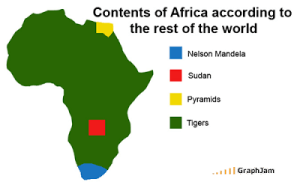
Me: Fine. Your study was perfect and its results are amazing. But you said Africa and the study takes place entirely in Uganda and treating Africa as a uniform mass is racist.  Why don’t you just talk about your tiger prevention efficacy?

africa

The paper graciously conceded my last point, but it knew my heart wasn’t in it. There is no end to the number of follow up studies one can suggest, but this is as good as a single study can be, and I accepted their conclusions. Founding afterschool clubs for girls in Uganda, with a mix of social activities and vocational, and health education, has pretty amazing results. $17.90 US (I know the exact number because the paper specifies it, which I love) spent on a girl translates to an additional $1.70 in monthly spending, almost a 50% increase (they tracked spending rather than earnings because self-employment earnings tend to be feast or famine. Employment also went up significantly), and a decrease in rape and child bearing. That means the program pays for itself in less than a year, and they get some additional benefits on the side. And to the researchers’ credit, the abstract trumpeted the less impressive community-wide numbers, when they could just as easily have used the confounded but shiny attendee numbers.

I mention this for two reasons. One: someone found a way to improve the bodily autonomy and earnings of African young women, basically for free. That’s neat. Two, I read this paper the morning after spending hours on a HAES post (which you may or may not ever read because wordpress ate it, thank you very much. WordPress ate this one halfway through too, so what you read is a cliff’s notes version of my original Socratic dialogue). The HAES post was enormously frustrating, because of the two claims I investigated, I found one (that cyclic dieting, rather than current weight, increases blood pressure) to be pretty misprepresentative of the data, and the other (high blood pressure hurts thin people more than fat people) pretty well supported…for a medical claim. By which I meant the evidence came from either retrospective studies (too many confounds to contemplate) or rats specifically bred to have the physical fitness of an aging Tony Soprano. That is genuinely good for medical research, and that fact is really frightening given how much is riding on getting the correct answer.

So when I read this paper, and see the study is well designed, they explain their modeling in a way an educated non-expert can understand, and they refuted every one of my criticisms, I felt a kind of relief. I’m not quite ready to say “trust the experts”, but at least I didn’t spend two hours tracking down reasons to not trust them

*If something goes from 10% to 20%, that’s an increase of 100% but only 10 percentage points. Switching between the two and failing to give the absolute percentages is a common trick for making data look more impressive than it is.

**Confounding variable, i.e. something that varies between your control and treatment group that is not the thing you are studying, and affects outcomes. The most popular confounding variable is time, e.g.

Pirate_Global_Warming_Graph
But here I’m worried about motivation: girls who show up to a club to learn entrepreneurial and life skills are probably more likely to start businesses and delay marriage than those that don’t attend,

On Racial Injustice in America

This blog is a testimony to my willingness to talk about things I’m not an expert in. But when it comes to Ferguson, I can’t think of anything to say. It’s desperately important, and I want to add my voice to the chorus saying This Is Wrong, because it is, and because so many white Americans’ response to Ferguson was to support the cops. But as a white American I have no first hand experience with the kind of systemic racism that killed Michael Brown, and everthing I try to write feels like I’m pretending I do.

I went to a protest today, but it didn’t give me any insights. I can’t even claim to be a good source of referrals, because I haven’t read that much about Ferguson. I’ve been reading about these kinds of murders for years, and it took me a long time to realize this one had gone mainstream. My Facebook feed is filled with great articles on many aspects of the case, but none seem like the right intro for people who aren’t already convinced, and if you are convinced you can find them on your own.

The best long term source I know on racism in America is Ta-Nehisi Coates, and while he hasn’t talked extensively Ferguson, he’s talked well.  I also encourage you to give money to support the residents of Ferguson or the legal rights of the protestors, and to be physically present for protesters in your town.  No one has any math on how effective protests are, but this is not something you can buy your way out of.