Health At Every Size Roundup

I read Health At Every Size and wrote a number of blog posts on it.  Some are follow ups on science it mentions but didn’t not examine in depth, some are spot checks of its scientific claims.  Neither set is comprehensive, but hopefully they are helpful.

HAES pre-check: What I thought about fat, food, and health before reading HAES.

Now I’m learning about hypothalamusing: The hypothalamus is the main coordinator of food consumption and use, and we have no idea how it works.

Ghrelin: The Hunger and Lung Development Games: the discovery that the hunger hormone also plays a crucial role in fetal lung development inspires a pun I will find increasingly difficult to maintain as the series progresses.

Leptin: Catching Chemicals: This one was a stretch.

Insulin and Glucagon: Mockingsugar: you try and come up with a food/health/fat based pun on the word Mockingjay.

Bariatric Surgery: HAES says it’s universally bad, my reading of the literature is that it’s awful, but sometimes the better choice.

Fiber: The Mr Rogers of Nutrition: Everyone likes fiber.

Obesity, Blood Pressure, and Study Design: partially an examination of the link between obesity and blood pressure, but mostly an explanation of why the studies we’ve done so far are so unhelpful.

Controls and Confounds: Why designing a study to determine causality is so hard.

HAES post-check: What I thought about fat, food, and health after reading HAES.

HAES post-check

A chief contention of Health At Every Size (Linda Bacon) is that human beings can’t lose weight, so even if it would optimal for them to weigh less, there’s nothing to be done about it.  Is this true?  It’s hard to answer, because the question isn’t very well defined.  Bacon admits there are things human beings can do to gain weight, and when they stop doing them, they sometimes lose weight.  So if you’re doing those things, you probably can lose weight.  And that people have a set range they can move around in healthily, based on diet and exercise, so if you’re at the top of your range now you could lose 20 pounds and still be okay.

On page 143, Bacon very strongly implies that twins maintain the same body weight even when they have very different activity levels, so weight is controlled by genetics.  The studies she cites do show that when activity and diet is held constant, two unrelated people will have different health metrics.  They also show that when two identical twins have different activity levels or diets, they will have different health metrics (including weight).  Oh, and the combined sample size of both studies together is 35 sets of twins.  This is where I started to get angry.  I get using weak studies that strongly support your hypothesis.  I get misleading people about what a study stays to support your hypothesis.  But doing both is just…argh.  I supported HAES.  The actual prescriptions for food are basically the Michael Pollan diet (eat food, mostly plants), and motivation to retrain yourself to like real food rather than hyperprocessed crap.  Those goals are good.  Those goals are good even if they lead to weight gain, because under most circumstances produce is good for you and cheetos are not (although not all- this Captain Awkward post is full of people for whom carrots trigger intense digestive distress but hamburgers are safe and nurturing.  I used to live off of pasta because anything else felt like eating death.)

I did check Bacon’s sources on the claim that people who lose dramatic amounts of weight tend to gain it back within 5 years.  That appears to be true, at least in the studies she cited.  And yet, she also cited studies showing that activity level affects weight.  My explanation is that losing weight is not a thing you do.  Your diet and activity level translate to a weight or body fat percentage*.  If your current weight is different than that, it will move towards it.  If you change your behavior, you will move towards the new translated weight.  The translation appears to be a combination of genetics and perhaps past experience (she claims loss-and-regain cycles increase the set point.  I’ve read that a lot of places, but at this point I neither trust her nor have the heart to investigate).

So how do my current views compare to those I held before reading HAES?

Exercise- still good for you.

Human diversity- still vast.

Impervious of weight to diet and exercise- depends a lot on what you mean.  I will never look like Keira Knightley, but I will probably lose fat if I exercise more.  Which I have just started to do after ceasing for a very long time because I was recovering from surgery, and will pause again when I have my next surgery, because the health harms outweighed the benefits.  Fat is a proxy for health, but not the only measure of it.

Large amounts of fat are quite bad for you, but it’s unclear where that effect kicks in.  The American aesthetic ideal is much lower that the healthy weight cut off, and may be actively unhealthy. In the normal range, diet and exercise have bigger health impacts than fat.

Our food supply is definitely fucked.

Fat people still don’t deserve to be shamed, especially under the guise of for their health.  First because no one deserves to be shamed, but especially because shame is super bad for your health.  It is intrinsically bad and it keeps people from seeking medical care, for both things related and unrelated to their fat.  Stop doing it.  People owe you neither their health nor their attractiveness.

*Weirdly, in my case it appears to be weight.  I’ve had a shockingly consistent weight despite large changes in activity level and muscle mass.

Fiber: the Mr. Rogers of nutrition

I have consciously decided to let the arguments for high protein diets pass me by, despite how convincing some of the research and underlying mechanistic claims sound.  Humans have been cycling through high -protien, -fat, and -carb diets since we developed enough of a surplus to choose, and I’m pretty sure if any of them were that superior to the others it wouldn’t have been supplanted.  I would say “everything in moderation”, but that is just a zen way of saying “Eat the correct amount.  Idiot.” which I don’t think is very helpful.

HAES brings up a more constructive suggestion: eat fiber.  Fiber* is usually left out of the macronutrient triumvirate, but so is water, and water is extremely useful.  Off the top of my head: Fiber has the advantage of being natural**, because our ancestral foods had much more fiber than our current ones, yet its lack of calories is well suited to our current, couch-based, lifestyle.  It evens out digestion of other nutrients, reducing the destructive sugar/insulin boom and bust cycle.  It simultaneously treats diarrhea and constipation (if you drink enough water, which you should anyway).  Have you ever wished you could eat a good thing and have it cancel out a bad thing?

mitch-hedberg-onion-ring

Well, that might actually be true if the good thing is fiber, and the bad thing is not cocaine.

Here is where I meant to track down all the good things HAES says about fiber, but when I read it more carefully.  I realized most of what it was praising was fruit, with the implication that fiber was the reason fruit is beneficial.  The one actual fiber claim is that high-glyemic diets increase the risk of type 2 diabetes unless the diet is also high in fiber (five sources, all of which say nice things about fiber, one of which is actually about type 2 diabetes.  The paper did conclude that fiber fights type 2 diabetes, but it was a post-hoc survey, which is a weak methodology).  However, those other four sources also say pretty good things about fiber, just not the one the book claims they did.  I think we are all on board with “fruit and whole grains” > “potato chips and soda”, although I’m severely disappointed that this of all books is backing that up with data on weight loss, rather than actual health outcomes.

But Dr. Wikipedia has many very specific nice things to say about fiber, and it cites much more relevant sources.  Fiber increases micronutrient absorption (a little).  Fiber increases nutrient absorption (more).  Fiber fights inflammation.  Basically, it does everything good and nothing bad.  So while HAES didn’t lay out its case properly, fiber is definitely good, and I look forward to finding out who takes this too far and what the negative effects are.

*Definition of fiber varies a little from institution to institution, so for clarity: I am defining fiber as carbohydrates that are not broken down for energy in the human body.  It’s worth noting that there are two contributors to whether an organism can digest food: its own enzymes, and the bacteria in its digestive track.  Termites can’t naturally digest wood, but they house a bacteria that can.

**It’s easy to oversell “naturalness”, but when you have a mission critical system made of complex legacy code no one understands, sticking close to its original environment is a good default strategy.

Bariatric Surgery

I had a pretty poor opinion of weight loss surgery already, but Health At Every Size all but says any doctor recommending it should lose their license for malpractice.  That claim seems worth investigating.  Luckily, she cites her sources.

First, I feel it’s important to note that bariatric is medical Greek for “obesity related medicine.”  I’m already not thrilled with that because I think excess fat is a symptom of health problems, but rarely a health problem in and of itself.  “Bariatric surgery” is often sold as something that is fixing a problem, the way an appendectomy fixes appendicitis, but it is at best undoing the damage of something else that is making you fat.

That said, let’s start with the immediate death rate.  HAES quotes a study as reporting a 4.6% death rate within the year: what it doesn’t say is that that study was done on Medicare recipients, meaning they were older than 65 or disabled.    Moreover, the 4.6% number is based on death from any cause, not what would be expected above and beyond what is normal for patients’ age and health.  Controlling for age, sex, and likelihood they would have died anyway* the researchers found that surgery increased your risk of death in the 90 days after surgery by somewhere between 90% and 200% (=3 times as likely to die), depending on which demographic you were in.  Inexperienced surgeons make this worse (which they do not back out of their model).  This is not just the stress of surgery: that’s twice the death rate following coronary revascularization or hip replacement, neither of which are minor.

HAES cites another study, published in JAMA as reporting a 6.4% four-year death rate.  This study has a number of problems.  Its only control was matched for age- and sex- but not health status.  A lot of the deaths stem from heart disease, which could plausibly be caused by being fat or having been fat, which is not a case against weight loss surgery.  Worse, that was the death rate only among people considered “at risk” enough to justify four years of follow ups.  The article doesn’t explain what qualified someone as “at risk”, but rarely does that risk mean “at risk of living too long”.  HAES cites a blogger who cites the study as demonstrating a 250%-360% increase in mortality over four years, relative to age- and BMI- matched controls, but I don’t see that anywhere in the original paper.

Meanwhile, the American Society for Metabolic and Bariatric Surgery aka “the people doing the surgeries” is happy to report a mere 0.2%-0.5% mortality rate after the first month of gastric bypass surgery.

That’s everything the book cites on mortality, which I found unsatisfying, so I turned to Dr. Google.  This Swedish study actually bothered to match controls (although surgery was not assigned at random, introducing the possibility that the surgical patients varied on a factor they didn’t think of) and found a 30% reduction in death over 10 years.

But I hate it when people act like death is the only bad thing that could ever happen to you.  What about people who don’t die, but do suffer for the surgery?  HAES cites six studies showing long term nutritional deficiency.  Of the five I was able to find online, all showed serious deficencies and none had a control.  Interestingly they all found a vitamin D deficiency, when vitamin D is primarily produced by your skin in response to sunlight, unless you live in Seattle, in which case you mostly get it through supplements.  Either way, food is not a major source of it, and if bariatric surgery effects vitamin D levels (which these studies have not demonstrated) I am extremely curious as to why.  Given the current controversy as to the efficacy of vitamins even in people with normal stomachs, it’s not clear how much this issue could be fixed with supplementation.

Every study I’ve read agrees that people lose substantial weight after surgery and then gain some of it back, I’m not even bothering looking for citations for this.

CONCLUSION: bariatric surgery has severe risks.  These may be partially compensated for by a skilled surgeon and good nutritional technique.  For extremely obese patients the benefits may outweigh the risks.  We don’t know where the cut off is for “fat enough to benefit.”  The strongest piece of evidence against bariatric surgery is that no one has done the fairly obvious studies that would conclusively demonstrate their effectiveness.

Some of the benefits probably stem from societal approval rather than genuine health issues, and the long term fix for that is for society to stop shaming people for their weight.  Another part of the benefit may be a forcing function, i.e. if patients ate like they’d had the surgery they’d lose weight whether or not they actually had it.  For an individual living in the society they live in and who has already tried dietary changes, this is sad but irrelevant to the decision.

I’m really uncomfortable with this conclusion.  It doesn’t fit my prior model, and I prefer the tribal affiliation of strong weight loss surgery opponents to strong weight loss surgery advocates.  I consider the evidence I’m basing this on somewhat iffy,  but in all honesty if it had come out the way I expected I would be fine with it.  I’m also pretty disappointed in HAES for so blatantly misrepresenting the evidence.

*Risk of death was calculated using the  Charlson Comorbidity Index.   I have no idea if that is a good model, but it appears to be standard.  This doesn’t prevent the researchers from being wrong but it does mean they’re probably not being deliberately manipulative.

Leptin: Catching Chemicals

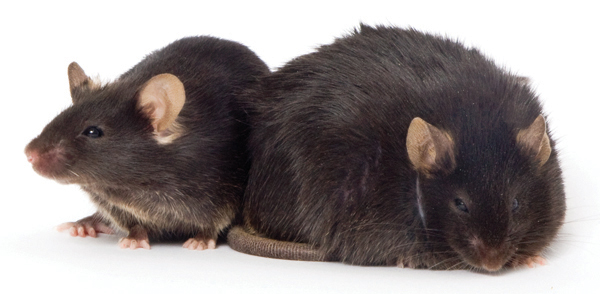
Leptn is often considered the anti-ghrelin.    It is produced by fat cells to say “I exist and am full, you do not need to feed me.”  Animals with their leptin gene knocked out grow enormously fat.  This is a perfectly lovely story that can be conclusively proven by a picture of a fat rat.

Figure2diabetes
Bring me Solo and the wookie

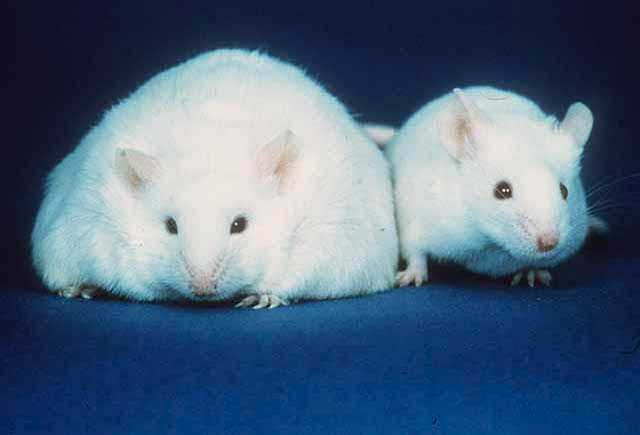
If you do not find this story compelling, please consider that I also have a photo of a fat mouse.

Well, if it isn't Lone Star. And his sidekick, Puke
Well, if it isn’t Lone Star. And his sidekick, Puke

Are you convinced yet?  Look, I know last week I said all hormones are almost fractally complicated and anyone who says they completely understand one is lying, but that entry forever to write (thanks for publishing that a week early, wordpress), and this entry has pictures of obese rodents.  Surely you believe the rodents?

Original source: http://commons.wikimedia.org/wiki/File:Big_Fat_Red_Cat.jpg
If no, would a cat be sufficient?

*sigh* I’ve created a monster.

Like ghrelin, leptin is important to fetal lung development because, and I quote, “I don’t know stop asking me.”  Leptin is also produced by the ovaries, skeletal muscle, stomach (some cells produce both ghrelin and leptin), mammary epithelial cells, bone marrow, pituitary, liver, and of course adipose tissue.

Leptin stimulates ovulation and sperm production, which makes some evolutionary sense: getting pregnant when you don’t have the resources to carry it to term in a healthy way is extremely costly (men have to be nearly dying before they stop producing sperm entirely, but levels can drop incompletely before then).  This doesn’t explain why the ovaries (but not testicles) produce leptin, since they don’t have any independent information about fat stores.  This may be an example of an override (in which the ovaries decide they want a baby even though the rest of the body doesn’t believe it has enough fat), but the fact that I can come up with a clever anthropomorphization does not make an explanation legitimate.  You can sort of see why leptin facilitates the onset of puberty, since puberty takes a lot of energy.

What you can’t see is why, despite everything we know about pregnancy and eating, the placenta produces leptin. Excess amounts appear to cause hyperemesis gravidarum (extreme morning sickness aka Kate Middleton’s one weakness).

katemiddleton

High amounts of leptin appear to be good for your brain.  Just so story: brains are extraordinarily expensive, so if you don’t have sufficient savings your body turns on the dimmer switch.  They also have a long term protective effect against Alzheimers.  On the other hand, high levels of leptin alter the immune system in a way that encourages artery hardening.  I am way more afraid of living with Alzheimers than I am of dying of a heart attack, so I will count this as one point for fat.

Leptin’s overall effect on the immune system is complicated.  Leptin is an inflammatory agent, possibly to prevent damage from overreating as your body suddenly tries to shove extra calories that won’t fit in the white adipose tissue under the bed and in the coat closet (the organs).  Which may explain why ghrelin is an anti-inflammatory.  Leptin and ghrelin chose opposite powers and color schemes, like an early 90s superhero cartoon.

Or an early 90s cartoon
The safe represents the hypothalamus

Fatness in humans does not appear to be a problem of inadequate leptin production, and more leptin does not make people thinner.  Instead, it appears that the brains of obese individuals are less sensitive to leptin.  No one knows exactly why, but “crash dieting” is high on the list of suspects.  Two people with identical body compositions but different genes or life history may produce very different amounts of leptin, which means they may require very different behavior to stay the same weight, in ways we do not understand at all.  Which I could have told you before we went on this magical photographic tour of my childhood.  But now we know for sure, plus I learned that fetal lung development is creepily intertwined with food in a way no other organ is.  Let us go forth and use this new knowledge

The Rescue Rangers also want me to play video games.

Contempt and Complacency

My current surgical dentist recommended some things fairly far outside the mainstream.  I went to my old dentist for a second opinion, and she very solemnly informed me that his recommendations were outside the mainstream.  I explained that mainstream medicine had had nine years with this problem and only made it worse, whereas his one operation had made things better.*  She repeated that conventional treatment for my symptoms was to do something else.  I explained his specific hypothesis about the root cause of my symptoms, which had a coherent narrative and made specific testable predictions.  We had tested it once and the predictions were upheld.  She repeated that conventional treatment for my symptoms was to do something else.  I asked her what her explanation was for the problem, accounting for  the symptoms, imaging, failed treatments and the one successful one.  I asked her if she would have recommended the surgery I already had, which had been conclusively proven necessary.  I would have eventually died without it.  She repeated that conventional treatment for my symptoms was to do something else.

This woman wasn’t evil, or trying to profit.  She didn’t even charge me for the visit.  She followed up with other practitioners and with some additional data I sent her afterwords.  When her words failed to convince me, she was was genuinely sad and worried that I was going to hurt myself.  But she was simultaneously completely unable to wrap her head around the actual evidence in front of her.  And while her concern for me is touching, the fact that it centered on a treatment that was helping and not any of the treatments that made it worse is pretty damning.

This is one of many examples of why it pisses me off when people deride medicine outside the mainstream (including but not limited to eastern and “natural” medicine) and mock those stupid enough to believe or even try it.  Conventional medicine does some things very well.  If I get in a car crash, take me to the hospital.  But if something is consistently failing, the smartest, most scientific, most rational thing to do is look at other options.  And if those other options succeed based on the scientific method (ideally with large studies, but scaled down to n =1 if necessary), that is evidence in their favor.

I used to express this as “Yeah, and you said Mesmer was a danger because his patients stopped blood letting” or “You don’t get an opinion until you start washing your hands“, but now I have an even better example.  The American Academy of Pediatric Dentistry’s position on soda used to be “Are you kidding me?  Of course kids shouldn’t have soda.”**  But when Coca-Cola gave them a million dollars, the president defended it by saying “Scientific evidence is certainly not clear on the exact role that soft drinks play in terms of children’s oral disease.”***  I’m not saying alternative practitioners are all brilliant bastions of moral purity.  Some are idiots, some hurt people for money.  I’m just saying that “hypothesis that passed many tests” is a better proxy for correctness than “recommended by large medical association” is.

This is highly related to Scott Alexander’s cowpox of doubt.  If you spend too much time on easy problems you start to believe all solutions are obvious, and anything new must be not only wrong, but dumb.  It breeds a contempt for uncertainty that is inimical to discovery.  And this is why I’m considering a broad anti-contempt stance, even though contempt is really fun and a fantastic group bonding exercise.

*Of course it’s too soon to know if this will last forever, but none of the conventional treatments had worked even briefly.

**Exact words: “…frequent consumption of sugars in any beverage can be a significant factor in the child and adolescent diet that contributes to the initiation and progression of dental caries.”

***Original source: Health at Every Size, which I am side eyeing for implying that this was an official change in policy.  The position paper on the AAPD’s website still condemns soda, juice, and even formula.

Cannibidiol for pain: a partial retraction

Earlier I described CBD as having absolutely no effect on cognition.  This turns out to be wrong.  I’ve subsequently found that CBD does impair cognition somewhat relative to optimal, it just does so less than pain.  And at least for me, it doesn’t wear off quickly: if I take it at night I’m in less pain the next day, but I also have trouble focusing for long periods and doing truly complex work.  It feels like I can’t get far enough away from problems to see the whole of a thing.  If my choices are “in pain and dumb” or “not in pain and dumb”, I choose door 2, but this does make me more forgiving of NSAIDs.

In other news, they finally took my bone spur out and wow, I’m in a lot less pain.

Different things for the same name

I’ve picked up enough scientific/medical Latin and Greek that I can often guess what a new term refers to without looking it up. Of course 50% of that comes from knowing “itis” means “inflammation”, but I’ve picked up other terms too.

The problem is that even English -> Science translations are ambiguous. In psychology, “displacement” means redirecting an emotion from the cause to a new target (e.g. you’re mad at your boss so you punch a wall). In the closely related field of animal behavior, displacement means taking the energy of a negative emotion it can’t act on and investing it in something positive (e.g. your cat licking itself after it hears thunder).  Over in physics, it means physically moving something out of the way, which is probably the closest to the conversational definition.

Latin -> Science -> English is even worse. Take parabiosis. It literally translates to “living next to”, which could mean the perfectly reasonable “two species living in very close association with each other, without noticeable benefit or cost to either”. Or it could mean “sewing the circulatory systems of two different animals together so they can share blood forever.” This is useful when you want to test if blood borne chemicals are relevant to a system but have no idea which chemical might be relevant, e.g. testing how aging affects recovery from trauma. AKA Elizabeth Bathory was on the right track.

If you read that and are wondering if you can maintain eternal youth by sewing yourself to a college student, the answer is probably no. The mice must be heavily immunocompromised to avoid mutual destruction via the immune system (although I wonder if this could be combated with cloning.  Hypothetically.). But having discovered that pigeon-rats are a very real possibility, I am excited/afraid to discover what other Simpson’s Halloween episodes we can make real.

On a more serious vocabulary note note, I’ve been using Iodine’s in-browser medical translator, and I’m shocked at how helpful it is.  You wouldn’t think Highlight-rclick-google search is that taxing, but compared to seeing the definition instantaneously and in context, it feels like an enormous waste of working memory.    My only complaints are that it doesn’t autotranslate words in links, which are often exactly the words I want to know the meaning of, and that it’s strictly medical rather than biological, so it skips a lot of basic science words.

Now I’m learning about hypothalamusing

Lots of people, including HAES subscribers, believe human beings have a set point or range where their weight will always be.  It takes great effort to get your weight above or below your set point, although repeated attempts can probably raise it.  If there is a set point, one likely candidate for its controller is the hypothalamus.  It comes up enough that it seems worth my time to find out what the hypothalamus is.

The hypothalamus is part of the brain.*  It translates the electrical impulses in your brain into signals to endocrine glands to produce and release hormones, which signal the rest of your organs to do their thing.  In this way, the brain is like general.  It dictates orders to its secretary, the hypothalamus.  The secretary than copies all the orders and sends them to the relevant lieutenant generals (glands), who respond by releasing the appropriate hormones.  For example, it coordinates the ebb and flow of melatonin (produced by the pineal gland) and cortisol (produced primarily by the adrenal glands), so that you can wake up in the morning and fall asleep at night.  It also translates from hormones to the brain, turning “I’m hungry” into cooking, or “I’m horny” into hitting on someone.

What does this have to do with food and weight?  If I had a definitive answer to that I would be rich (and better nourished).  Damaging specific parts of the hypothalamus while keeping environment constant causes weight change in rats that previously maintained a stable weight.  Damaging other parts causes the rat’s weight to be more affected by an environment (i.e. before damage they previously maintained a particular weight regardless of what food was offered.  After damage they lost weight when food was unpalatable and gained weight when it was more palatable).  And we’ve tracked several hormones that communicate status between the hypothalamus, adipose tissue, and digestive organs, in ways too complicated to fit into this overview post.

In summary, the hypothalamus is the connection point between the brain and your hormones, and no one really knows what either one is saying.

*One thing that always bugs me when I hear the phrase “part of the brain” is  “how sharp is the distinction between this part and other parts?  Can there be cells where it’s a matter of judgement which section they fall into?  Can you just look at an arbitrary brain and say “there, that’s the hypothalamus”?”  I eventually found this video, which very explicitly detailed how each part of the brain is separated, except for the hypothalamus, which he just sort of gestured around.  As we’ll read later, scientists are able to precisely destroy sub sections of of the hypothalamus so I guess its boundaries are pretty sharp.

Ghrelin: The Hunger and Lung Development Games

Writing about hormones is hard because anything I say will be incomplete by necessity.  I can only do so much research,  and will undoubtedly miss something.  More worryingly, there’s a lot nobody knows about our endocrine system, and all available overviews tend to overstate our level of certainty.  I will be ecstatic if in 10 years this entry turns out to be 60% true.  But we go to war with the facts we have, so:

Ghrelin is best known as… well if you’re me it’s “proof calories in/calories out is bullshit“, but it’s more commonly known as “the hunger hormone”.  The simple story is that cells in your stomach produce ghrelin in response to perceived space in the stomach (which may be one way gastic bypass surgery leads to decrease in food consumption: your stomach reports fullness almost immediately).  Your hypothalamus detects this and informs the brain, which interprets it as hunger, which should lead you to get food.

But nothing in the human body does just one thing.  For one, ghrelin is produced in other areas of the body.  Pancreas, intestines (sure, they have information about current digestion status), placenta (okay, the fetus needs a way to direct you to eat more), gonads, adrenal cortex, pituitary gland (well those are pretty general hormone production factories), kidneys (for…water…consumption?), and lungs (the hell)?

Ghrelin encourages storage of calories as fat, which could mean that eating more (to suppress ghrelin production)  would help you avoid fat gain or even allow fat loss.  But (one form of) ghrelin also triggers production of human growth hormone (in fact, that’s where the name comes from: Growth Hormone RELease INducing factor), which encourages burning fat and building muscle.  The important lesson here is that if someone every tells you “Do X lose weight because hormone Y does Z”, you should laugh at them, even if Y and Z are correct, because Y does 4 million other things, some of which are the opposite of Z.  Ghrelin’s presence in the lungs might be a mechanism to trigger HGH to trigger fetal lung development.  Or maybe not.  We don’t know.

Still in the realm of possibility, high ghrelin levels delay puberty and discourages ovulation.   This is a reasonable second job for the hunger hormone to have because transforming a zygote into a baby is an epic amount of work and you want to be well fed.   I seriously wonder about the effects on ghrelin on libido: given that humans have sex for both reproduction and social bonding,** I could see the effect going either way.

Ghrelin appears to have some mood effects.  When I first read this I assumed high ghrelin -> stress and depression, which would be a convenient way of explaining why I was so jumpy before my hypochlorhydria was treated.  Turns out, nope, ghrelin is an anti-depressant* , which may be one mechanism reinforcing anorexia.  But ghrelin also makes pleasant activities (eating, but also drugs, and it’s at least in the same brain neighborhood as sex) more rewarding.  It also has a bunch of effects on learning and memory and stress-based learning, mostly apparently positive.  This is the opposite of what I would have predicted, given how I and people I know act when hungry.

I'm sorry for what I said when I was hungry

Lastly, ghrelin inhibits inflammation. To the point it may be useful as a treatment for autoimmune diseases like rheumatoid arthritis and multiple sclerosis.   This concerns and confuses me, possibly even more than growth hormone effects. Hunger and long term calorie deficits are associated with increased susceptibility to disease (as your body prioritizes short term goals over long term health), so maybe this is a happy accident?  But no, ghrelin promotes development of at least one kind of white blood cell.  The anti-inflammatory effect may explain why people often don’t want to eat while injured- your body lowers ghrelin levels to allow healing to occur, and the loss of appetite is a side effect.  But that’s highly speculative, the truth is we just don’t know.

For all that, ghrelin is one of the simplest hormones I’ve studied.  It has one obvious primary job, and several of its lessen effects seem at least related to that job.  We know where it is produced and a good chunk of how it achieves its (known) effects.  More fundamental hormones like progesterone, testosterone, or oxytocin are infinitely more complicated.  So this post is a little bit about the science of hunger, and a lot about how the human body is complicated and people with simple answers are liars.

*Should you be laughing at me right now?  Maybe.  The study in question shows actual behavior change, not a potential mechanism of behavior change (that’s this paper), but it is just one study.  Perhaps compromise on chuckling.

**What about pleasure, you ask?  Irrelevant from an evolutionary standpoint.  We feel pleasure because there is some actual useful purpose served.