A true should feels like executing a Screw The Rules I’m Doing What’s Right trope. In fiction, a true should feels like the moment when the villain reveals that doing the Right Thing will start a war, and you set your jaw, and you look them in the eyes, and you say “so be it,” and you do the right thing anyway.
[…]
Not an external obligation whispered down from the heavens, but an internal fire, a defiance of the natural order, a need to make the world different from the way it would be otherwise.
Cognitive behavioral therapy is getting less effective over time. There are a lot of possible explanations for this, but my favorite is that as CBT techniques have been integrated into the mainstream (therapy or helpful articles your mom sends you on anxiety) they become less useful. I’ve heard the same thing suggested for Freudian analysis: that when it was invented it really was a revelation and helped a lot of people, but now everyone knows to ask about your subconscious feelings so there’s no value add.
Boring explanations include therapist skill, wider application, publication bias, changes in measurements.
I’m pleased to announce the return of the Beautiful Gang of Theory Killed By An Ugly Gang of Facts award. This week’s recipient is The Bloop, an enormous sound recorded by underwater microphones over 3000 miles apart in 1997. If you believe the video youtube showed me after the sperm whale one. it’s completely unexplained but probably some sort of sea creature orders of magnitude larger than any we have ever discovered, that only made detectable noise this one time. It might also be Atlantis. If you believe NOAA, it’s an iceberg cracking. Bor-ing.
I covered a lot of really heavy things with no good solutions in group organization the last three days. Now I’d like to talk about one easy thing that we solved brilliantly.
When Seattle EA first started, all meetings were discussion meetings that operated with discussion norms. One person came prepared to lead a discussion, which meant both presenting information and steering the conversation. This worked great with 8 people and was increasingly creaky at 15. Physically it became harder to find spaces where everyone could hear and no one had to shout. Conversationally, a tangent rate that led to charming new discoveries with 8 people led to huge snarls with 15, increasing the brain power required to moderate just as presenting got difficult. We solved this by splitting moderation and presenting into two different jobs (often two people trade off between them in the same meeting), and shifting meetings to be more presentation and questions, and the moderator steering tangents back to the meeting purpose. These are not the same as the old meetings, that’s not possible, but they are just as good at what they do.
An attempt to stall, derail, or raise the cost of talking about a topic such that the original speaker is unable to make progress on their original point.*
Other things I haven’t thought of.
Subcultures vary in how you signal what kind of question yours is, which can lead to really massive culture clash. Rationalist and EA culture are on the high end of asking questions, and the low end of explicitly signalling respect for the speaker as you ask (because asking is not considered a sign of disrespect), which can lead to problems for people who don’t know that’s what’s happening or don’t realize that this comes with a corresponding freedom to say “This is not fun and I’d like to talk about something else now.”
So one reason people may get mad at you for “just asking questions”, even ones you sincerely meant as requests for information, is that they mistook it for an attack or derail. The internet really came through for us by labeling this JAQing off.
The second, subtler reason people might get mad at a question is about interpretive labor. As I explained yesterday, interpretive labor is the work to understand and adjust to another person- anything from the strain to listen to them against high background noise to knowing “come by tomorrow” doesn’t mean anything unless they give a time. Everyone is doing this any time they are interacting with another human being, but some people do more of it than others. In general the lower status, more marginalized, or further from a particular group’s default member you are, the more interpretive labor you have to do.
When you ask a question, even a sincerely meant one, you are asking the person to put effort into explaining themselves to you. That’s interpretive labor (on both your parts, if you’re attempting to learn more about them). Sometimes being asked to invest that labor, and especially being told you’re wrong if you don’t, is really annoying. It is especially annoying when you are talking about a way being low status/privilege hurts you, and the person demanding you explain is higher status/privilege.
Interpretive labor is one reason people might like to form subgroups from a larger group even when the larger group is absolutely free of racism/sexism/etc. That is most often women and minorities splitting off from groups made up mostly of men/white people, or where whiteness/maleness is considered the default even though they’re not that much more prevalent. But male nannies totally deserve a place where they’re not constantly asked “wait, you’re taking care of the kids?” just like business women deserve a place where they’re not constantly being asked how the balance work and kids.
What does this mean for Effective Altruism? EA has very strong norms in favor of asking questions, and a lot of good comes from it, but that subtly pushes away people who have the least energy for questions. Energy available for questions is not randomly distributed, so that creates blind spots. I have some guesses as to how to reduce this, but I don’t think there’s a way to get rid of it while keeping the things that make EA good at what it is. This is now my reason to donating to certain charities outside of EA.
Possible mitigations:
Destigmatize opting out of conversations/arguments. Especially making it clear to new people they can opt out without stigma.
Have meetings on specific issues focus on listening rather than debating. This is what I would have done with the sexual assault meeting, had it happened.
As an individual, consider how much work you’re asking someone to do before asking a question, especially if they already seem emotionally taxed.
Push back against JAQing off. If you figure out how to do this perfectly without collateral damage please tell me because I have no idea.
Look for other ways to get information than directly questioning someone who is talking. The internet is full of things. You might also ask a friend who can put your question in context, rather than a stranger who knows nothing but that you’re questioning them.
On that note: I’m officially volunteering to be your Female Friend That Explains Sexism. If you have a question but don’t want to make the person who introduced the issue explain it to you, you can ask me.
*For example, this boing boing article is about a science editor calling a black female scientist an “urban whore” for refusing to write for him for free. The comment thread is 35 pages of “but can you prove that was racist?”, so no one ever got to discuss the massive sexism or entitlement or possible actions to take. I would not have been noticeably happier with the guy if he’d called her a rural whore, even though that’s less racially coded.
In Utopia of Rules David Graeber introduces the concept of interpretive labor. This will be stunningly useful in discussing how to handle sensitive discussions and yet there’s nothing on the internet about it, so please forgive this digression to explain it.
No two people are alike, everyone interprets a given action a little differently. Often you need to put work in to understand what people mean. This can be literal- like straining to understand an accent- or more figurative- like remembering your chronically late friend is from a culture where punctuality is not a virtue, so it’s not a sign they don’t value you. The work it takes to do that is interpretive labor. Interpretive labor also includes the reverse: changing what you would naturally do so that the person you are talking to will find it easier to understand. Tell culture is in large part an attempt to reduce the amount of interpretive labor required. Here are a few examples of interpretive labor in action:
Immigrants are expected to adopt the cultural norms of their new country.
Parents spend endless hours guessing whether their infant is crying because it’s hungry, needs a fresh diaper, or just felt like screaming.
Newbies to a field need to absorb jargon to keep up, or experts need to slow themselves down and explain it.
There’s a whole chain of schools that teach poor, mostly minority students business social norms, by which they mean white-middle-class norms. There is no school teaching white middle class kids how to use the habitual be properly.
Crucial Conversations/Non-Violent Communication/John Gottman’s couples therapy books/How to Talk so Kids Will Listen and Listen so Kids Will Talk are all training for interpretive labor.
Graeber himself is talking about interpretative labor in the context of bureaucratic forms, which can simultaneously dump a lot of interpretative labor on the individual (bank forms don’t negotiate) but alleviate the need to be nice to clerks.
Comments in code.
With a few very specific exceptions (accents, certain disabilities, ), interpretive labor flows up the gradient of status or privilege. This can get pretty ugly
People who insist their code is self documenting.
Girls are told “snapping your bra means he likes you” and then expected to no longer be mad about it.
Bullied kids are told to forgive and forget because their bully “is trying to say they’re sorry”, even after repeated cycles of faux-apologies and bullying.
This is more tenuous, but I think there’s a good argument that a lot of the emotional abuse on the estranged parent boards comes from parents expecting unfair amounts of interpretive labor from their children, adult or minor.
Fundamentalist husband expects his wife to know his emotions and correct for them while he actively hides the emotion from himself.
A paraphrased quote from Mothers of Invention: A woman’s house slave has run away, greatly increasing the amount of work she has to do herself. She writes in her diary “Oh, if only she could think of things from my point of view, she never would let me suffer so.”
I think a large part of the anger around the concept of trigger warnings is related to interpretive labor. It shifts the burden from traumatized listeners to protect themselves or calm themselves down, to speakers to think ahead if something they are about to say could be upsetting. That’s work. Speaking without thinking is much easier. Like, stupidly easy. Ditto for Christians who feel they’re being oppressed when they’re asked to consider that not everyone has the same beliefs. That is way more work than assuming they do.
How does this relate to altruism? Charity generally flows down the status/privilege gradient, especially from rich to poor. If the givers don’t consciously change the rules, they will end up demanding large amounts of interpretive labor from their beneficiaries, and do less good in the process. Arguably this is what’s happening when Heifer International gives people livestock and they immediately sell it- the rich people decided what to give without sufficient input from the poor people they were giving it to, and the poor people had to do extra work to translate it into something they want. Or this post on Captain Awkward, from a woman trying to teach her tutoring volunteers to not be racist.
EDIT 9/7/18: I think I in appropriately conflated two different situations in this post: situations where interpretive labor closes the whole gap (e.g. understanding an accent), and things where even after correct interpretation there is still a problem. The problem in that bullying example isn’t just that the victim doesn’t understand how the bully wants to apologize, it’s that the bully is going to keep bullying.
[Content Note: talking about talking about sexual assault][not a typo]
A few years ago I was an extremely active member of a martial arts studio. Martial arts has risks, and this school chose to take more than the bare minimum- sparring involved head shots and take downs. I was willing to accept the risks of this with most people at the dojo, because I knew they were acting with my safety in mind and the risks were worth the benefits, but there was one guy, Snotlout, who did not pass that test.
Snotlout is a psuedonym
Where most people will aim to hit near your face, so a mistake means you get a tap, Snotlout aimed to hit you, and the failure mode was hitting your face really hard. He took blind kicks at full power and blamed you for not getting out of the way. He once flipped a child flat on their back and his first concern was letting us know how lightly he had touched them.
The school wouldn’t kick him out, wouldn’t even really place restrictions on him. When I complained to the de facto leadership it was always redirected to what I could do to take care of myself, but when I did so (e.g. insisting on slow motion sparring), I got push back from other de facto leadership. No one would kick him out or place the necessarily level of restrictions on him, apparently out of fear those restrictions might drive him to leave. If I really pushed, the people who would talk to me about it would say that they or someone they loved was that dangerous when they came in, and they wanted to give that guy the same chance. Which is a beautiful thought, except that I know at least three people for whom he was a contributing factor in leaving the school. Where was the inclusivity for us?*
Where would Berk be if Snotlout had driven out Astrid?
Last year Seattle Effective Altruists had a member who brought up sexual assault a lot, in ways that made it clear it was personally relevant to her. This made me really uncomfortable, but I was aware of how often rape victims are silenced and how damaging that is, so I didn’t say anything. What occurred to me much later was that statistically there was at least one other victim of sexual assault in room, probably more, and they might find also find it uncomfortable.** The choice wasn’t “do I silence this rape victim or not?”, it was “who do I make/let be uncomfortable?”, even if I didn’t know who the other person was. Obviously a trauma victim discussing work with personal meaning to them is in no way equivalent to a jackass endangering people’s safety in order to prove how awesome he is, but that is part of my point: even actions with very good motivations have costs.
Back to martial arts. Notice that I said de facto leadership? The problem wasn’t that someone calculated Snotlout vs. [me, the two people I know about, and unknown number of others he drove away] and chose him. It was that no one did the calculation and no one was responsible for making sure it was done. There wasn’t even anyone I could negotiate with to ensure my personal safety; a plan I worked out with one senior student would be publicly ridiculed by another.*** No one had ownership of student safety so there was no one to turn a pile of individual complaints into “wow, that guy is dangerous and we should do something”. To this day I’m not sure why “we have to be welcoming” meant “you have to let him hit you in the face over and over”, and everyone I asked described it as a decision made by someone else. I don’t even think this worked out particularly well for that guy, because while no one was willing to restrict him, a lot of people would have been happier if he just left, and it showed up in petty things like him never quite getting added to the parking mailing list. Eventually, after driving out who knows how many people, he screwed up so badly the school had to put severe restrictions on him. He never came back.
An unanticipated struggle to find parking rarely inspires the kind of self reflection that leads to redemption or dragon riding.
Back to EA. My eventual solution to the “how to talk about rape” problem was to simultaneously ask the woman to tone down the sexual assault talk in meetings where it wasn’t relevant and host her own meeting on the topic. Unfortunately she left for other reasons before I could implement this. But if I’d had the chance, it only would have worked because I was empowered as an organizer to do both of those things. If I’d approached her as a peer, the request to limit talk about sexual assault would have had less heft, and a dedicated meeting would have been a suggestion, not an offer. But it probably wouldn’t even have gone that far, because it wouldn’t have felt like my place to do it. That leaves the hypothetical assault victim that didn’t want to constantly hear about rape to defend themselves by approaching her directly, and possibly requiring they disclose their history to see results, which they shouldn’t have to do. In order to be truly welcoming to them**** , someone had to proactively make the space safe.
There have been other, less fraught trade offs. One person’s friendly debate is another’s attack, and a third person’s derail. I think one of my major contributions to the group has been not the decisions we made on these (although those were awesome), but that we made decisions at all, and worked out how to implement them.
If you are an organizer, for EA or something else, these are my recommendations:
Have a small, identifiable group with whom the buck ultimately stops. Individual meetings in Seattle are run mostly on a who-is-excited-about-this system, but there are three people explicitly in charge of the administrative stuff, including disputes.
Make explicit decisions about your norms, share them, and enforce them.
Explicit is not the same as fixed. I’m extremely excited about our plans to experiment with different norms at specific meetings, even if some of the norms would make me miserable as a participant. Not every meeting needs to be for every person.
There’s a fine line between overpreparing and sticking your head in the sand until something blows up. Some of our best decisions are “let X keep going unless Y happens, and then figure out a plan.”
***10 minutes before the same guy started quoting The Gift of Fear on listening to your instincts, and specifically leaving situations where you felt afraid. I walked out.
****Or people who were uncomfortable talking about sexual assault for other reasons, or people who just wanted to talk about the planned topic.
The best argument I’ve read for friendly AI research. The best counter argument I’ve heard is that my one friend who does AI research says there ain’t no way step 3 (superintelligent machines) actually happen. But the math/CS/philosophy problems this is motivating seem like they’ll bear useful fruit even if that’s true, and given what we do spend money on, this doesn’t seem like a ridiculous use of a few million dollars.
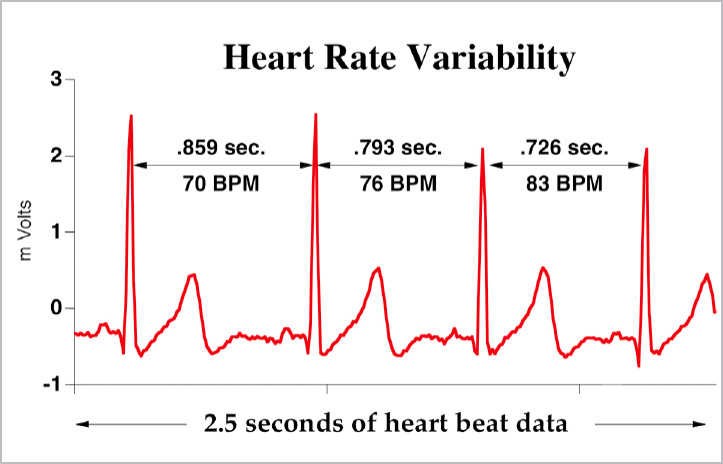
Heart Rate Variability is one of those things that has such an obvious meaning I feel dumb asking follow up questions, but is consistently used in ways that confuse me. It sounds a lot like arrhythmia, which is bad, but The Willpower Instinct consistently refers to it as good. Plus it refers to it changing in ways that must be measured instantaneously, but changes in variability have to be measured over time, right?
Here is what I have figured out: we (I) think of the heart as beating to A Rhythm, which is your BPM. The rhythm can speed up or slow down, but it’s still a rhythm. A deviation from that is an arrhythmia, which is Bad. We (I) think this because the wikipedia article on sinus rhythm basically says it, and because the article on HRV implies it’s measured in five minute increments over 24 hours, which means it’s basically a measure of range. But at least some of the time HRV refers to beat-to-beat variation, and it’s being measured in response to an immediate stimulus (although, maddeningly, no one specifies the time period).
four heart beats, separated by .859, .793, and .726 seconds.
Your parasympathetic (relaxed/restorative) nervous system sends signals to your heart to decrease your heart rate. Your sympathetic (fight/flight/freeze) system sends signals to increase it. High parasympathetic activity also seems to be associated with high variability, at least to a point. My personal guess is that high variability indicates both systems are operating and interacting, while low variability indicates one has taken over, and that your body is somewhat biased towards a higher rate, so it takes a bigger push from the parasympathetic to get the rate down. Having one system dominate is not always bad: when you are running from a tiger, your heart should beat as fast as possible and redirect blood from digestion and immune system to muscles. And when you are truly safe, the parasympathetic tells your body it can safely pay off it’s technical debt. But often having both, and being able to switch between the two, is useful.
There’s a lot of data showing high heart rate variability is increased by known Good Things (meditation, exercise), and low HRV is associated with bad things (alcoholism, PTSD), but I don’t see hard enough data on causality that I’m confident of the direction.
What happens when you wring out a wet cloth without gravity? (h/t: Sydney)
space program: justified.
Weaponized data: How the obsession with data has been hurting marginalized communities. I really disliked this on my first read through, because what are you going to do, not base your decision on data? But then I realized that I was treating “data”” and “information” as synonymous, and the author was not. I’m not clear on exactly how she’s defining “data” here, but I agree with most of her examples of bad data or data being misused, and I like most of her proposed solutions. I also liked her post on trickle-down community engagement.
Things I’ve learned about academic work from playing Age of Empires. This is interesting, because it’s all about combat, and what I learned from Age of Empires is that fighting is boring and base building is fun. Actually now that I think about it that’s also what I learned from Hardcore History’s series on World War I. That’s why I play Colonization: there’s a nice long period of supply chain building before you have to do the stupid war, and you can just quit then.
One of the contentions of The Willpower Instinct is that a lot of things (hyperpalatable foods, lottery tickets, facebook…) are hijacking the system that incentivizes you to be productive*, making you think feel that if you do this one more thing, you will achieve an important goal (nutrition, money, social connection). You can try to stare it down, but what you are really fighting is not the specific action, but the goal, and everything in you believes that goal is good, so it’s an expensive battle you will ultimately lose.
Recently I’ve been experimenting with hijacking back. Let’s use food as an example. I noticed that I would feel a very strong drive to eat candy, but eating it alleviated the urge for less than a second. There was no amount of candy that would move me to a not-wanting-candy state. Once I had that perspective, I could use higher brain powers to figure out what would actually scratch that itch. Moreover, I could use the urgency generated by the proximity of candy to power making real food with actual nutritional value. And the dopamine system couldn’t really do anything about it, because it had sold candy to my body as a means to an end.
It works for video games too. Sometimes I play video games because they are fun. Sometimes I play them because I need the feeling of Doing a Thing, and doing actual things will involve an unpleasant intermediate steps. Of course video games can’t actually make me feel productive, but the reward system tells me that means I need to play harder.
This is a difficult urge to fight. But if I pull back and notice doing the thing is not making the urge to do the thing lessen, it becomes obvious I need to do the unpleasant intermediate steps in order to get what I want.
*This is identified only as “dopamine”, but dopamine is a neurotransmitter, so she must mean dopamine in a particular part of the brain. For simplicity I’ll keep referring to it as the dopamine system.
This is Huey. He has not met you yet, but he loves you, and he wants you to love him too. Almost all dogs are human-oriented, but Huey takes it to the next level. He has been known to hyperventilate with happiness when a friend arrives- and that’s after he’s been at home all day with his work-from-home owner, so it’s not loneliness or separation anxiety, he is just that happy to see you.
Pictured: a dog that would really like to be told he is good.
Sometimes Huey’s desire for affection puts him at odds with himself. For example if you tell him to stay and walk away, he wants to do what you said, but he also wants to be near you. He will literally vibrate with the effort it takes to stay in place. But once you tell him good puppy, all the strain goes out of him. He rushes over for his well deserved affection, and then he’s done. He might even go play with a chew for a bit.
If you’d like a more human example, consider the orgasm. Most humans on the edge of orgasm will do anything to finish it. Immediately post orgasm, they will do absolutely nothing. Even people who have multiple orgasms will usually have a final one after which they really don’t care.
According to The Willpower Instinct, dopamine release corresponds to the vibrating-with-effort phase, not the good puppy phase. Dopamine doesn’t mark pleasure, because pleasure doesn’t need to be marked. Dopamine tells you pleasure is just around the corner, so keep trying. Note that this is slightly different than Peter Redgrave’s timestamp hypothesis I talked about before, but either would account for a lot of available data. For example, people with ADHD (who are energetic and yet somehow unable to get themselves to do the thing to get the results they want) are on average low in dopamine, and almost all ADHD treatments increase dopamine availability*. Dopamine levels rise copiously during sex until orgasm, at which point they plummet. Dopamine is also heavily involved in addiction.
When asked about his dopamine levels, Huey asked which answer would make me love him the most.
This makes slightly more sense to me than the timestamp hypothesis, but is less interesting. Normally interesting is a bad sign for a hypothesis (almost anything is more interesting than chance, and chance explains a lot), but I’m not sure that applies in this case. The timestamp hypothesis is a lot more specific and thus testable, the priming hypothesis seems sort of vague in comparison. And of course both could be true- dopamine simultaneously says “reward coming soon” and “reward is because of this”. Those actually make sense to go together, as opposed to some things our body has combined.
I’m never going to be able to conclusively prove one or the other sitting at my computer, but let’s talk about how they differ. Timestamp hypothesis suggests people with low dopamine will be attracted to things that make it is easy to distinguish what caused a reward, like video games and obsessive facebooking. Based on my friends and reddit, those are heavily associated with both depression and ADHD. My literature search turns up some support for this**, but nothing with a design I consider rigorous.
Timestamp covers the H in ADHD better (a low baseline makes a small increase more distracting than it should be), but priming seems more apt for ADHD- inattentive type (ADHD minus H) and depression, where nothing is attractive enough to pull the person out of their focal activity.
So the answer is “some of both plus probably some other stuff”. But variations in which of these dominate might explain why a given person reacts to low dopamine the way they do.
*In addition to changing other neurotransmitters and hormones. The brain is complicated and no one understands it.