Exercise Trade Offs

Woman Exercise Bike - Free vector graphic on Pixabay

Update 9/2: A friend pointed out that I was ignoring the time costs of exercise, which ended up being pretty significant. See new numbers here. I then double checked the math on the microlife numbers and the news is not good.

Tl;dr: under my current conditions, outdoor exercise is slightly safer than indoor for me, but the risks of both are dwarfed by the benefits of exercise.

Recently I’ve been weighing trade offs around exercise. At the gym I’m risking covid exposure. I can reduce that by wearing a mask, at the cost of making the exercise less effective or enjoyable. I could use my friend’s outdoor gym, but it’s fire season here in California so there are prolonged periods where I don’t want to be sucking in all that unfiltered air. This is also addressable with a mask, but at the same cost. I could exercise indoors in my own home, but I do not have that much space and it gets miserable really fast. I could not exercise until conditions improve, but that has its own health costs. So I did some math.

Wikipedia says 10 minutes of exercise = 1 micromort lost (as in, you live longer). That’s obviously going to depend a lot on the type of exercise but we’ll use it.

This calculator translates time * AQI into cigarette equivalents. At 50 AQI, it takes 12 minutes to generate .01 cigarettes. I’m going to treat that as 10 minutes because exercising is slightly worse than merely existing out doors and it makes the math much easier.

Wikipedia lists an equivalent of 1.4 cigarettes = 1 micromort.

N95 masks block 95% of PM2.5 particles (which is what the AQI is based on). I couldn’t immediately find a translation of that to micromorts so let’s assume it’s linear discounting. EDIT: On Twitter Divia Eden points out that 95% assumes a perfect seal, which you probably don’t have. This isn’t material at my current air quality; I did this whole thing without including masks at all and then added them in afterwords, but when you do your own math you should include that.

That means that 10 minutes unmasked outdoor cardio, at 50 AQI = .01/1.4 = .007 micromorts, which is clearly dwarfed by the 1 micromort lost from exercise (even if you assume it’s 10x worse for me due to the existing chest congestion, and don’t give the exercise a corresponding impact bump). If I wear a mask the risk is probably below the significant figures I’m allowed. It’s so negligible compared to the benefits that if allowing myself to go outside increases total exercise by any amount at all, it’s obviously worth it.

How about covid risk?

My gym is personal training focused with a single cardio machine, which you must schedule in advance. If I’m doing cardio there will be at most two clients doing weight training and two trainers in the room, plus me, all > 10 feet away, in a large room with filtration they claim is good. If I’m doing weight training there’s me, my trainer (fairly nearby), and potentially a farther away client and trainer pair. In theory there could be an additional person on the cardio machine but I’ve yet to see it happen.

Under an excessively conservative set of assumptions (City-average vaccination, no mask, constant talking), my cardio scenario is 7 microcovids. If I give everyone masks it’s 0.5. My weight training scenario is <=10 microcovids (7 for the other pair, which may or may not exist, and 3 for my trainer. Note that weight training is 2.5x as long as cardio). But microcovids are not micromorts. The Economist calculator (pre-delta, pre-vaccine) has the risk of dying of acute covid at my age and sex as immeasurably low, despite it being prone to overestimate because its denominator is only diagnosed cases. Long covid is a concern (although I’ve tentatively concluded its overblown: more on that soon hopefully), but lack of exercise is bad for long covid in particular. If we generously use my age/sex hospitalization rate as the discount factor (2.6%), the micromorts from my indoor cardio are <=0.16, and my weight training is <=0.23. These are not quite as negligible as the pollution, but still very safely under the benefits of exercising.

Some caveats: I didn’t examine any of these numbers that closely because the verdict was so overwhelmingly clear; the values would need to be off by orders of magnitude to change my conclusion. But that is always an option, and when I tried to follow up on the 0.1 micromort/minute of exercise number, I hit a dead end.

I’ve made a very crude spreadsheet with sources linked in comments so you can make a copy and play around with your own numbers, based on your local air quality, covid prevalence, etc.

Book Recommendation: The Cruel Prince

This is not normally the venue I use for discussing fiction, but I’ve recommended The Cruel Prince (affiliate link) to ~10 people in the last year and a half, and every single person loved it. Every last one. And not just a little bit; multiple people put off important things they needed to be doing because TCP was so good and did not regret their decision. This level of agreement and enthusiasm among my friends is completely unprecedented. So if you can possibly see yourself being interested in “YA fairyland with unusually agentic protagonist”, I suggest you give it a shot.

The first five or so people I gave this recommendation to, I warned that I hated the third book in the series and thought that it undid some of what was most important to me in the first two (cannot reveal without spoilers, but happy to discuss out of band). No one was able to resist after enjoying the first two so much, and thus far no one has agreed with me. So you should probably read it too, and if you happen to agree with me I would be extremely happy to have someone to complain about this with.

Antidepressants and Medical Uncertainty

I’ve occasionally talked about how great my experience with antidepressants was. First one (2015) worked great and reduced my trigeminal neuralgia to boot. But it wasn’t enough so I started a second one (2017), which was also great and also helped my trigeminal neuralgia with no other side effects. I knew this experience wasn’t universal, but I would occasionally share it so people would have data on the best case scenario.

Welp.

I tried lowering both meds last summer, but each time my neuralgia got worse so I resumed my regular dose. Then in January USPS delivered my pills two weeks late, and I was forced to go off them (luckily I saw this coming as was able to taper with my remaining pills, so it wasn’t cold turkey). Like over the summer my neuralgia got worse, as did my anxiety, but the depression definitely did not come back.

A bunch of stuff happened here. First I was fine, then I was sleeping an awful lot, then I was sleeping quite a bit less (and felt fine about it). Every time I felt bad I would wonder “is this a transient reaction to an external stimulus, a sign of returning depression, or both?” When I had my checkup with my psychiatrist and mentioned that I no longer needed a daily nap, she immediately said “Oh that’s [medication 2]”.

I’ve talked to multiple doctors about my previously quite extreme sleep needs, including her. They all tried a bunch of complicated stuff, and they all had access to my list of medications, but no one ever said “hey, it might be this medication you’re on, let’s try adjusting that”. It’s possible the medication was the right choice for a period of time even when it was eating two hours of of my day, it’s possible it wasn’t eating two hours of my day and it’s a coincidence things have improved. But when my doctor is so sure it was the problem now and nobody even mentioned it before, something has gone deeply wrong somewhere.

There was a time this would have really freaked me out and possibly triggered a panic attack, but TBH it’s about what I expect from medicine at this point. So the point of this post is mainly to be an accurate data point for people assessing antidepressants for themselves, because God knows the medical community isn’t going to give them to you.

I still think medications were mostly a success for me. I really needed them when I started them, I might really need them again in the future and would consider taking them even with the risk of nap. But I would pay a lot for a doctor who even raised this possibility.

PS. Given what I do for a living, “why didn’t you research this yourself?” is a reasonable question. The answer is:
1. I was not in a good place to do this when I started them
2. The fatigue did not kick in immediately- I was actually hypomanic for a bit, and the mandatory naps kicked in at least a year later
3. I did in fact know that fatigue was a possible side effect of the medication, but I was taking it off label at a drastically lower dosage than is typically prescribed (<1/20th), so it didn’t seem very applicable. I don’t think better scientific studies are the solution here, humans are too variable. What’s needed is a system that is responsive to individual feedback, including doing experiments to get that feedback.

What can a covid test tell you?

The following is extracted from research I did for a client (which I’m sharing with their permission). An important thing to keep in mind while reading this is that the information was gathered to answer particular questions (Primarily “quarantine procedures for very risk sensitive, cost insensitive people”), and that biases what I looked at in weird ways. But I think it’s still much more useful for some set of you to have this information than not, so here it is.

The Tests

Symptoms

Of young, healthy people caught by prophylactic screening (typically contact tracing), 30-50% who test PCR+ will never report symptoms (in some cases these subjects are proactively screened for temperature, in others it’s not clear. Additionally, other studies have found that some percentage of people who report no symptoms will go on to develop CT lung anomalies). Additionally, most people who do develop symptoms spend several days being contagious before they develop symptoms.  So symptoms are not a very good metric at all for determining if someone is infectious.

 [Full notes and sources]

PCR

PCR tests look for specific viral RNA sequences and amplify them to make them easier to detect. They can vary in a number of ways:

  • Specific sequence searched for
  • Number of amplifications done
  • Collection site and mechanism of sample

PCR false positives are quite rare, and typically have to do with sample contamination. False negatives are more common, and can come from a variety of sources:

  • Covid was present but did not have the particular sequence searched for
  • Did not do enough amplifications to notice effect
  • Patient has covid but the particular site sampled does not.

How common are false negatives? That’s hard to define, because currently a nasopharyngeal PCR is what gets you diagnosed as having covid- if you fail that, you’re assumed to have one of the many things that produces similar symptoms. However, we can make some guesses.

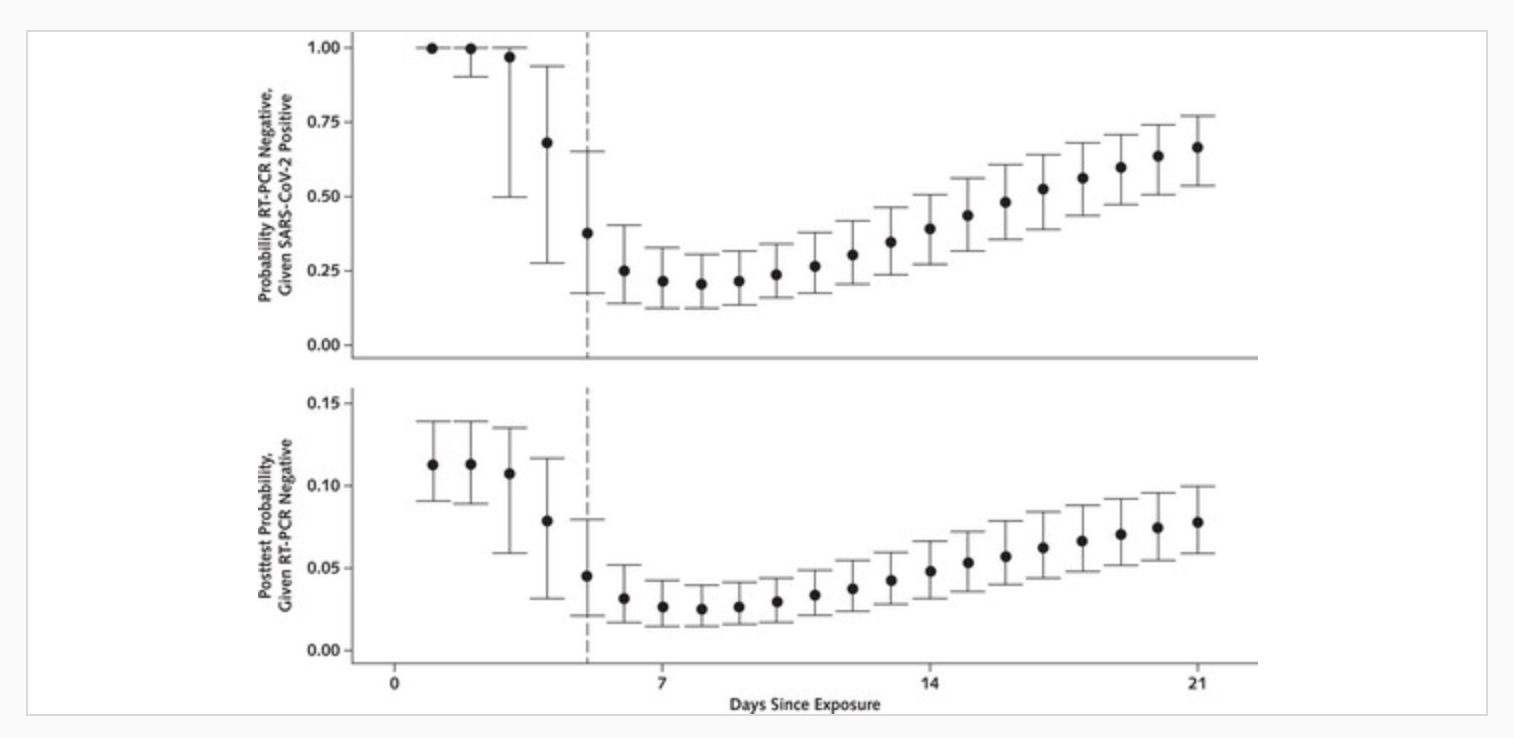
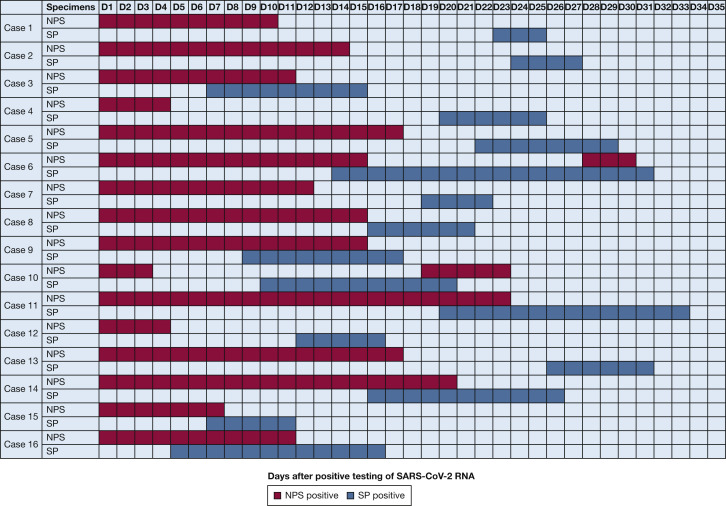
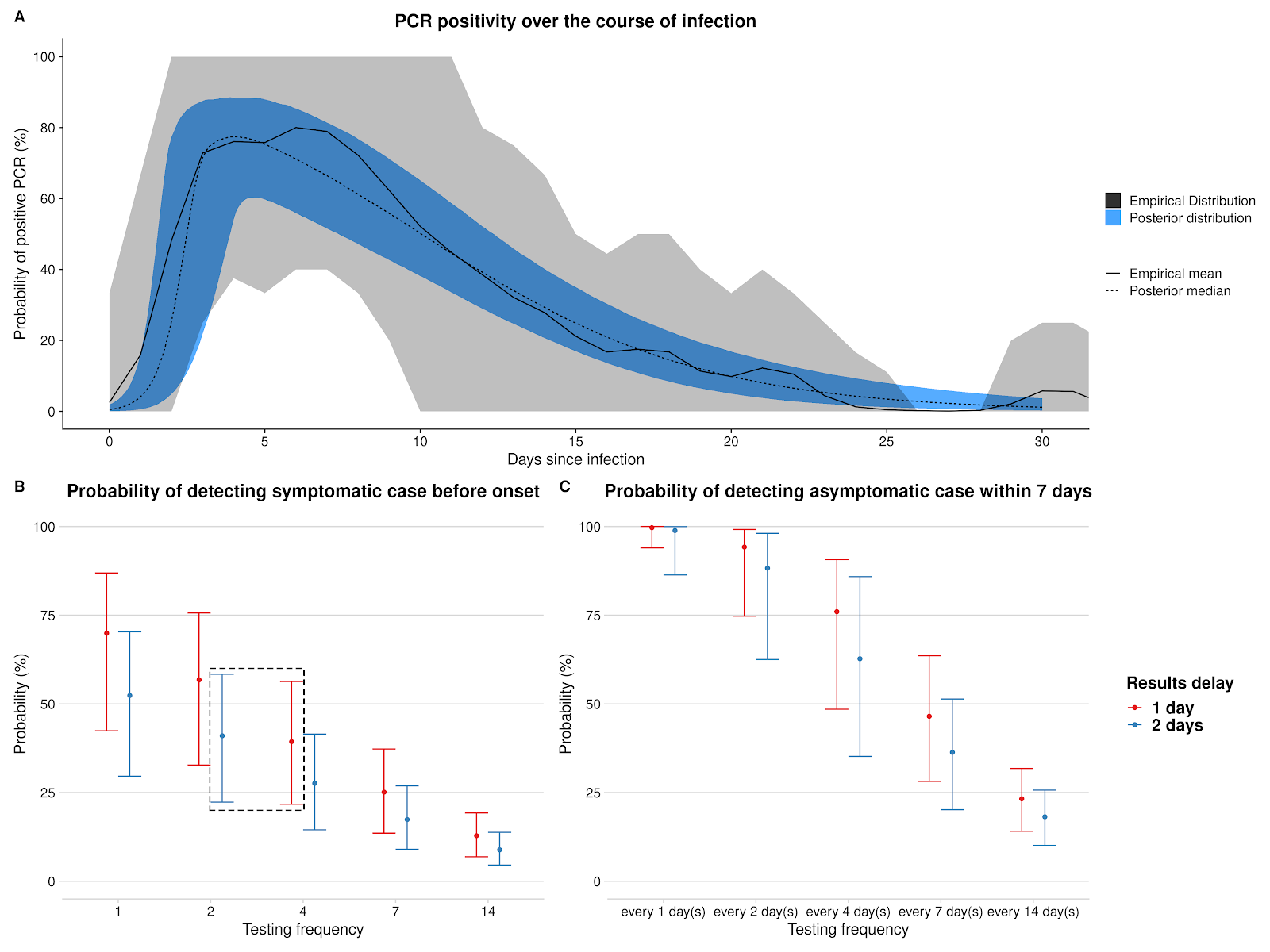
The following graphs show the calculated chance of testing PCR+ on a nasopharyngeal test on a given day after exposure, given frequent testing and an eventual positive result.

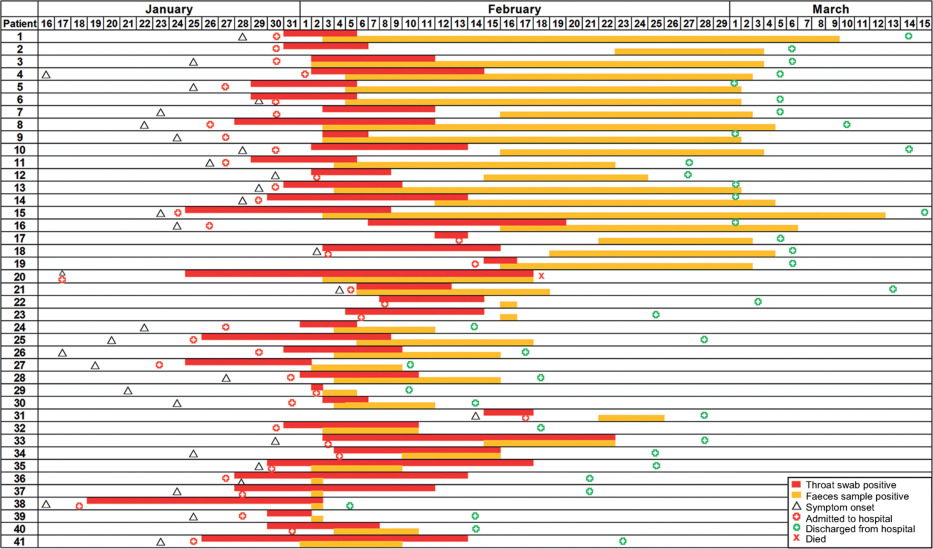
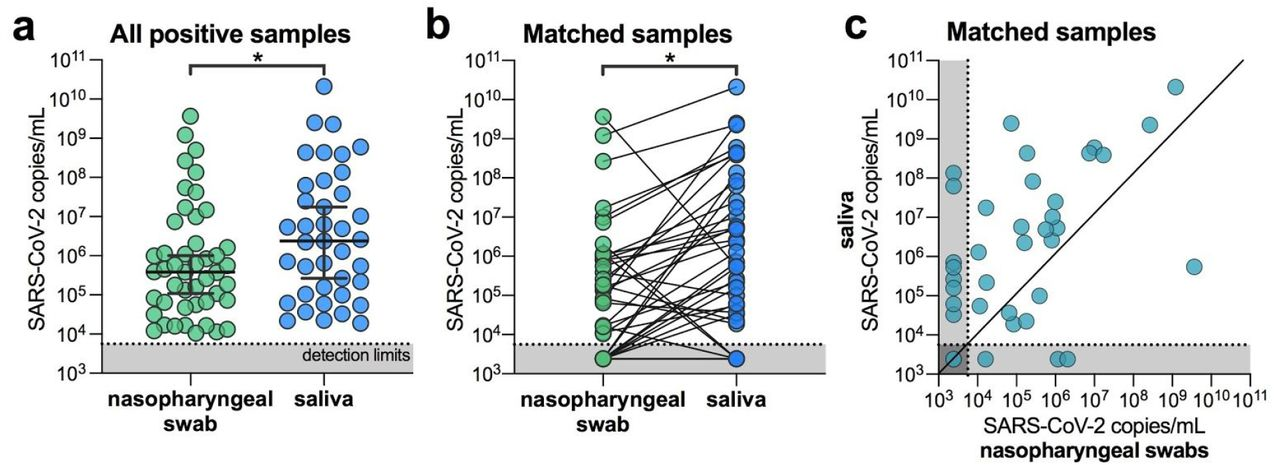
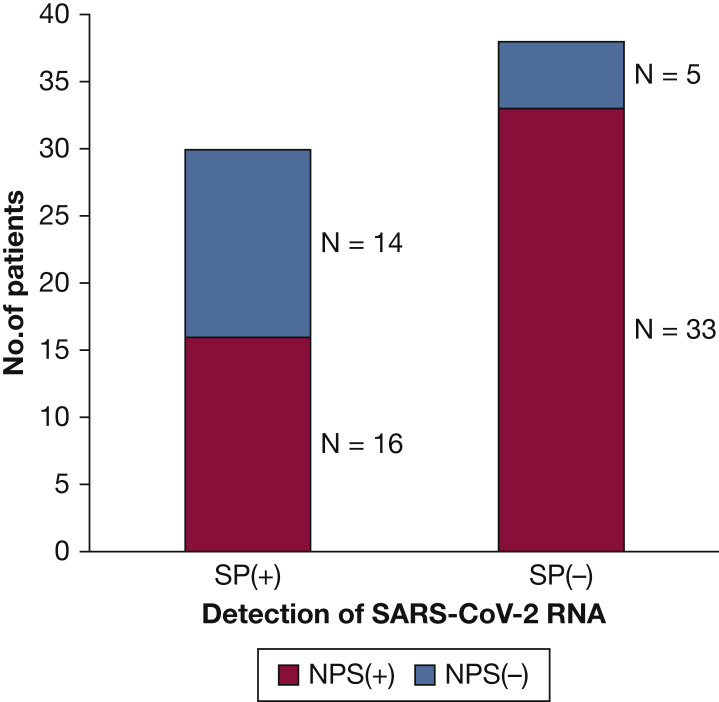
But that’s just for nasopharyngeal (NP) tests. Data on sicker patients (the only ones studied) show it’s possible to have a negative NP test while another area of the body (lower respiratory or gut) tests positive.

Figure thumbnail gr1

But these are all people who tested PCR positive eventually. What about people who get sick without ever testing positive? A very small study found that of 24 health care workers who developed positive antibodies over a 3 month period, 10 never had a positive PCR test despite being tested twice weekly. The paper offers multiple explanations for this, and I’m very reluctant to draw conclusions from such a small study, but it is concerning.

[Notes on NP tests]

[Notes on stool tests]

[Notes on spit tests]

[Notes on lung tests]

Antibody tests

Antibody tests look for an immune reaction to viral proteins. They can be negative when a person is contagious (because they haven’t formed a large enough reaction yet) and positive when they are not (because they successfully fought off an infection). 

A reasonable question I have not investigated is “does an antibody+ test mean I’m immune?” 

[Full notes and sources]

LAMP tests

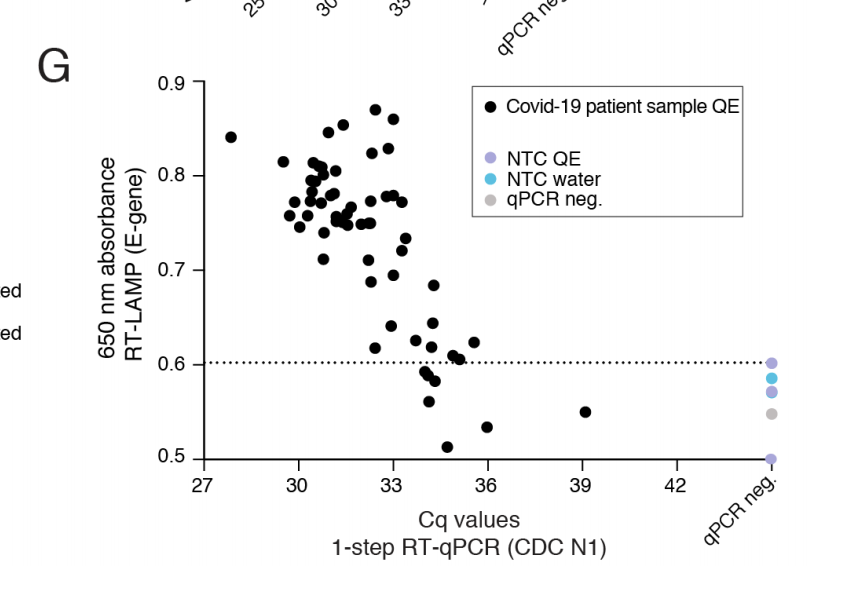
Like PCR, LAMP tests look for specific viral RNA sequences and amplify them to make them easier to detect. LAMP tests go through many fewer amplification cycles, making them less sensitive but much faster: 30 minutes vs 2-3 days for PCR, plus the transit time for the PCR samples. 

A LAMP test every three days is much more valuable than one PCR test, because catching the peak is much more important than the sensitivity. I’m not sure if a LAMP test taken today is more or less useful than a PCR test taken to give results today. I stopped digging into this because there were not yet any LAMP tests on the home market.

[Full notes and sources]

Antigen tests

Antigen tests look for specific viral proteins in a sample. There’s no amplification, which makes them less sensitive, but manufacturers report catching 88% of cases caught by PCR, so maybe this is fine, especially since you get results days faster? 

The 88% sensitivity number is much, much higher than you see in literature (which is something like 20%-50%), I assume because they used more abundant samples. There’s some controversy over whether that’s because many PCR positives are driven by dead virus, in which case the antigen test returning a negative result is a feature, not a bug. This may well be true, however at least one study was able to culture live virus from a PCR+/antigen- sample, so it’s not foolproof.

Of the studies looking at antigen tests, all that I found either started post-symptoms, or took a random sample of people showing up at a sampling site. None were in a position to determine how good antigen tests are as an alarm system for catching an early infection (as opposed to diagnosing symptoms or determining when someone has ceased being contagious)

However antigen tests return results in minutes, while PCR tests take 2-3 days to complete not including shipping time. Given how quickly covid multiplies, it’s possible that an antigen test now is more sensitive than a PCR test from four days ago, especially if the exposure occurred in the intervening time.

[Full notes and sources]

What do any of these mean for contagiousness?

That’s a good question, which with the exception of asymptomatic spread can’t really be answered without human challenge trials, which the entire world declined to do. I would be surprised if any of these tests’ thresholds lined up perfectly with the threshold of infectiousness, because there’s no reason to expect they would. I expect culture tests to be much closer, but still not necessarily exactly on line (plus AFAIK they’re not available for diagnostics, even through a doctor). Given that I asked…

How long do I need to stay in quarantine after potential exposure?

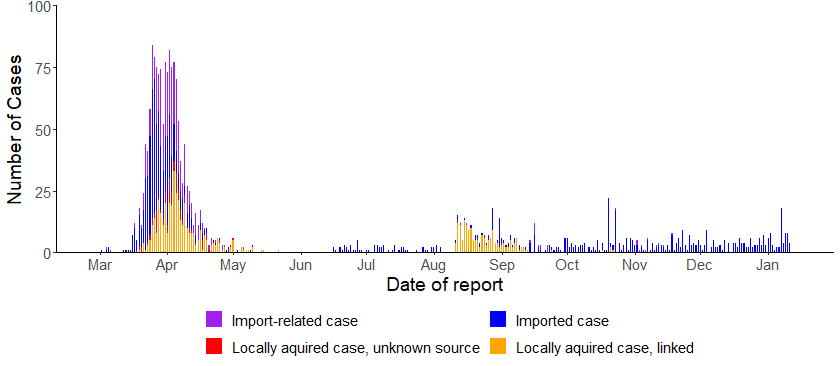
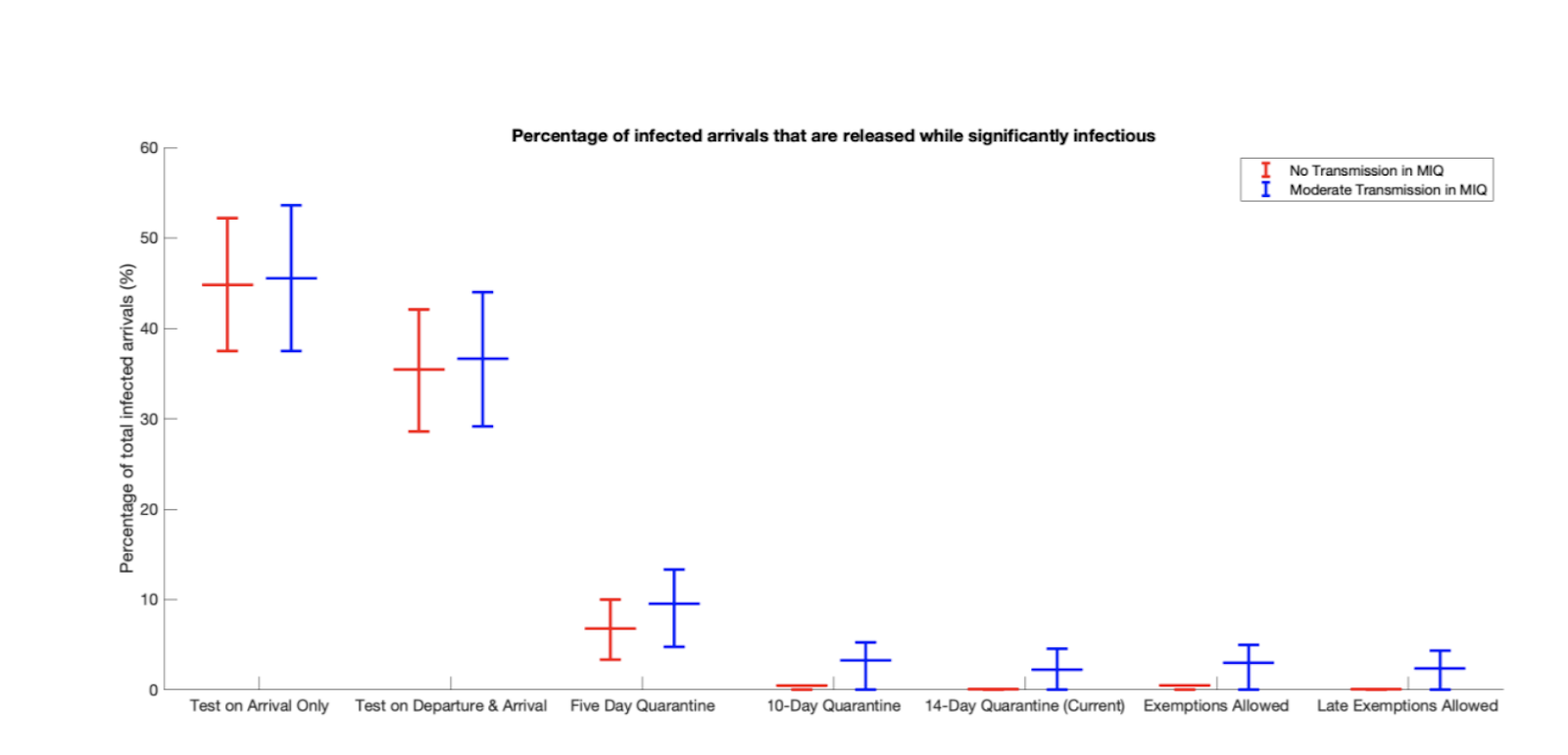
The best data on this is from New Zealand, which has a very strict isolation policy for entrants: 14 days isolation, with PCR tests on days 3 and 12 of isolation (a pre-departure test is required only if you’re coming from the US or the UK). By my earlier estimations, day 3 of isolation is already likely to be past the peak of detectability, unless travellers were exposed right before they left. Nonetheless, New Zealand reports only a handful of import-related covid cases after this policy kicked in, and a model attributes those to people who caught covid in isolation (e.g., a couple who shares a hotel room and one partner gives it to other on day 4), rather than people who entered New Zealand infected.

Transmission type of COVID-19 cases

I did look for similar data from other countries, but NZ had both the best quarantine and the best data.

So despite the tests’ low sensitivity, 14 days + a test at the end really does seem to be a long-enough isolation period.

[Full notes and sources]

Thanks to my original clients for funding this research, and my Patreon patrons for contributing to the cost of preparing this for publication

Follow Up: Predictions as a Substitute For Reviews

In August I wrote about using PredictionBook as a substitute for weekly reviews. Several months later, I am rather predictably not using it, for the same reason weekly reviews stop working: it reminded me of something I endorsed doing but didn’t finish, and that put an ugh field around the whole thing.

Weirdly, I re-picked-up that thing a week ago. This was completely independent: I haven’t looked at PredictionBook since September. I don’t think this has any bearing on the viability of predictions substituting for reviews, it’s just a cute coincidence.

Interview with former cult member Duncan H.

As my twitter followers already know, I started a deep dive on cults back in September. To the extent I had a goal for this, it was “figure out behaviors that differentially push you away from actual cults, without throwing the baby out with the bathwater”.

I mentioned this to a friend, who suggested I talk to a friend of hers, Duncan. Apparently Duncan gets this request a lot, because his condition for talking to me was that we record the conversation so he can share it with the next person who asks. We had mixed success at this- the audio quality was horrible for the first section of our conversation, and the transcriptionists had limited ability to save it.

But the second half got quite interesting. Some highlights:

  • Duncan got a lot from the cult and would make the same decision again (and then leave again).
  • If power is creepy, only creeps will have power.
  • How society interacts with strong belief.

Part 1 video (low quality) and transcript
Part 2 video (much better quality) and transcript

These calls lasted 2 hours and I still had more I wanted to talk about, so I suspect you do too. Duncan has indicated a strong willingness to answer more questions, as long as they are interesting. So if there’s anything you’re dying to know after listening/reading these, comment here, @ me on Twitter, email me at elizabeth@acesounderglass.com, etc.

Thanks to Patreon patrons and Duncan for helping to defray the cost of the transcripts.

Looking For Work

Three and a half years ago I announced I was leaving software to try to work on longtermist projects instead. A year ago I announced I was focusing specifically on research on the meta level. Today, I’m sad to announce that neither of these have worked out like I hoped; I’ve failed to find a way I’m confident has a large positive impact on the future. Three years seems like long enough to give this project, especially given that I don’t know what I’d try next if I wanted to. In light of that, I’m stepping back from big Save The World projects to focus on finances for a while.

What this means for the blog: I still like reading stuff and talking about it, so that will probably happen sometimes just like it did before I took this on ~full time. Maybe even more, now that the pressure to do the Most Impactful Research is gone. I don’t plan on putting more effort than is fun into refining knowledge bootstrapping or learning-and-trauma studies for the foreseeable future.

What this means for me: I’m now looking for employment that isn’t “the most impactful thing I can do”, and would appreciate any leads you can give me. My primary skills are as follows:

  • Research
  • Was once a programmer. I didn’t like it then but ironically the learning-and-trauma stuff is making it much easier to do and I may hit enjoying it again on a reasonable timeline.
  • Was once an SDET. I’m going to be even pickier about SDET work than dev work, but it is a skill I have.

The research thing is tricky. There’s not a lot of call for uncredentialed laymen who can read books about the history of childhood really thoroughly. But those skills are applicable to a wider range of problems, if people know to conceptualize the problems the right way and know that they have the option to turn them over to an expert. I spent one of the last three years at a company that *did* know how to use those skills, and was fantastically useful as I twitter-stalked investors, found the unwritten rules for getting on exchanges, and forecast the economy of Argentina. But of course I would claim that.  Instead of taking my word for it, here’s a description from my former boss at Reserve, a for-profit company where I worked as Head of Research for a year:

From managing Elizabeth at Reserve, I would strongly recommend her as a researcher to other companies, and even more so to startups, that need help making difficult highly complex decisions.

Early on at Reserve we faced many very complex challenges – e.g. navigating a labyrinth of legal issues, identifying product-market fit, and making major strategic decisions about how to fundraise. A major recurring bottleneck to make decisions was that we lacked information on various key unknowns, and so to find this critical information we tried out hiring Elizabeth as a researcher. Initially her scope of research at Reserve was pretty limited, but we quickly realized that her skill and autonomy meant she could do alot more for us and so we kept giving her larger and larger research tasks and she quickly became a pivotal member of the team.

Elizabeth has high agency at learning about an extremely wide range of topics and enjoys research work, and so she happily took on any research challenge that we gave her. She’s very competent – I remember we needed background info on someone, and she found a lawsuit against them hidden away on the internet. She will also research to any depth that you want – she can do 1 hours worth of research on something and then report back, or 5, or 10 hours. Best of all she’s highly autonomous and needs very little oversight, so once she knows what you need she can independently make decisions about what’s worth researching, and at what point is it best to stop and report back, which makes her especially well suited to a startup.

[Said manager didn’t want his contact info plastered all over the internet but it is available on request]

[If you’re wondering why I left a job I enjoyed and was good at and appreciated me that much, the answer is a combination of “changing business needs” and “crypto winter”.]

If there’s somebody you think this could be useful to, I’ve also included this in my Hire Me page and LinkedIn, so you can share it with them without the rest of this post.

Some other traits that make things a good fit for me:

  • Not make the world worse on net
  • Not be a bullshit job, in the Graeber sense of the word. One of the hardest things about the last three years has been the lack of feedback loops, and one of the things I’m most looking forward to is having concrete contact with reality.
  • < 25 hours/week on average (large week-to-week fluctuations are fine)
  • Working with other people who can give me feedback. One of the other hardest things about the last three years has been doing it more or less alone, and worrying about what I missed is just exhausting.

This would have been a really devastating announcement if I was making it any earlier than I am, but after my last grant rejection, I came to terms with it pretty rapidly. I tried something, I failed, and I’m pretty fortunate to have had both the option to try something unlucrative and a lucrative thing to return to. I don’t think my current orientation towards money and mental space is permanent- I just don’t currently have anything compelling enough to justify further burning of runway.

If you’d like to contact me directly, my e-mail address is elizabeth@acesounderglass.com.

Thanks to everyone for all their support and encouragement over the years.

-Elizabeth

Epistemic Spot Check: This Isn’t Sparta

Prologue

Despite not normally being a fan of military history, I’ve really enjoyed Bret Devereaux’s blog Acoup, in which he uses pop culture representations as a starting point to teach the subject. Unfortunately I got stuck in a loop where I didn’t want to read Acoup without fact checking at least one post, and I didn’t want to fact check a post because military history is boring when taught by anyone besides him and Dan Carlin (and I was really disappointed in Carlin’s book. Why, you might ask? Yes, I too wish I’d written that down).  

But I really wanted to start reading Acoup again. My compromise is to:

  1. Use a sequence that involved a lot of non-combat facts (as good military history usually does, and by “good” I mean “enjoyable for me to read”)
  2. Limit myself to some pretty bare bones fact checking. This does not protect me against sophisticated forgeries, but is surprisingly good at catching people with a sincerely believed agenda.

And now, a good old fashioned epistemic spot check of Bret Devereaux’s This Is Not Sparta.

Conclusion

Devereaux is not so much sharing historical facts as comprehensive models, informed by both local facts about the specific area of interest and general knowledge of humans and historical trends. This is great and I wish more people would do it. Along the way he sometimes presents facts as more certain/less controversial among historians than they are. He’s not hiding that he does this, but on first read through I did walk away with the impression that certain things were more settled than they are, and unprepared to argue for their truth.

E.g., Acoup describes helots not only as slaves, but as slaves that were especially poorly treated even by the standards of the time. 

First, let us dispense with the argument, sometimes offered, that the helots were more like medieval serfs than slaves as we understand the ideas and thus not really slaves – this is nonsense. Helots seem to have been able to own moveable property (money, clothing etc), but in fact this is true of many ancient slaves, including Roman ones (the Roman’s called this quasi-property peculium, which also applied to the property of children and even many women who were under the legal power (potestas) of another). Owning small amounts of moveable property was not rare among ancient non-free individuals (or, for that matter, other forms of slavery).

As noted below, this is not the consensus view. The writing leaves me with a good sense of why Devereaux believes what he believes, but not prepared to teach the controversy. I think if I started an argument with a helots-are-serfs partisan based purely on this blog post, I would look stupid and unprepared. Which is fine. The goal of the post is not to help me look smart at parties with classicists, it’s to leave me with better models of militant societies as a group. This is a restatement of the truism that if you really care about something you should probably read more than one source.

A broader example is that Devereaux fills in the paucity of written records about helot life with patterns known from other slave societies.  E.g. there isn’t actually a written reference to Spartiate men (the Spartan nobles) raping helot women. But we can take a look around at better documented slave societies, and at the legal code around the existence of children with Spartiate fathers and helot mothers, and make some educated guesses. This is a good and reasonable thing to do if what you want to do is picture ancient Sparta more accurately, but should not be double counted as evidence for the trends and patterns used to fill in the gaps.

I feel dumb ending with the conclusion “this is good but also never rely on one source.” You knew that already, and so did I, and yet doing this spot check made me more cautious in relying on Acoup than I previously was. Humans, man.

The Actual Spot Check

Full notes are available in my Roam graph

All claims are taken from posts 1 and 2 in the Sparta series. Claims were selected for being easy to verify and do not in the slightest constitute a random sample.

Claim: “Sparta was not a city-state for the simple reason that it didn’t have a city – it had five villages instead”
Verdict: Plausible, subject to arguments on definitions. It’s easy to find tertiary sources describing Sparta as a city, but none saying “I have considered the possibility that Sparta was in fact five villages in a trenchcoat and rejected it for these reasons”. I couldn’t actually find any references to Sparta being five villages- sources that described it as an amalgamation always said four. Bu when I reached out to Mr. Devereaux’s Twitter he explained that he was counting a fifth village that had joined later (he also acknowledged there was some controversy in the description, which he didn’t in the original post). I still wish this had come with exact definitions of what constitutes a city vs a village, and what the implications of the difference are.

Claim: “Spartan boys were, at age seven, removed from their families and  instead grouped into herds (agelai) under the supervision of a single adult male Spartan”… “While the heirs of Sparta’s two hereditary kings were exempt from the agoge – perhaps because the state couldn’t afford to risk their lives so callously – Leonidas was a younger brother and thus was not exempt”
Verdict: confirmed in secondary source (although Devereaux goes to pains to point out the biases of the secondary sources)

Claim: “The boys were intentionally underfed. They were thus encouraged to steal in order to make up the difference, but severely beaten if caught”
Verdict: confirmed in secondary source

Claim: “Not even the exemplary boys escaped the violence, since the Spartan youths were annually whipped at the Altar of Artemis Orthia”
Verdict: confirmed in tertiary source

Claim: “Then there is the issue of relationships. At age **twelve** (Plut. Lyc. 17.1) boys in the agoge would enter a relationship with an older man – Plutarch’s language is quite clear that this is a sexual relationship (note also Aelian VH. 3.10, similarly blunt).”
Verdict: Well supported inference, not actually proven. My literal reading of the sources cited leaves a lot of ambiguity over whether the relationships were sexual or not. This could be a lack of experience reading between the lines of ancient Greek sources, but other historians who have presumably read them also dispute the claim. Given what we know of violent all-male institutions in general I think it’s an extremely reasonable inference that the relationships were sexual (and by our standards, extremely coercive at a minimum), in fact it would be surprising if they weren’t, but this isn’t a smoking gun.

Claim: “These Spartan boys will have to apply to be part of a mess-group (syssitia – a concept we’ll return to later) when they are twenty”
Verdict: confirmed in tertiary source.

Claim: Some boys in the agoge were selected for the krypteia, which patrolled farms at night to murder slaves.
Verdict: confirmed in tertiary source.

Claim: “we actually know that individual Spartans painted their shields with a variety of individual devices.”
Verdict: Multiple tertiary sources report this being true at the time 300 would have taken place, but that the army kit was eventually standardized.

Claim: “While there were supposedly 8,000 male spartiates in 480 there seem to have only been 3,500 by 418  just 2,500 in 394 and just 1,500 in 371.”
Verdict: tertiary sources gave slightly different numbers at slightly different times but the trend was confirmed repeatedly.

Claim: The perioikoi were poor farmers on marginal land on the outskirts of sparta. They were free save for mandatory participation in the army, but had no say in government.
Verdict: gist confirmed in tertiary sources.

Claim: “The hypomeiones seem to consist of the men (and their descendants) who had been spartiates, but had been stripped of citizen status for some reason, usually poverty (but sometimes cowardice)”
Verdict: gist confirmed in multiple tertiary sources, sometimes using a narrower definition

Claim: “The mothakes (singular: mothax) seem to have been the bastard off-spring of spartiate men and helot women”
Verdict: gist confirmed in tertiary source, although they seemed to consider hypomeiones a subset of mothakes.

Claim: Neodamodes were freed spartan slaves
Verdict: gist confirmed in tertiary sources, although they refer only to slaves freed for military service

Claim: Sparta’s population distribution was roughly

Verdict: agrees with cited source.

Claim: Helots were owned by the Spartan state, who assigned them to work land owned by the Spartiates (method of assignment unknown)
Verdict: confirmed by tertiary source.

Claim:  Helots were poorly treated slaves, not serfs or a stage between slave and free
Verdict: certainly seems justified, but officially controversial

Thanks to my Patreon patrons for helping to fund this work.

Update 11/25: Bret Devereaux has a few comments about this on Twitter.

Update 11/27: A friend checks the Spartan military record and finds it meh.

Looking For Test Subjects: Breaking Questions Down

As long time readers are well aware, my main focus for the last year has been developing a method for Knowledge Bootstrapping– going from 0 to 1 in an unfamiliar field without undue deference to credentialism. I’m at the stage where I have a system that works well for me, and I’ve gotten feedback from a few other people about what works and doesn’t work for them, but there’s a long way to go. A lot of my knowledge is implicit and not explained on the page, plus I am only one person; what works for me will not translate perfectly for every human. So I’m looking for test subjects.

One particular part of my method is breaking down one large question into many smaller questions. This has several purposes: it forces you to clarify what you actually care about, and makes it more obvious what information is relevant. I describe this process and the reasoning behind it here, but not very well.  I’m looking for test subjects that have a research question, and would like to practice breaking it down into smaller questions, with the goal of refining the technique and my teaching of it.

What This Looks Like

  1. Come up with a question you might like to research.
  2. You book a phone call with me via calendly, or email me at elizabeth -at- acesounderglass.com to set up a time. 
  3. We discuss your question in an attempt to break it down into smaller parts.
  4. I sure hope some people actually go off and research the new questions but there’s no commitment required to do so.

What Are the Expected Outcomes?

  • You will have a better understanding of what you actually want to know and will be better positioned to find answers.
  • You will be better able to break down your next research question, without me.
  • I will make some of my metis on breaking down questions more explicit.
  • I will become better at teaching the technique of breaking down questions.
  • I learn techniques from you I couldn’t have learned on my own.

No Notes Research

I started watching The Vow with a friend, and got inspired to do a bunch of reading on cults in general and Vow’s cult, NXIVM, in particular. I didn’t originally take notes because this was coded in my head as a leisure activity, not real research. Eventually it became clear it was a real research project, but it seemed unfair to introduce real notes halfway through, so I decided to use it as an experiment in research without detailed notes instead (I did end up writing a few, but a far cry from The Algorithm). This turned out to be the right situation for that experiment, because my friend was a check on how much I actually remembered, especially on things we disagreed on, which was a lot.

Observations:

  • Memory is in fact hard. 
    • When I went to share what I learned with my friend, I often had to look back at my (sparse) notes to remember things I wanted to talk to him about. This is true even when I was talking to him the morning of the day after I read the book. 
    • Often he would ask me questions and the answer wasn’t in my notes- sometimes it was firmly in memory and I’d just forgotten to bring it up, sometimes I knew the book had the answer but I had lost it.
  • I mixed up sources a lot.
    • I would frequently assume my friend knew something, only to find out it wasn’t from our shared source. 
  • I’d compress specifics into patterns. This hindered me arguing with my friend.
  • In combination with the source mix-up, this often meant I couldn’t tell apart the following situations:
    • Books A and B repeating the same story with the same source (almost equivalent to one source)
    • Books A and B tell the same story from their own perspectives (stronger evidence the thing actually happened, but not evidence of a pattern)
    • Books A and B tell stories about similar things happening to different people (evidence of a pattern).
  • Losing the specifics that demonstrated a pattern also made it much harder to change my mind in response to new evidence. Is this more credible or a stronger signal than the data my current view is based on? Who’s to say, if I can’t remember the original evidence?
  • This feels way easier with something as emotionally salient as cults than it did with my more distant historical research. And when I did shift to a more history-style book (Mystics and Messiahs), I suddenly had to take real notes.
  • I did go into this with a question, but I didn’t know what it was until I’d read a few books and seen what felt live and what didn’t. 
    • The question was: how do we cultivate instincts/responses that seamlessly antagonize the unhealthy parts of cults while allowing for communities and new ideas.
    • Also: Interpersonal power: How does it work?

I feel like there’s more to learn from this experiment, but I really needed to write *something* today and a draft post I had on a beautiful theory of mine took a hit from an ugly gang of facts, so this is it.